



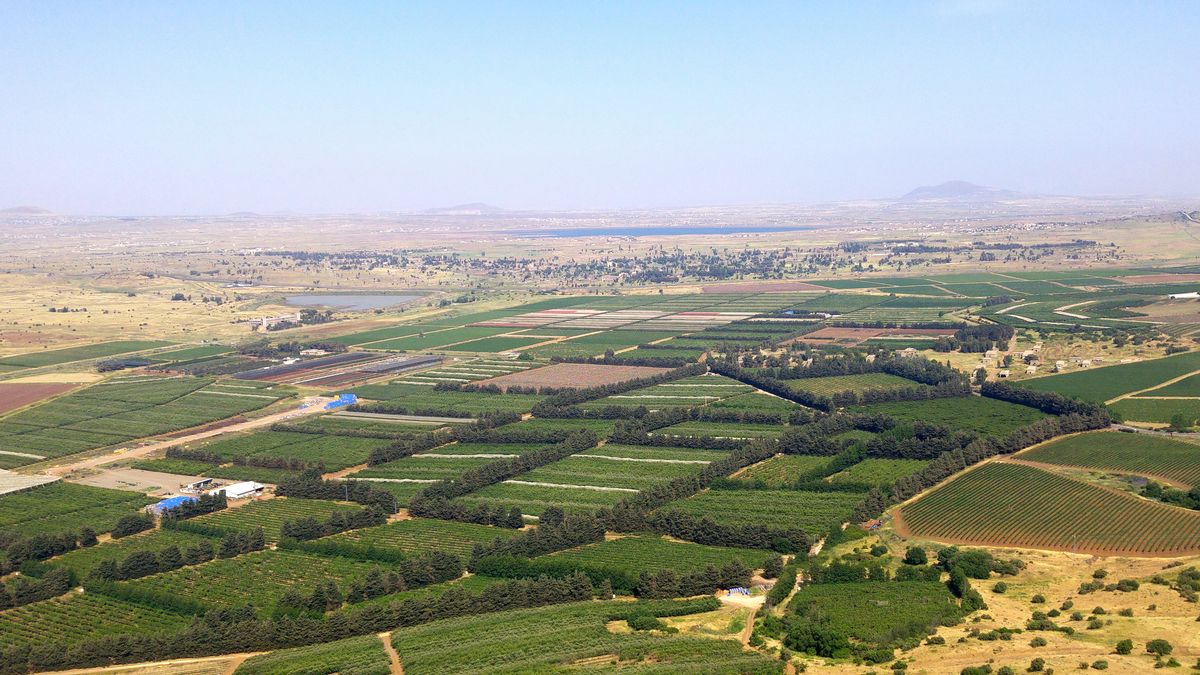
Standing on top of Mount Bental, an extinct volcano rising 1,171 meters above sea level on the Golan Heights, you can see Syria. Not in the abstract, geopolitical sense. You can literally see it. The abandoned city of Quneitra sits in the valley below, empty since 1974. Syrian villages are visible on the hills beyond. UN observation posts dot the landscape. And the coffee shop at the summit, in a gesture of dark humor that could only happen in Israel, is called Coffee Annan, named after the former UN Secretary-General.
An Extinct Volcano
Mount Bental is not just a hill with a good view. It is an extinct volcano, and the crater at the summit is still clearly visible, a shallow bowl of basalt and scrub that tells the story of this landscape’s violent geological origins. The entire Golan Heights sits on a volcanic plateau, and Bental, at 1,171 meters, is one of its defining peaks. The volcanic soil that makes the Golan so fertile for wine grapes and cattle pasture is the same material underfoot as you walk the crater rim. Standing here, you are standing on top of geological history as much as human history.
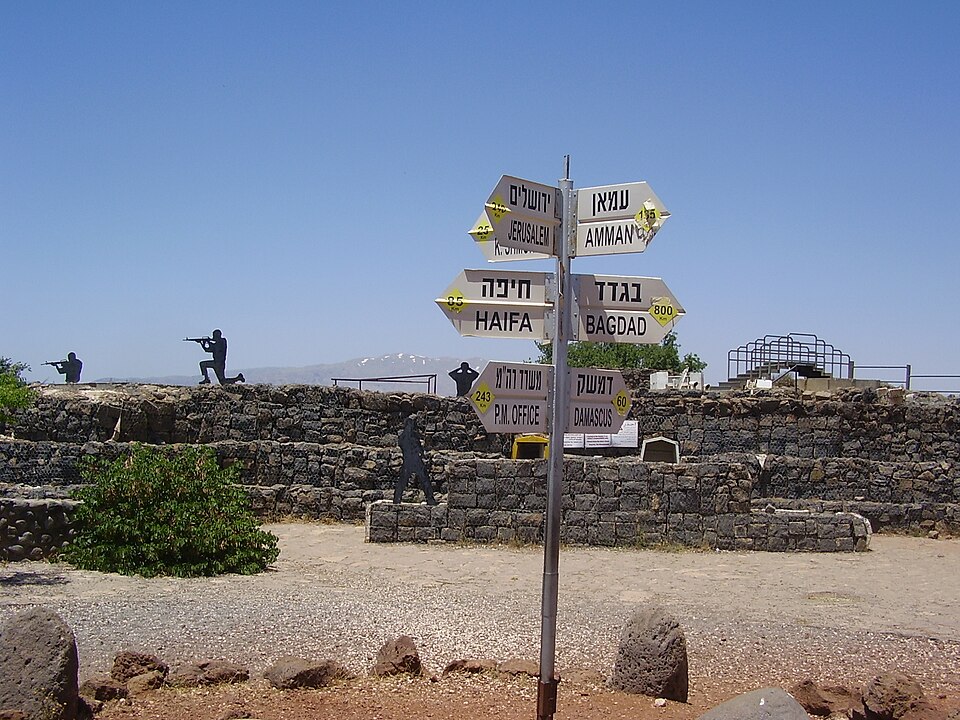
The View into Syria and Across the Golan
The view from the summit is one of the most remarkable in Israel, not just for its beauty but for what it contains. Look directly east and you are looking into Syria. The abandoned city of Quneitra is visible in the valley below, its empty streets and collapsed buildings frozen since 1974. The UN buffer zone stretches across the landscape between the Israeli and Syrian lines, patrolled by peacekeepers. On a clear day, Damascus is visible on the horizon, roughly 60 kilometers away. To the south, the entire Sea of Galilee spreads out below, shimmering blue against the hills of the Galilee and the Jordan Valley. To the north, Mount Hermon anchors the skyline with its snow-capped peak. Nowhere else in Israel can you take in so much history, geography, and sheer drama in a single glance.
The Yom Kippur War
On October 6, 1973, the first day of Yom Kippur, hundreds of Syrian tanks poured through this area in a massive surprise assault. Mount Bental and the surrounding ridges became the front line of one of the most intense armored battles in modern military history. Just below the mountain, in the valley to the north, the Battle of the Valley of Tears unfolded over four days, with a vastly outnumbered Israeli armored force holding off wave after wave of Syrian tanks until reinforcements could arrive. The scale of that battle is almost impossible to grasp from above, but standing on Bental’s summit and looking down at that valley, you begin to understand the terrain over which it was fought and what was at stake if the line had broken.
The Bunkers
The summit of Mount Bental is crisscrossed with old IDF bunkers and trenches from the post-1967 and Yom Kippur War period. Visitors can walk through the bunkers freely, ducking through narrow corridors and emerging at observation slits that frame the Syrian border like a gun sight. The bunkers are unrestored and unglamorous, just concrete, iron, and darkness, but they give a tangible sense of what it was like to man a forward position on one of the most contested borders in the world. The walls inside are covered in graffiti and military artwork left by soldiers who served here over the decades, a raw and unofficial record of the men who kept watch from this hilltop.
Coffee Annan
The cafe at the summit serves coffee, snacks, and one of the best views in Israel. The name is a pun that only Israelis could love: Kofi Annan, the former UN Secretary-General whose peacekeepers patrol the buffer zone visible in the valley below, becomes Coffee Annan. The joke is entirely intentional, and entirely Israeli. Sitting on the terrace with a coffee, looking out across the border at Syria and the UN posts below, is one of those experiences that is hard to describe until you have done it. The beautiful and the surreal overlap completely, and the coffee, to its credit, is excellent.
Visit with Hoshen Tours
Mount Bental is the most visited overlook on the Golan Heights and the natural starting point for understanding the region’s modern history. Hoshen Tours combines it with the Valley of Tears, Tel Saki, and the broader Golan Heights story for a full-day itinerary that puts the landscape, the geology, and the military history in complete context. It is one of the most powerful days available anywhere in Israel.
Visitors exploring the Golan Heights often combine Mount Bental with nearby destinations such as Kibbutz El Rom, Valley of Tears, and Druze of the Golan Heights, each offering its own distinctive perspective on the region’s layered history and landscape. A broader itinerary might also include Syrian HQ and Birkat Ram, both within easy reach and rich in their own right.
Every Hoshen Tours itinerary is private and fully customizable. Contact us to begin planning your journey through the Golan Heights.
Ready to experience Israel in true colors?
Plan Your TourPrivate tours designed around your interests, schedule, and pace.