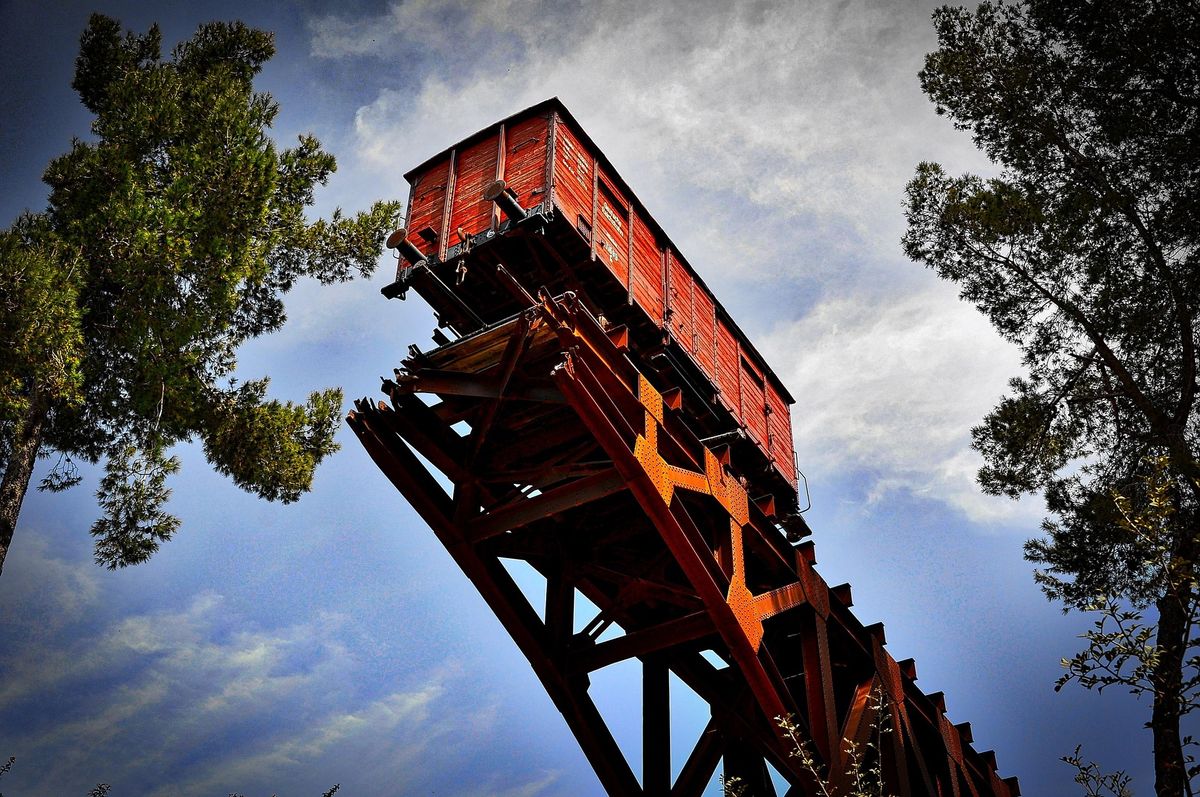
Yad Vashem, the World Holocaust Remembrance Center, stands on the western slope of Mount Herzl in Jerusalem, on what is known as the Mount of Remembrance (Har HaZikaron). Founded in 1953 by an act of the Israeli Knesset, just five years after the founding of the state, Yad Vashem was established at a time when many survivors were still struggling to rebuild their shattered lives in the new country. The name comes from the Book of Isaiah: “To them I will give within my temple and its walls a memorial and a name (yad vashem) better than sons and daughters; I will give them an everlasting name that will endure forever” (Isaiah 56:5). The 45-acre campus includes museums, memorials, archives, a research institute, and an educational center, making it not only a place of remembrance but also the world’s foremost center for Holocaust research and education.
The Historical Museum
The main museum, designed by the architect Moshe Safdie and opened in 2005, is built as a long triangular prism cutting through the mountain: a dramatic 180-meter concrete wedge that pierces the hillside from one end to the other. The museum tells the story chronologically, from the rise of antisemitism in Europe through the Nazi rise to power, the ghettos, the deportations, the camps, and the liberation. Each gallery uses original documents, photographs, film footage, personal objects, and recorded survivor testimonies to tell the story not as statistics but as individual human experiences.
The architecture itself contributes to the narrative: the corridor narrows and darkens as the story reaches its worst moments, and then opens gradually toward the end. Safdie’s design ensures that visitors emerge from the museum’s final gallery onto a cantilevered balcony that juts out over the valley, and the first thing they see is a sweeping panorama of green hills and the neighborhoods of Jerusalem below. The message is unmistakable: after the deepest darkness, the Jewish people emerged into a new life in their own land. It is one of the most powerful architectural statements in Israel.
The Hall of Names
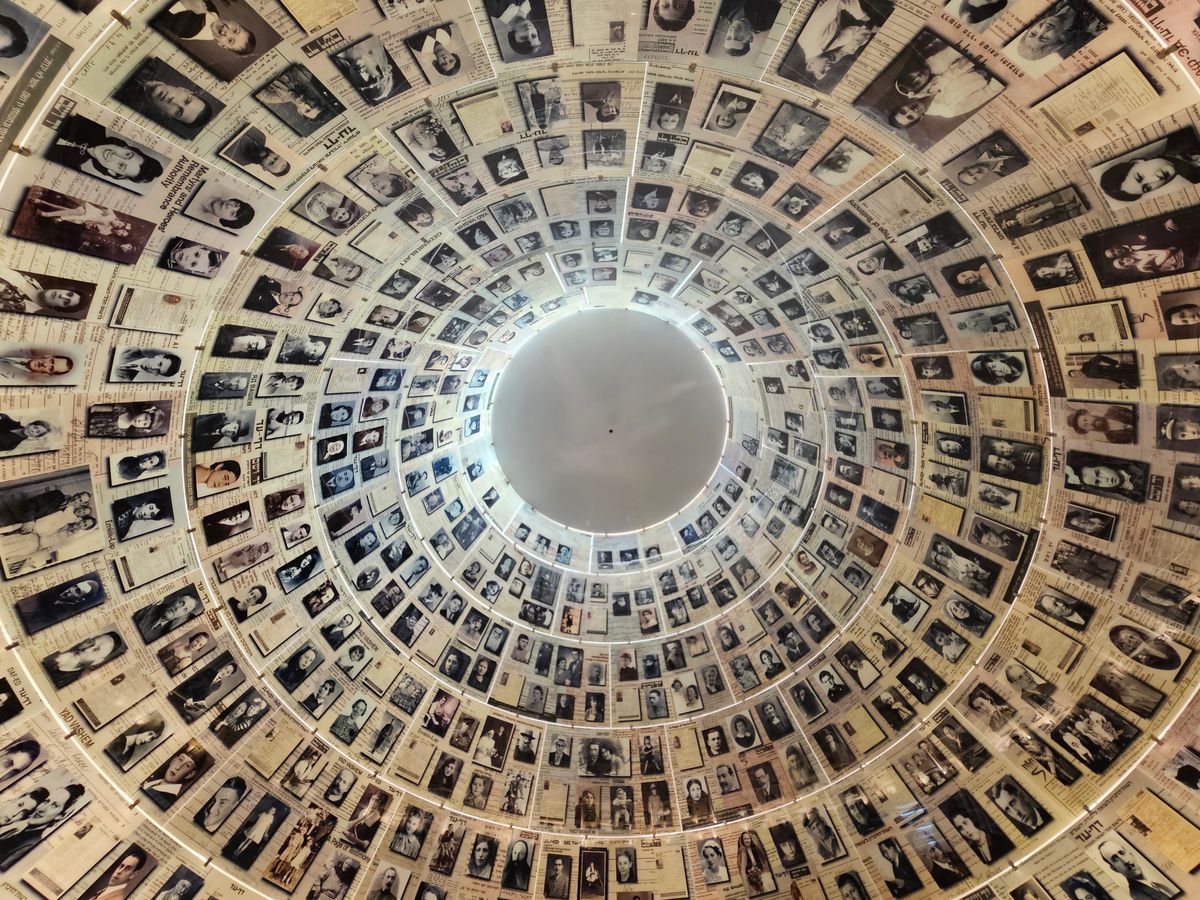
The Hall of Names is a circular room at the end of the museum, containing Pages of Testimony for the victims. The ceiling is a cone-shaped dome reaching ten meters high, lined with over 600 photographs and fragments of Pages of Testimony, reflected in a pool of dark water below. The Pages of Testimony are Yad Vashem’s attempt to restore individual identity to people who were murdered as numbers. Each page records a name, a birthplace, a profession, a family, a face. Over 2.8 million pages have been submitted by families and researchers over the decades, recording approximately 5 million names. The remaining one million victims, whose names may never be known, are represented by the dark water at the bottom of the dome, a haunting reminder that for many, even their names were erased.
The Children’s Memorial
The Children’s Memorial, carved into an underground cavern, commemorates the approximately 1.5 million Jewish children who were murdered in the Holocaust. The memorial was funded by Abraham and Edita Spiegel of Beverly Hills, California, who lost their two-and-a-half-year-old son Uziel in Auschwitz. They approached Yad Vashem with a request: build something that will ensure no one forgets what was done to the children.
The interior is almost completely dark. Five memorial candles are reflected infinitely by mirrors in every direction, creating the illusion of millions of lights floating in an endless void, each point of light representing a child’s soul. A recorded voice reads the names, ages, and countries of origin of murdered children, continuously, day and night. The recitation takes months to complete before cycling back to the beginning. Many visitors find this the most difficult and most memorable part of Yad Vashem. There is nothing to see in the conventional sense: only darkness, infinite lights, and a quiet voice reading name after name after name, each one a child who never grew up. Uziel Spiegel is one of those names.
The Avenue of the Righteous Among the Nations
The Avenue of the Righteous honors non-Jews who risked their lives to save Jews during the Holocaust. Trees and plaques line the pathway, each bearing the name and country of a rescuer. Over 28,000 individuals from more than 50 countries have been recognized, including Oskar Schindler (whose grave lies on Mount Zion), Raoul Wallenberg, Irena Sendler, Corrie ten Boom, and thousands of lesser-known people (farmers, priests, diplomats, factory workers) who chose to act when it was easier and safer not to. Each tree was planted by the person it honors, or by their descendants if they did not live to see the ceremony. The avenue is a reminder that even in the darkest chapter of human history, there were those who chose light.
The Valley of the Communities
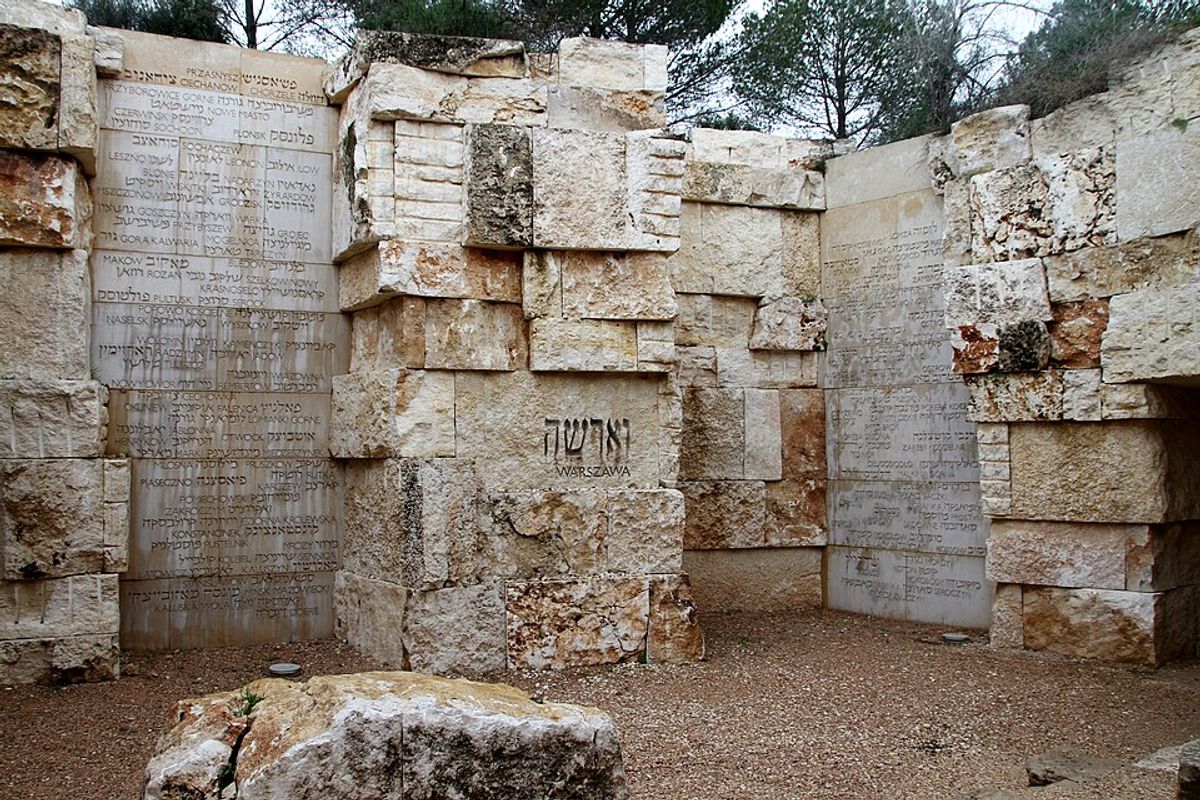
Carved deep into the bedrock of the mountain, the Valley of the Communities is a massive maze of stone walls into which are engraved the names of over 5,000 Jewish communities that were destroyed or devastated during the Holocaust. The walls are rough-hewn, the corridors narrow, and the names cover every surface: towns and villages from Poland, Lithuania, Hungary, Greece, the Netherlands, France, North Africa, and beyond. Walking through these stone corridors, surrounded by the carved names of communities that no longer exist, is one of the most quietly devastating experiences at Yad Vashem. These were not just places on a map. They were entire worlds of culture, language, scholarship, music, and tradition: the shtetlach of Eastern Europe, the Sephardic communities of Salonika and Rhodes, the ancient Jewish quarters of Amsterdam and Rome, wiped from the face of the earth.
The Archive
Behind the public memorials and museums, Yad Vashem houses the world’s largest Holocaust archive: over 210 million pages of documentation, along with hundreds of thousands of photographs, films, recorded testimonies, and personal artifacts. The archive is not a static collection. It continues to grow as new documents surface, as families submit Pages of Testimony, and as researchers uncover previously unknown material. Yad Vashem has undertaken a massive digitization effort, scanning millions of documents and making them accessible online to researchers and the public worldwide. The archive serves not only as a repository of evidence but as a tool of education: Yad Vashem develops study programs, curricula, and educational materials used in schools across Israel and in dozens of countries, ensuring that the memory of the Holocaust is transmitted to generations who never met a survivor.
Visit with Hoshen Tours
Yad Vashem requires time, context, and a guide who knows when to speak and when to let the exhibits speak for themselves. Hoshen Tours leads visitors through the museum’s narrative arc, from pre-war Jewish life to the Final Solution to rebirth, shaping a visit that is both devastating and deeply meaningful. The day often pairs Yad Vashem with the Israel Museum nearby, or with the Knesset and Bible Lands Museum in the same cultural corridor of western Jerusalem.
Explore Our Tour Collection
Ready to experience Israel in true colors?
Plan Your TourPrivate tours designed around your interests, schedule, and pace.