



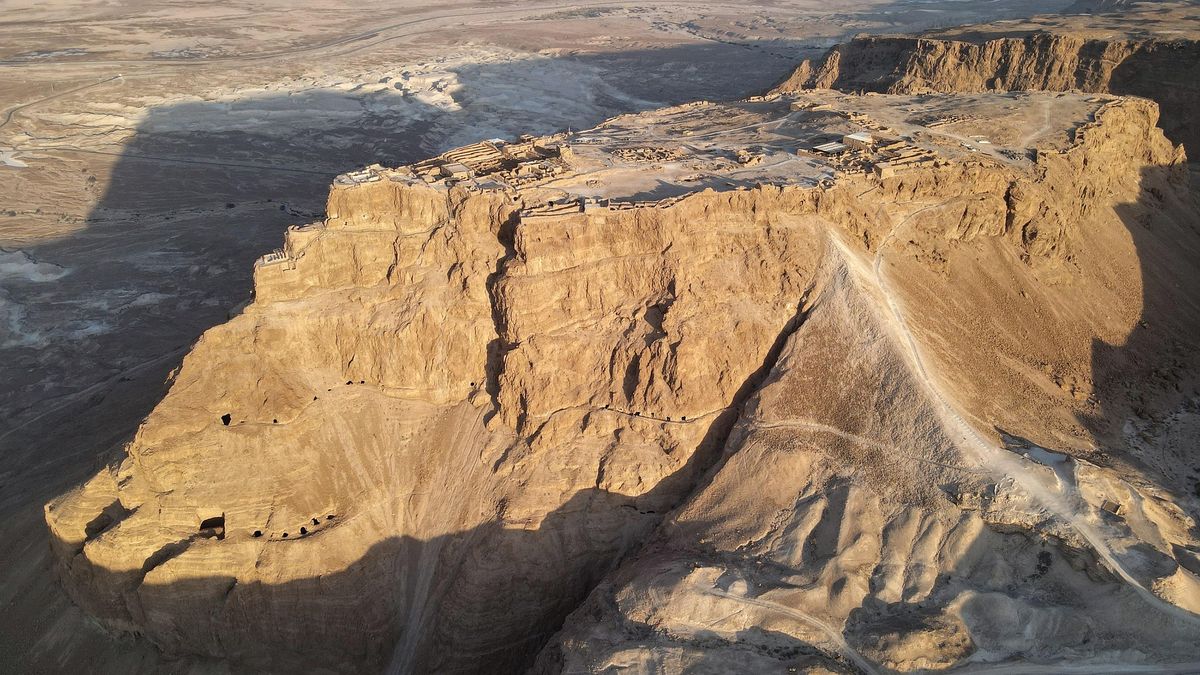
Masada is an isolated flat-topped mountain rising roughly 434 meters above the western shore of the Dead Sea, in one of the most desolate landscapes on earth. The summit, measuring approximately 550 by 270 meters, holds the ruins of a fortress-palace built by Herod the Great in the last decades of the 1st century BCE. It was here, according to the historian Josephus Flavius, that 960 Jewish men, women, and children chose death over surrender to Rome in 73 CE (some scholars argue 74 CE), making Masada one of the most dramatic and debated stories in Jewish history. The site was inscribed as a UNESCO World Heritage Site in 2001, and it is one of the most visited places in Israel.
Herod’s Desert Fortress
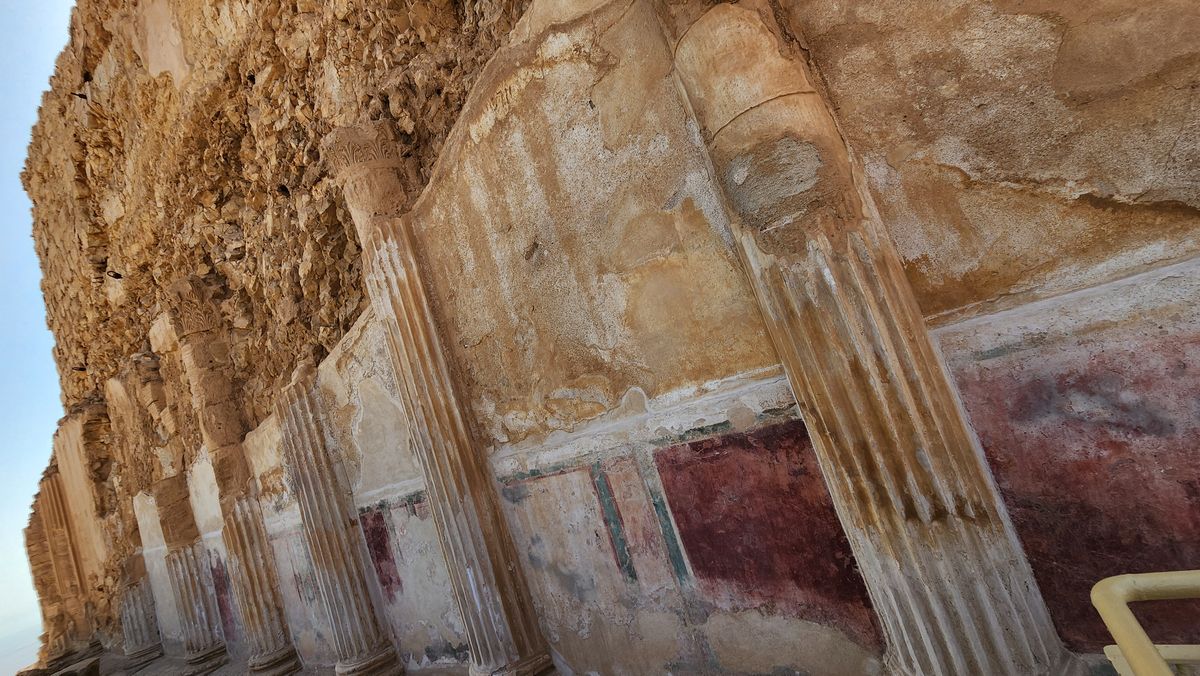
Herod built Masada over roughly two decades, beginning around 35 BCE. The mountain was already fortified during the Hasmonean period, but Herod transformed it into a royal retreat that combined military engineering with extraordinary luxury. He enclosed the entire summit in a casemate wall approximately 1,300 meters long, with 37 towers and rooms between the double walls that served as storage and barracks. The most remarkable structure is the Northern Palace, built across three terraces descending the cliff face: a private living quarters at the top, a reception hall in the middle, and a banquet hall at the bottom, all connected by a narrow staircase carved into the rock. On the western side he built a larger ceremonial palace. A Roman-style bathhouse with a hypocaust heating system, mosaic floors, and frescoed walls stood near the Northern Palace. Long storerooms, the largest measuring 70 meters, held enough food, wine, and weapons to sustain a siege for years.
The water system was perhaps the greatest engineering achievement. Masada has no natural water source. Herod’s engineers carved two channels along the mountain’s slopes to catch flash flood runoff from the wadis, directing the water into twelve large cisterns cut into the rock. The combined capacity was approximately 40,000 cubic meters. Laborers and pack animals carried water from the lower cisterns to the summit. A single heavy rain could fill the system with enough water to sustain over a thousand people for years. The cisterns supplied not only drinking water but also the bathhouse, a swimming pool, and ritual baths.
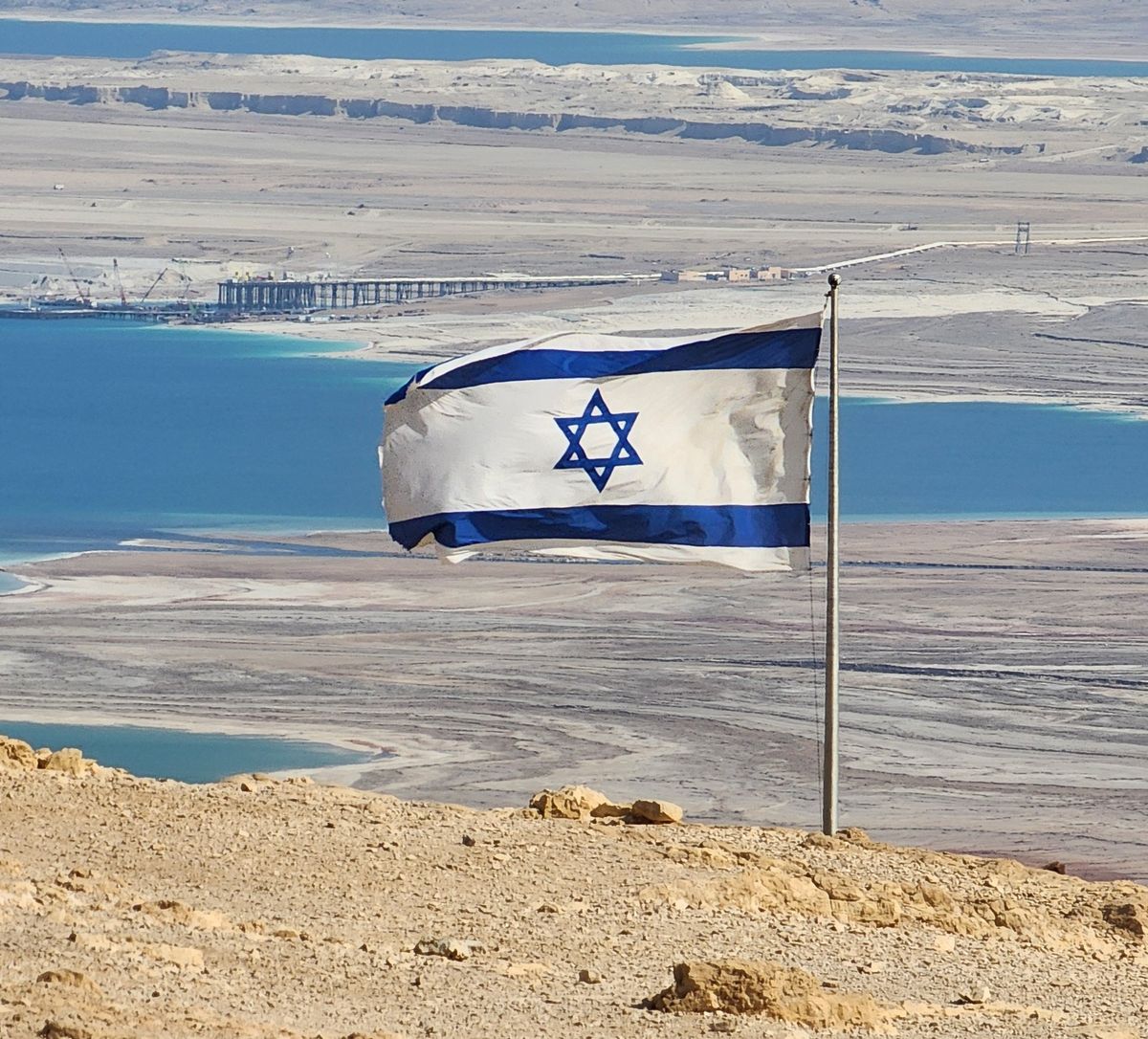
The Roman Siege of Masada Israel, 73 CE
In 66 CE, at the outbreak of the Jewish revolt against Rome, a group of Jewish rebels known as the Sicarii seized Masada from its small Roman garrison. The Sicarii, whose name comes from the Latin word for dagger, were the most radical faction of the revolt. After the fall of Jerusalem and the destruction of the Temple in 70 CE, Masada became their last stronghold. Their commander was Eleazar ben Ya’ir, a descendant of Judas of Galilee.
Rome sent the Tenth Legion under the governor Lucius Flavius Silva, along with auxiliary forces and Jewish prisoners of war, an army of approximately 15,000. Silva established eight camps around the base of the mountain, connected by a circumvallation wall stretching several kilometers, to prevent any escape. The outlines of these camps are still clearly visible from the summit, preserved by the dry climate, and they are among the best-surviving Roman siege works anywhere in the world.
The eastern cliffs were too steep to assault, so Silva chose the western side where the drop was only about 90 meters. His engineers built a massive ramp of stones and beaten earth, rising approximately 60 meters against the cliff face. When the ramp was complete, a battering ram was hauled to the top and broke through the casemate wall. The defenders built an emergency inner wall of wood and earth, but the Romans set it on fire. By nightfall, the breach was open.
The Last Night
What happened next is told only by Josephus, and every detail depends on his account. According to The Jewish War, Eleazar ben Ya’ir assembled his people and delivered two speeches. He argued that death as free people was preferable to slavery under Rome. He invoked the immortality of the soul. The speeches, scholars note, bear a strong imprint of Greek Stoic philosophy and are almost certainly Josephus’s literary composition rather than verbatim records, but the story they frame has shaped Jewish memory for two thousand years.
The defenders, Josephus writes, chose ten men by lot to carry out the killing of all the others. Each man embraced his family before the act. The ten then drew lots among themselves, and the last man set fire to the palace and took his own life. In total, 960 people died. Two women and five children survived by hiding in a cistern beneath the ground. When the Romans entered the next morning expecting a battle, they found only silence, fire, and the bodies of the dead. The survivors emerged and told the story.
Modern historians debate how much of this account is historical and how much is literary. The scholar Shaye Cohen identified sixteen parallel accounts in Greek and Roman literature of besieged populations choosing death over capture, suggesting Josephus may have applied a familiar literary pattern. The archaeologist Kenneth Atkinson has argued that there is no archaeological evidence confirming mass suicide. Others, including Jodi Magness, take the measured view that archaeology can neither prove nor disprove what Josephus described. What is beyond doubt is that a siege took place, that it ended in Roman victory, and that the story as told by Josephus became one of the founding narratives of Jewish identity.
What the Archaeologists Found
Yigael Yadin, the former IDF Chief of Staff turned archaeologist, excavated Masada over two seasons in 1963 to 1965 in one of the largest archaeological projects in Israeli history. Thousands of volunteers from around the world participated. The excavations uncovered Herod’s palaces, the bathhouse, the storerooms, and a synagogue that is one of the oldest ever discovered, dating to the late 1st century BCE and reused by the rebels during the revolt. Several ritual baths (mikvaot) built according to Jewish law showed that the defenders maintained religious observance even under siege.
Scroll fragments found in a genizah (a sacred storage pit) beneath the synagogue floor and at other locations across the site included portions of Genesis, Leviticus, Deuteronomy, Psalms, and a fragment of Ezekiel chapter 37, the vision of the dry bones in which God breathes life into a valley of skeletons and resurrects the dead. The discovery of this particular text at Masada, where hundreds had died, struck the excavation team as extraordinary. Whether the defenders chose to read this passage in their final days, or whether it was simply part of the synagogue collection, no one can say, but the coincidence is difficult to ignore. The scrolls also included portions of other texts, and the Hebrew original of the Wisdom of Ben Sira. Eleven pottery shards (ostraca) were found near the Northern Palace, each inscribed with a single name in the same handwriting. One reads “Ben Ya’ir,” almost certainly Eleazar ben Ya’ir himself. Yadin suggested these might be the lots described by Josephus, though later scholars are more cautious about that interpretation.
Twenty-five skeletal remains were found in a cave below the southern cliff, and three more on the lower terrace of the Northern Palace. The cave remains included pig bones, which raised the possibility that some of the dead were Roman soldiers rather than Jewish defenders. Yadin himself acknowledged he could not confirm the identity of the bones. Despite the uncertainty, the remains were given a state burial in 1969.
A Symbol and Its Evolution
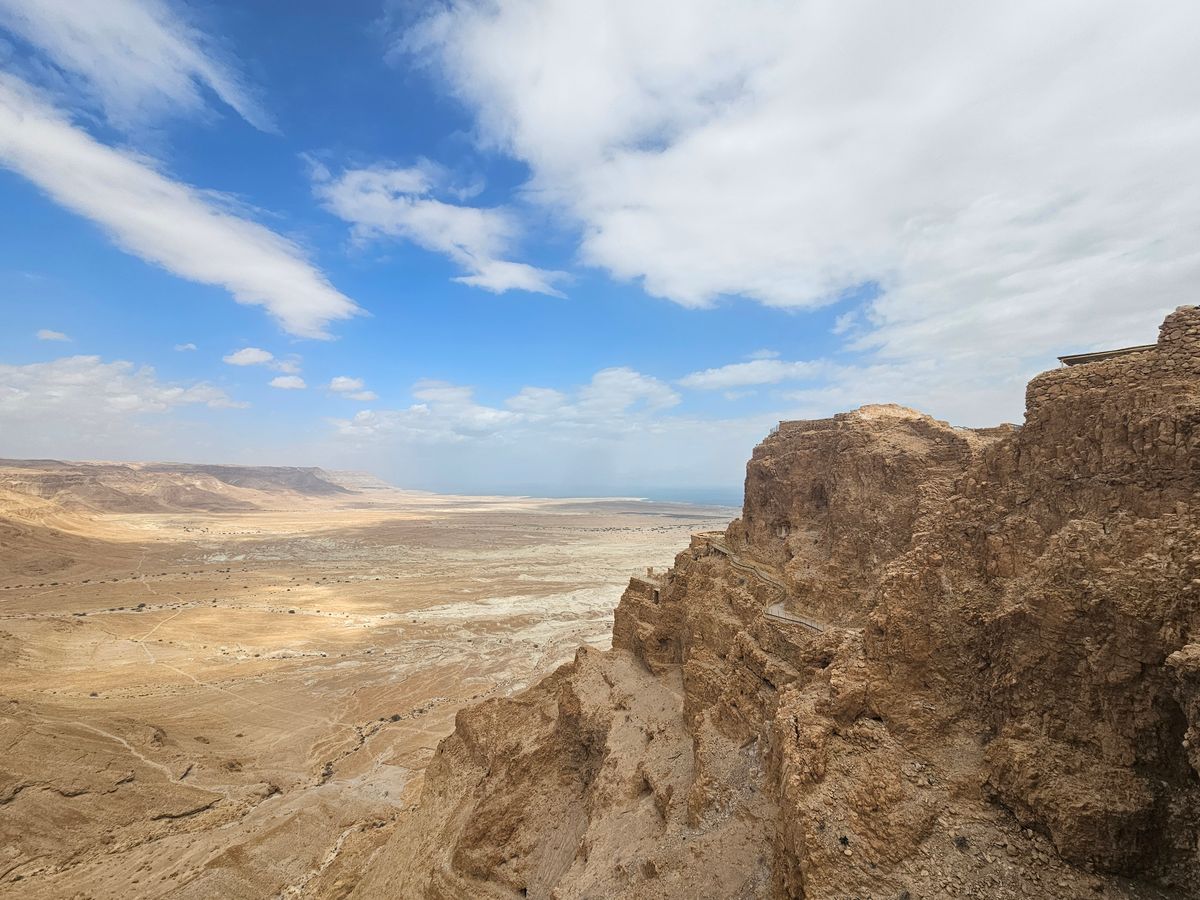
In 1927, the poet Yitzhak Lamdan published an epic poem called “Masada” that included the line that would become a national motto: “Masada shall not fall again.” The poem captured the spirit of a generation of Zionist pioneers who saw in the ancient story a mirror of their own determination. After the founding of the state, Masada became central to Israeli identity. For decades, elite IDF combat units held their swearing-in ceremonies on the summit at night, illuminated by torches, with soldiers repeating Lamdan’s words. The practice has since spread to other national sites, but the association between Masada and the idea that Jews would never again be defenseless remains powerful.
In recent decades, the narrative has been reexamined. Some Israelis and scholars question whether mass suicide should be celebrated as heroism. The conversation has shifted from uncritical glorification to a more nuanced engagement with what happened on this mountain and what it means. That complexity, rather than diminishing Masada, makes it more honest and more interesting.
Visit with Hoshen Tours
Most visitors approach from the east, where the Snake Path climbs approximately 350 meters in 45 to 90 minutes, depending on pace. The path opens before dawn, and watching the sunrise from the summit over the Dead Sea and the mountains of Jordan is one of the iconic experiences of any visit to Israel. A cable car operates from the eastern side for those who prefer not to hike. On the western side, the Roman Ramp path offers a shorter, easier ascent of about 20 minutes (note: the two sides are not connected by road and require separate approaches). The eight Roman camps and the circumvallation wall are visible from the summit, an extraordinary aerial view of ancient siege warfare preserved in the desert climate. A museum at the eastern entrance provides context, and a sound-and-light show is held on the western side on select evenings. Hoshen Tours visits Masada as part of Dead Sea and Ein Gedi itineraries, with a guide who brings the stones, the cisterns, and the story to life.
Masada is featured in many of our Holy Land tour packages. Whether you choose to hike the Snake Path or ride the cable car, this is a day you will never forget. Hoshen Tours often combines this site with Mount Sodom, St. George Monastery, and Good Samaritan Museum for a memorable day exploring the region.
Explore Our Tour Collection
Ready to experience Israel in true colors?
Plan Your TourPrivate tours designed around your interests, schedule, and pace.