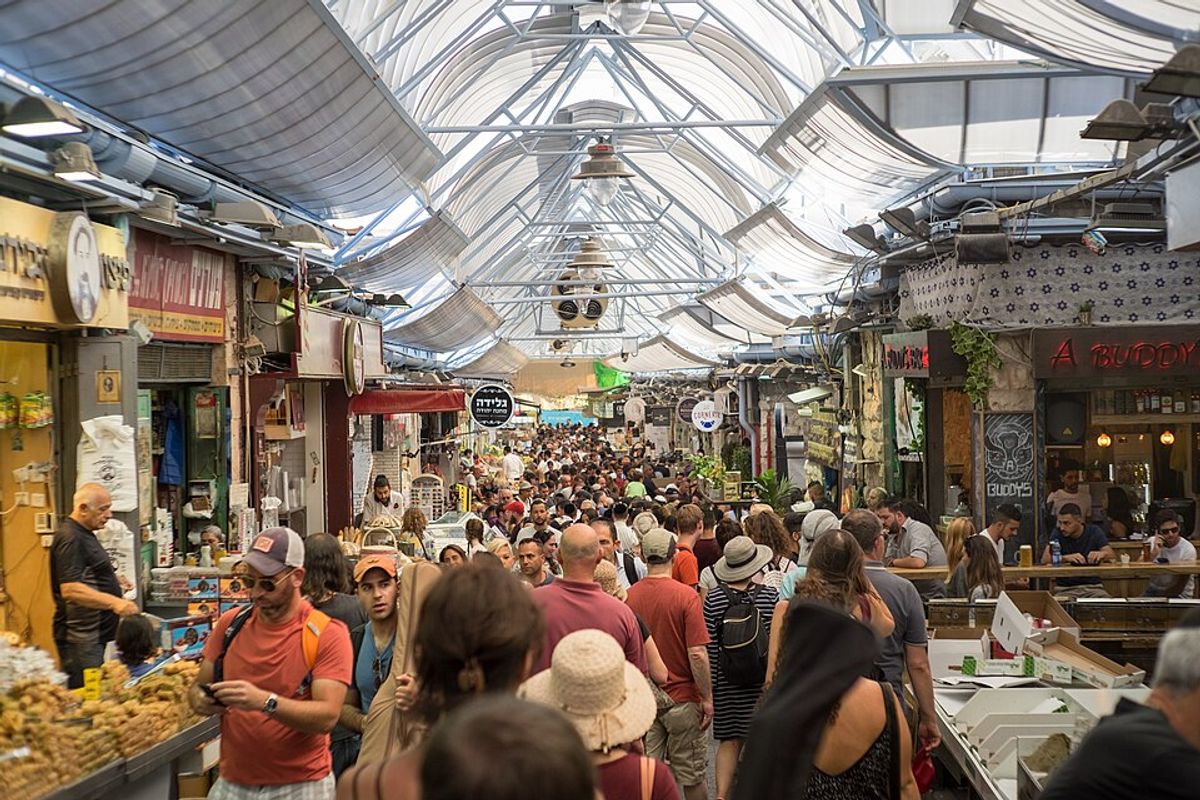
Machane Yehuda is Jerusalem’s main market, a place where the city’s real character is on display. The market has existed since the Ottoman period, when farmers from the surrounding villages brought their produce to sell in the open spaces west of the Old City. During the British Mandate, the market grew into a permanent covered bazaar as waves of immigration brought new communities and new foods to Jerusalem. Today it fills two parallel covered streets and dozens of side alleys with over 250 vendors selling produce, spices, baked goods, meat, fish, cheese, nuts, halva, and prepared food from every corner of the Israeli culinary spectrum.
The Daytime Market
During the day, Machane Yehuda is a working market where Jerusalemites do their shopping. The produce vendors stack pyramids of tomatoes, peppers, and pomegranates. The spice sellers offer za’atar, sumac, turmeric, and ras el hanout in heaping bins. The bakeries produce fresh challah, kubaneh, jachnun, and malawach. The butchers hang rows of lamb and beef. The fishmongers lay out whole fish on beds of ice. The halva shops slice endless varieties from blocks the size of suitcases. The energy peaks on Thursday afternoons and Friday mornings, when all of Jerusalem seems to converge here for Shabbat preparation, filling bags with challah, wine, flowers, and the ingredients for Friday night dinner.
The Halvaah VeHisachon
The heart of the market is the covered passage known as the Halvaah VeHisachon, the old “Loan and Savings” market, named after the workers’ credit cooperative (a communal savings and loan fund) that financed its construction in the early decades of the 20th century. The idea was simple: working-class families pooled their money into a shared fund, lent to each other at low interest, and used the profits to build market infrastructure that would serve the community. The name stuck long after the cooperative itself faded, and today most Jerusalemites use it without knowing what it means. This is the narrow, crowded main artery where the most established vendors stand behind the same stalls their families have operated for two or three generations. The iron roof keeps out the rain and traps the noise, and on a busy day the passage feels like a river of people, produce, and shouted prices flowing between the two open streets on either side.
The Nighttime Market
After the produce vendors close in the late afternoon, Machane Yehuda transforms into one of Jerusalem’s most vibrant nightlife areas. Bars, restaurants, and live music venues open in the same spaces that sold vegetables hours earlier. The market’s narrow streets fill with young people, and the atmosphere shifts from commercial bustle to social energy. The transformation is complete: the same stall that sold tomatoes at noon serves craft cocktails at midnight. This dual identity, traditional market by day and trendy bar scene by night, makes Machane Yehuda unique among the world’s great food markets.
The Street Art
The market’s shuttered storefronts are covered with street art, painted by the artist Solomon Souza. When the market is open, the shutters are rolled up and the art is hidden. When the market closes, a gallery of portraits appears: Golda Meir, Albert Einstein, Bob Marley, David Bowie, Maimonides, Theodor Herzl, and dozens of other faces covering the metal shutters. The art has become one of the market’s defining features, drawing visitors in the early evening specifically to see the shutters down and the portraits revealed.
Visit with Hoshen Tours
Machane Yehuda is where Jerusalem drops its ancient solemnity and becomes a loud, colorful, modern Middle Eastern city. Hoshen Tours walks visitors through the market’s narrow lanes, sampling spices, halva, and fresh-squeezed juices while explaining the waves of immigration that built each section. The market sits between Nachlaot‘s historic courtyards to the south and Mea Shearim‘s ultra-Orthodox world to the northeast, with HaNeviim Street connecting to the Old City beyond.
Explore Our Tour Collection
Ready to experience Israel in true colors?
Plan Your TourPrivate tours designed around your interests, schedule, and pace.