



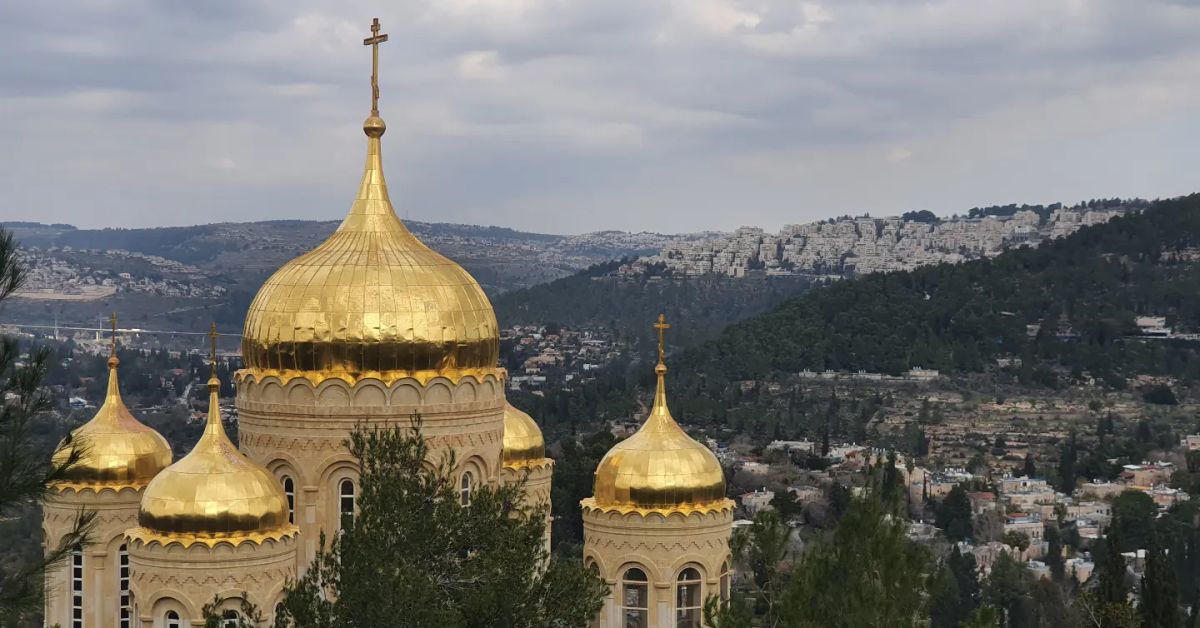
Ein Karem means “Spring of the Vineyard, and the name captures everything about this place: a perennial spring at the bottom of a valley, terraced hillsides planted with olives and grapes, and stone houses climbing the slopes on both sides. The village sits about six kilometers southwest of the Old City, and for centuries it was an Arab agricultural community, quiet, productive, and beautiful. Today it is one of the most charming neighborhoods in Jerusalem, home to artists, galleries, restaurants, and some of the most important Christian holy sites in the country. The story of how it got from one to the other passes through war, displacement, immigration, and reinvention.
The Village of Ein Karem Jerusalem
Ein Karem has been inhabited since antiquity, its life sustained by the spring that still flows in the heart of the valley. Some scholars have identified the site with the biblical Beth Haccerem (“House of the Vineyard, Jeremiah 6:1), though others place that settlement at nearby Ramat Rachel. For centuries, the village was home to a predominantly Christian Arab community with a Muslim minority. Under Ottoman and later British Mandate rule, residents cultivated olives, grapes, figs, and almonds on the elaborate stone terraces that shaped the hillsides. The houses were built of local Jerusalem stone with arched doorways and vaulted ceilings. By 1945, the village had a population of approximately 3,000. The spring was the center of daily life, where women gathered water and the rhythms of the village revolved around the seasons of planting and harvest.
1948
The war that created the State of Israel transformed Ein Karem. In April 1948, the massacre at neighboring Deir Yassin sent shockwaves through every Arab village in the Jerusalem area. Residents of Ein Karem began to leave, driven by fear of what might happen next. Over the following months, as fighting intensified along the western approaches to Jerusalem, more families departed. By the time Israeli forces entered the village in mid-July 1948, during operations to secure the Jerusalem corridor, Ein Karem was largely empty. The residents were not permitted to return after the war. Unlike many depopulated Arab villages from 1948, Ein Karem’s stone houses were not demolished, partly because of the significant Christian holy sites within the village and partly because the sturdy construction lent itself to reuse.
The Yemenite Families
Beginning in 1949, during the mass immigration of Jews from Yemen known as Operation Magic Carpet, Yemenite Jewish families were settled in the empty houses of Ein Karem. The lower part of the valley, near the spring, became known as Emek HaTeimanim, the Valley of the Yemenites. Several dozen families moved into the old stone houses, bringing with them a culture, a cuisine, and a tradition of craftsmanship that added a new layer to the village’s identity. Over the decades, as Ein Karem gentrified and property values rose, many of the original Yemenite families moved elsewhere, but the name Emek HaTeimanim persists, and some families remain.
The Christian Traditions
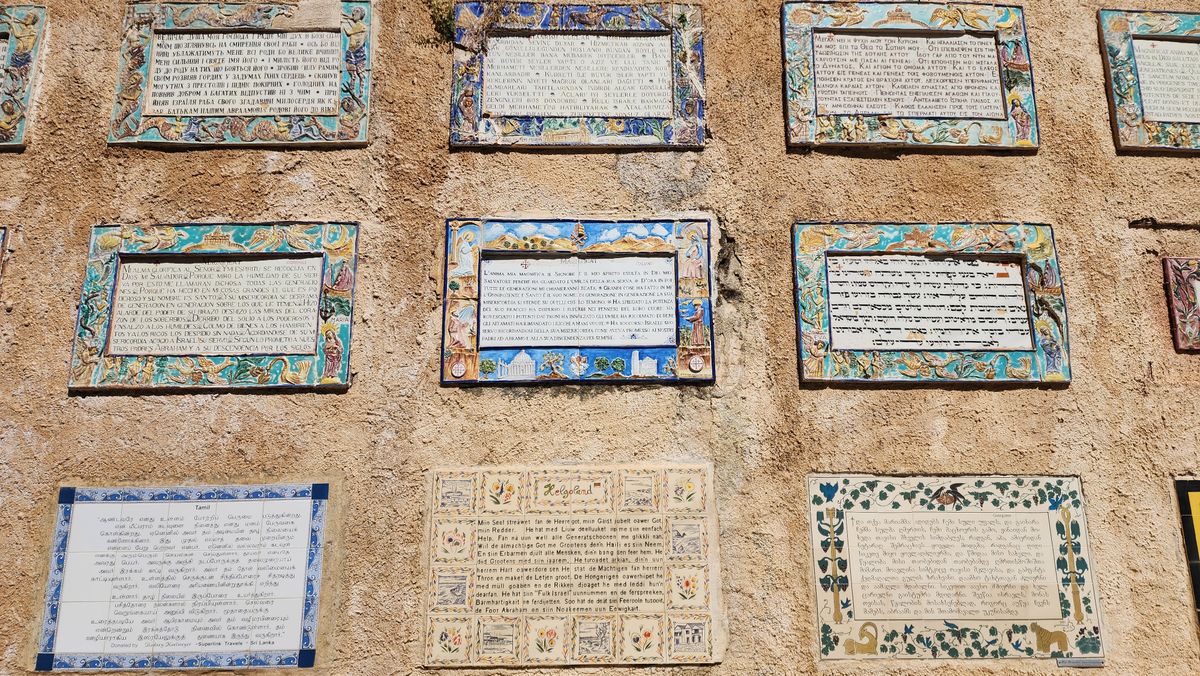
Christian tradition, dating to at least the Byzantine period (5th-6th century CE), identifies Ein Karem as the traditional birthplace of John the Baptist and the setting of the Visitation, the meeting between Mary, pregnant with Jesus, and her relative Elizabeth, pregnant with John. The Gospels do not name the village, saying only that Mary went “to a town in the hill country of Judea” (Luke 1:39), but Ein Karem has held this identification for over 1,500 years. The Church of St. John the Baptist, maintained by the Franciscans in the lower village, is believed to mark the birthplace of John, with a grotto beneath the church traditionally identified as the room where he was born. Up the hillside, the Church of the Visitation commemorates Mary’s visit to Elizabeth. Its courtyard walls display the Magnificat, Mary’s hymn of praise (Luke 1:46-55), in dozens of languages on ceramic tiles. Mary’s Spring, the ancient spring in the valley, is traditionally associated with the meeting of the two women. Above the village, the Gorny Convent, a Russian Orthodox community established in the 19th century, sits among the trees with its distinctive golden domes.
Ein Karem Today
Beginning in the 1960s, artists and sculptors began moving into Ein Karem’s stone houses, drawn by the beauty of the architecture, the village atmosphere, and rents that were at the time affordable. Galleries, studios, and restaurants followed. Today Ein Karem is one of the most sought-after addresses in Jerusalem, with property values among the highest in the city. The narrow lanes are lined with stone houses draped in bougainvillea and jasmine, the terraced hillsides are threaded with walking trails, and the spring still flows. On the hill above the village, the Hadassah Medical Center’s Ein Kerem campus is home to Chagall’s famous stained glass windows depicting the twelve tribes of Israel. The atmosphere is often described as Mediterranean, a hill village transplanted to the Judean Hills, and for visitors escaping the intensity of the Old City, Ein Karem offers something rare in Jerusalem: quiet.
Visit with Hoshen Tours
Ein Karem is a highlight for Christian pilgrims and for anyone who wants to experience the Judean Hills at their most beautiful. Hoshen Tours visits the churches, walks the lanes, and tells the full story of a village that has been home to Arab farmers, Yemenite immigrants, and Jerusalem artists, each leaving their mark on the same ancient stones.
Ready to experience Israel in true colors?
Plan Your TourPrivate tours designed around your interests, schedule, and pace.