



Tel Be’er Sheva is the biblical city of Beersheba, the southernmost significant city of ancient Israel, whose name gave rise to the expression “from Dan to Beersheba” (Judges 20:1), meaning the entire length of the land. The tel, a UNESCO World Heritage Site since 2005, sits east of the modern city and preserves one of the most remarkably well-planned Israelite cities ever uncovered from the Iron Age. Of the more than 200 tels in Israel, Beersheba was singled out by UNESCO as one of the most representative, with substantial remains that illuminate both the biblical narrative and the reality of daily life in the Kingdom of Judah.
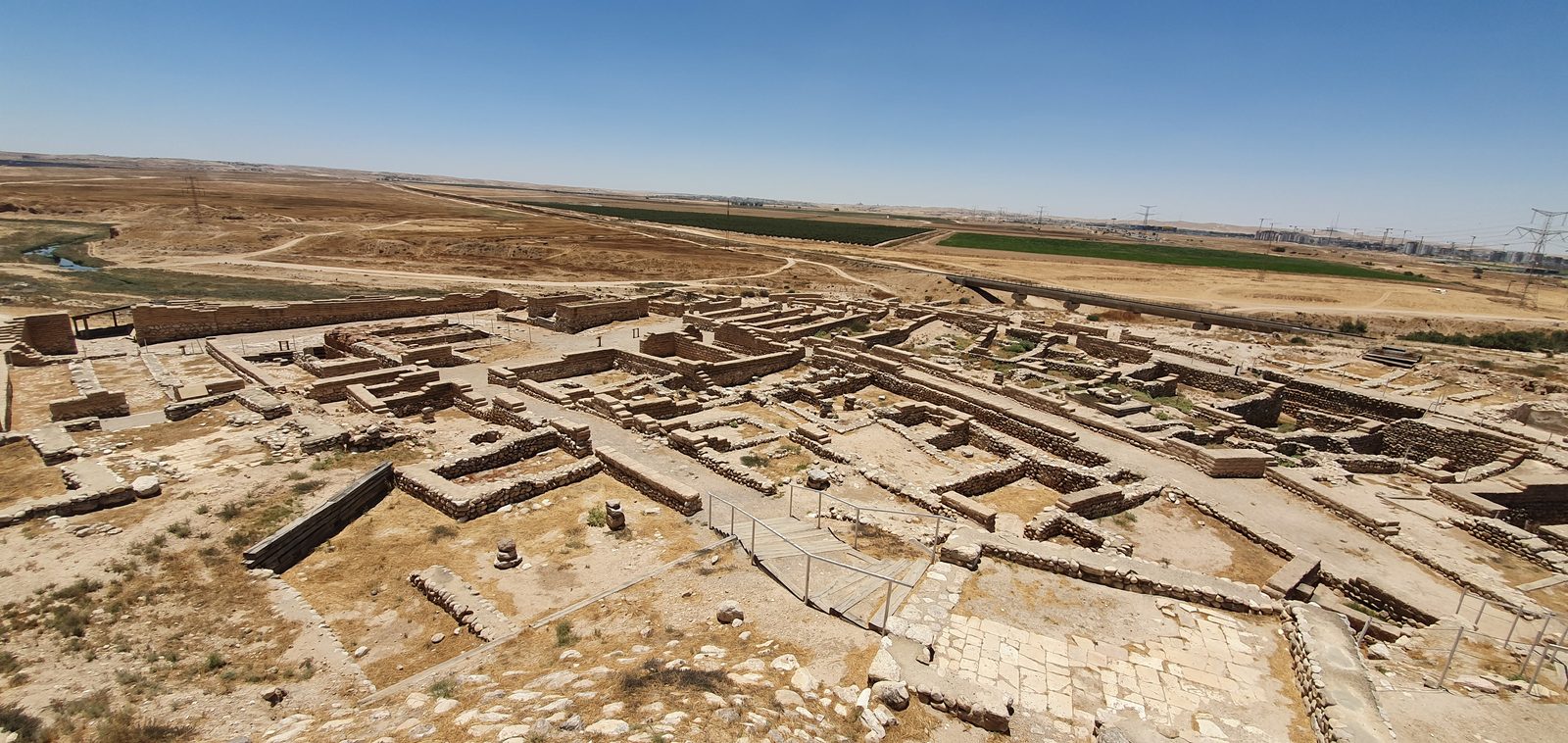
Abraham’s Well at Tel Be’er Sheva: Abraham’s Well and the Horned Altar Negev
Beersheba is deeply connected to the patriarchs. According to the Book of Genesis, Abraham dug a well here and made a covenant with Abimelech, the Philistine king of Gerar, after a dispute over water rights, a conflict as old as the desert itself. Abraham gave Abimelech seven lambs as a witness to his ownership of the well, and the two swore an oath of peace: “Abraham planted a tamarisk tree in Beersheba, and there he called on the name of the Lord, the Eternal God” (Genesis 21:33). The name “Beersheba” means either “well of the oath” or “well of seven,” referring to those seven lambs (Genesis 21:28–31).
The patriarchal connection runs deep. the Bible relates that Isaac also lived here and received God’s promise: “I am the God of your father Abraham. Do not be afraid, for I am with you” (Genesis 26:24). Isaac’s servants dug a well and he named it Shibah, another echo of the oath and the number seven. And it was from Beersheba that Jacob set out on the journey during which he dreamed of a ladder reaching to heaven (Genesis 28:10). For three generations, Beersheba was where the patriarchs made covenants, dug wells, and encountered God.
The Israelite City
The Iron Age city at Tel Be’er Sheva, dating from the 10th to the late 7th century BCE, is one of the finest examples of urban planning in the biblical world. The city was built around a circular peripheral street that ran like a ring inside the fortification wall, with smaller streets branching inward toward the center of the city. About twenty “four-room houses”, the characteristic Israelite dwelling, with three parallel rooms and a perpendicular back room, were built along the perimeter, their back walls doubling as part of the casemate fortification wall. This integration of residential and defensive architecture into a single system was a hallmark of royal Judahite planning.
The city included a governor’s palace with an entrance corridor, ceremonial halls, living quarters, and storerooms, the administrative heart of the Negev frontier. A large storehouse complex of approximately 600 square meters, divided into long halls, contained pottery vessels and supplies for the garrison and the surrounding region. Beersheba was not just a city; it was a military and administrative center controlling the southern approaches to the Kingdom of Judah.
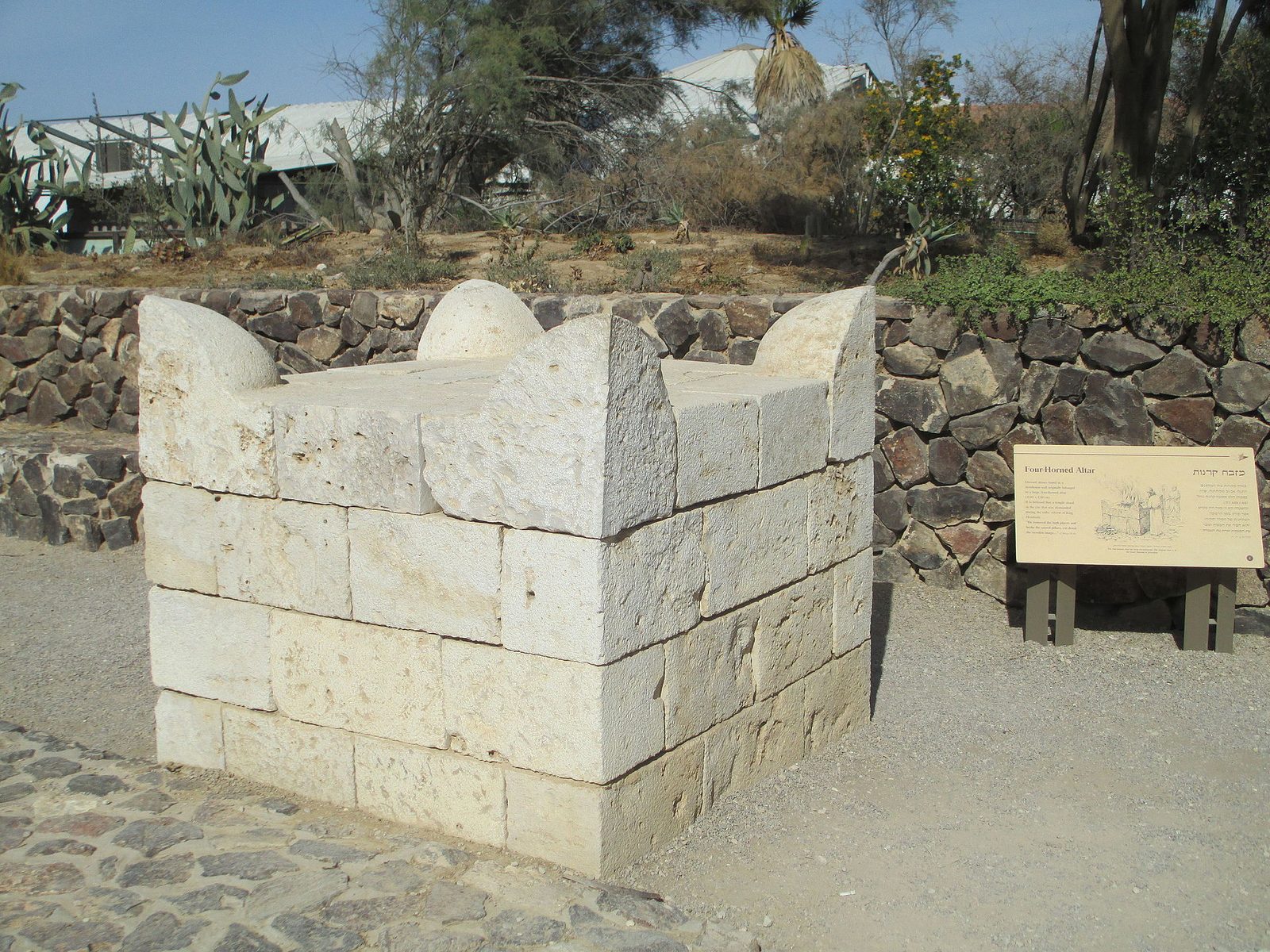
The Horned Altar
The most dramatic discovery at Tel Be’er Sheva is a large stone altar with horns at its four corners, found dismantled and reused as building material in the walls of a storehouse. The altar was carefully reconstructed from its scattered stones; a replica stands at the site today, while the original is displayed at the Israel Museum in Jerusalem. The horned altar is one of only a handful ever found in Israel and matches the biblical description of sacrificial altars used in Israelite worship. The horns were not decorative, they played a central role in the sacrificial ritual. The priest would smear the blood of the offering on the horns of the altar (Leviticus 4:7), and the horns also served as a place of asylum: a person fleeing for his life could grasp the horns of the altar and claim sanctuary.
When Adonijah feared Solomon after his failed bid for the throne, “he went and took hold of the horns of the altar” (1 Kings 1:50), and Solomon spared him. But when Joab, guilty of murder, tried the same thing, Solomon ordered him killed at the altar itself, the horns could not protect a man whose crimes were too great (1 Kings 2:28–34). The horns of the altar marked the boundary between mercy and justice.
The deliberate dismantling of the altar is consistent with the religious reforms of King Hezekiah in the late 8th century BCE: “He removed the high places, smashed the sacred stones and cut down the Asherah poles” (2 Kings 18:4). Like the temple at nearby Tel Arad the Beersheba altar is physical evidence of the centralization of worship in Jerusalem, the moment when local shrines across Judah were shut down and all sacrifice was directed to the Temple in Jerusalem. The stones were not discarded; they were repurposed into a wall, suggesting that even in reform, the sacred material was treated with a degree of respect.
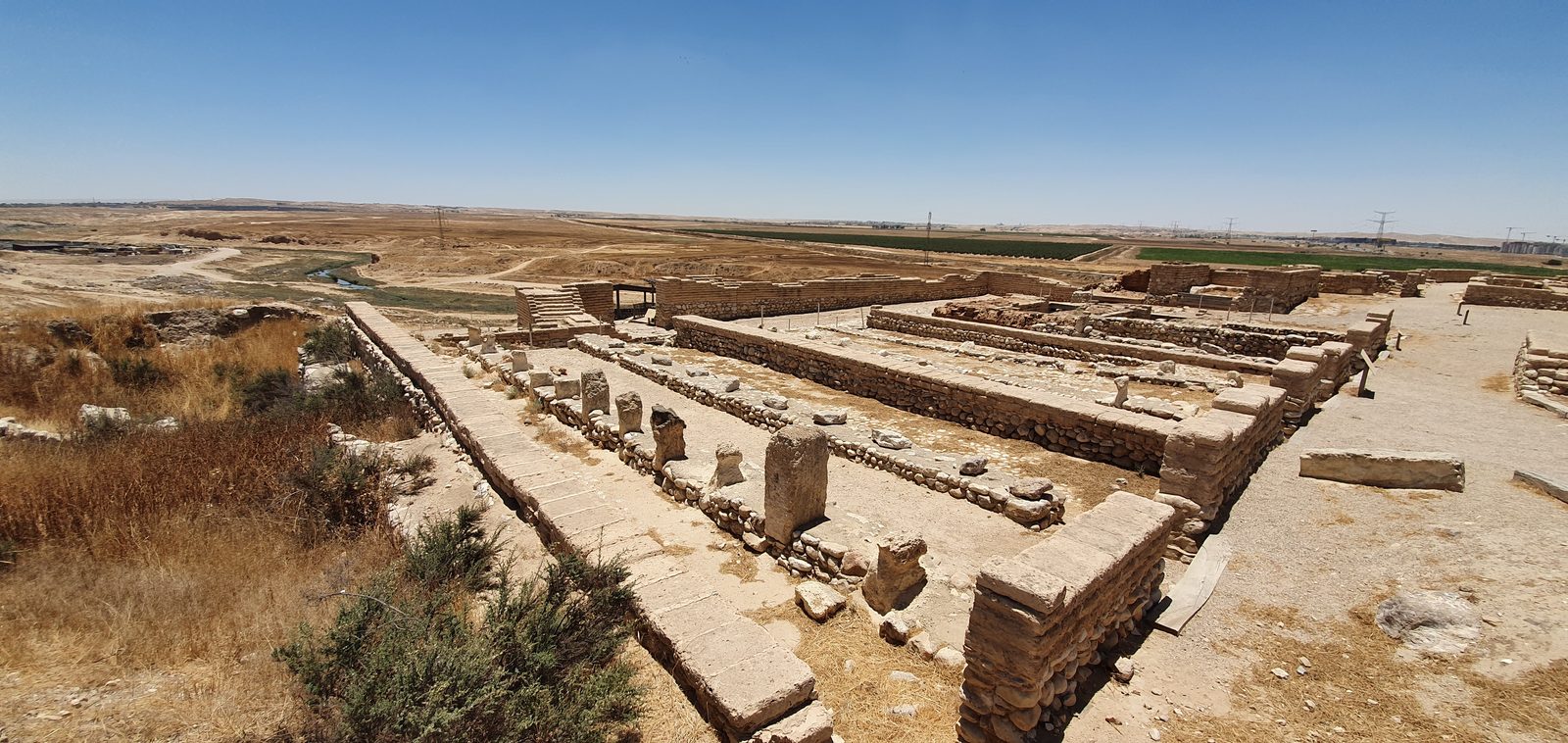
The 69-Meter Well and Water System
The water system at Tel Be’er Sheva is an engineering marvel that made urban life possible in the desert. A deep well, approximately 69 meters (226 feet), reached the water table far below the surface, providing a permanent water source. In addition, the city built an underground reservoir on its northeastern corner, fed by channels that collected seasonal floodwater from the Hebron stream and surplus rainfall from the city itself. The shaft descends about 17 meters, with stairs along its sides providing access. During a siege, the city could survive on stored water without ever leaving its walls.
Visitors today can descend into the water system and walk through the underground chambers, experiencing the cool, dark space that once meant the difference between survival and surrender for the city’s inhabitants.
Visit with Hoshen Tours
Tel Be’er Sheva anchors any visit to the northern Negev. Hoshen Tours pairs it with the Israelite temple at Tel Arad, the hospitality of Negev Bedouin communities communities, the the Negev Brigade Memorial, and the desert homestead of Sde Boker. Abraham’s well and the Horned Altar come to life with a knowledgeable guide.
Ready to experience Israel in true colors?
Plan Your TourPrivate tours designed around your interests, schedule, and pace.