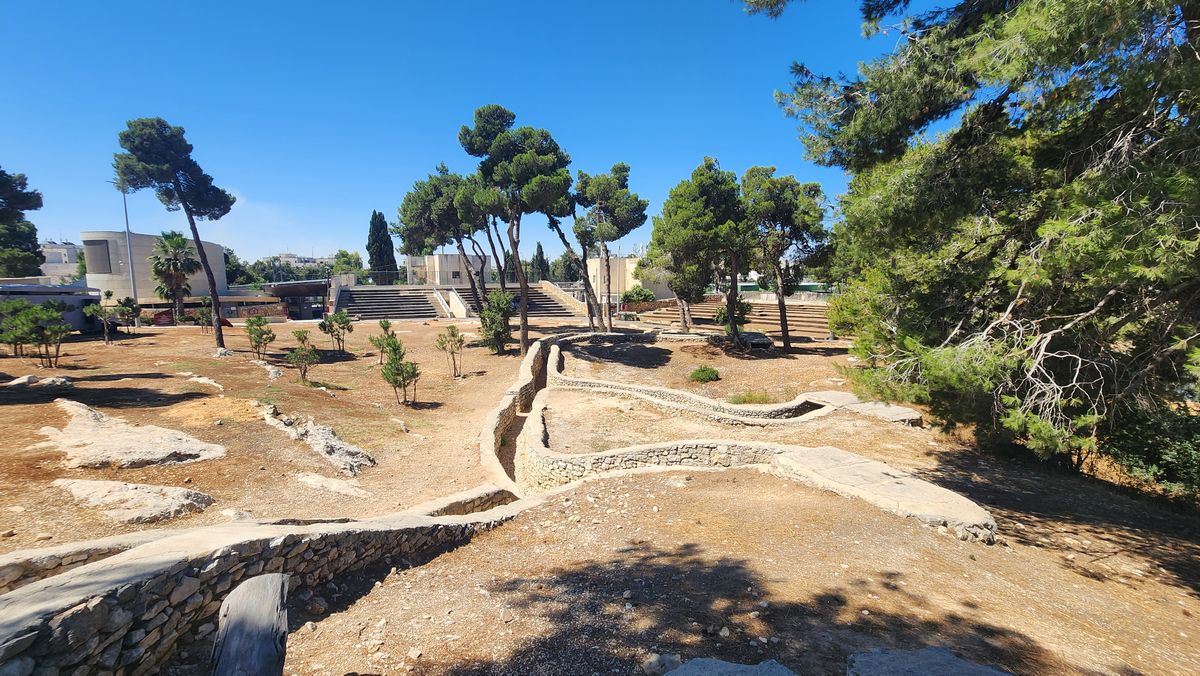
Ammunition Hill (Givat HaTachmoshet) is the site of the bloodiest battle of the Six-Day War in Jerusalem. On the night of June 5–6, 1967, Israeli paratroopers of the 66th Battalion stormed this heavily fortified Jordanian military position in a close-quarters battle that lasted four and a half hours and cost 36 Israeli and 71 Jordanian lives. The hill is now a memorial and museum that preserves the bunkers, trenches, and fortifications exactly as they were on the night of the battle.
The Strategic Position
From 1948 to 1967, Ammunition Hill was the strongest Jordanian military position in Jerusalem. The hilltop, originally a British Mandate police training ground, had been fortified by the Jordanian Arab Legion over 19 years of division into a complex of concrete bunkers, communication trenches, machine gun nests, and underground shelters, all interconnected by a trench system that allowed defenders to move between positions without exposing themselves to fire. The position controlled the road between the Israeli enclave on Mount Scopus and the rest of Israeli-held West Jerusalem, making it a critical obstacle to any attempt to reunify the city.
The Night of June 5–6, 1967
The task of capturing the hill was given to the 3rd Company of the 66th Battalion, part of the 55th Paratroopers Brigade commanded by Colonel Mordechai (Motta) Gur. The attack began at 2:30 AM. Israeli intelligence had expected the nearby police academy to be the main Jordanian strongpoint, but when the paratroopers stormed it, they found it empty. The Jordanian soldiers had taken shelter from the preliminary artillery barrage inside the bunker system on the hill itself. This meant that the defending force was far larger than anticipated, roughly equal in size to the attacking force, rather than a third of it as had been expected.
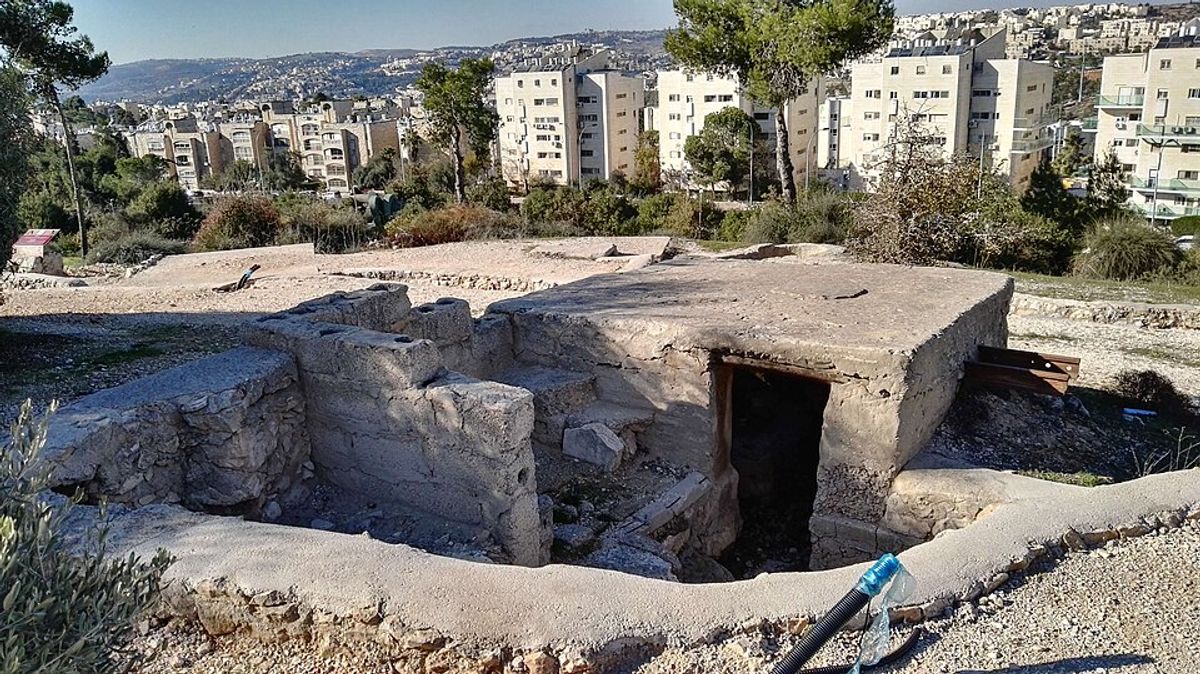
What followed was four and a half hours of the most intense close-quarters combat in Israel’s military history. The paratroopers advanced through the trenches meter by meter, clearing each position with grenades and automatic fire, often fighting around blind corners at a distance of arm’s length. In the narrow trenches, there was no room to maneuver, no way to call in air support, no way to outflank. Every bunker had to be taken head-on. The darkness, the smoke, and the confusion made it nearly impossible to distinguish friend from foe. Soldiers fought with knives, rifle butts, and bare hands when ammunition ran out.
By dawn, the hill was in Israeli hands. Thirty-six paratroopers and seventy-one Jordanian soldiers lay dead. The road to the Old City was open. Later that day, Motta Gur’s paratroopers reached the Western Wall, and his radio transmission, “The Temple Mount is in our hands,” became one of the most iconic moments in Israeli history. But it was here, on this hill, in these trenches, that the price was paid.
The Trenches Today
The preserved trench system allows visitors to walk the same route the paratroopers fought through on that night. The bunkers are still intact, the firing slits still face the approaches, and the concrete walls still bear the marks of the battle. Walking through the narrow passages, you understand physically why the battle was so costly: every corner is a blind turn, every bunker entrance a potential ambush. The trenches are preserved exactly as they were in 1967. Nothing has been cleaned up or softened. This is not a reconstruction; it is the actual battlefield.
The claustrophobia of the narrow passages, the low ceilings of the bunkers, and the sharp turns that hide what comes next make the experience visceral in a way that no museum display can replicate. For Israeli soldiers and officers, walking the trenches of Ammunition Hill is a rite of passage. Swearing-in ceremonies for combat units are still held here, connecting each new generation of soldiers to the men who fought in these trenches over half a century ago.
The Museum and Memorial
The museum tells the story of the battle through personal accounts, photographs, weapons, and a detailed multimedia presentation that recreates the night hour by hour. The voices of the soldiers who fought here, recorded in interviews years after the battle, guide visitors through the events, from the briefing before the attack to the moment the hill was secured at dawn.
The memorial wall displays the names and photographs of the 182 Israeli soldiers who fell in the battle for Jerusalem across all sectors, not only at Ammunition Hill but at the Old City, the Augusta Victoria compound, and other positions throughout the city. Each face is accompanied by a brief biography: name, age, hometown, unit. Many were 19 or 20 years old. The power of the museum lies not in grand narratives but in individual stories: the soldiers who went into the trenches and the ones who did not come out.
Visit with Hoshen Tours
Ammunition Hill preserves the trenches and bunkers of the bloodiest battle of the 1967 Six-Day War in Jerusalem. Hoshen Tours walks visitors through the restored Jordanian fortifications while telling the stories of the paratroopers who fought here. The site connects to the broader story of divided Jerusalem, which visitors can explore further at Musrara along the former border, the Zion Gate battle scars, and the Sheikh Jarrah neighborhood nearby.
Explore Our Tour Collection
Ready to experience Israel in true colors?
Plan Your TourPrivate tours designed around your interests, schedule, and pace.