



Sataf is a restored spring-fed agricultural site in the Jerusalem hills, one of the most beautiful nature reserves near the city and a living demonstration of the farming methods described in the Bible. Thousands of visitors come each year to walk the trails, swim in the spring pools, and see the ancient terraces where the Seven Species of the land of Israel still grow. Sataf is also a story about the land itself: how it was farmed in biblical times, how it was reforested in modern times, and the organization that made it happen.
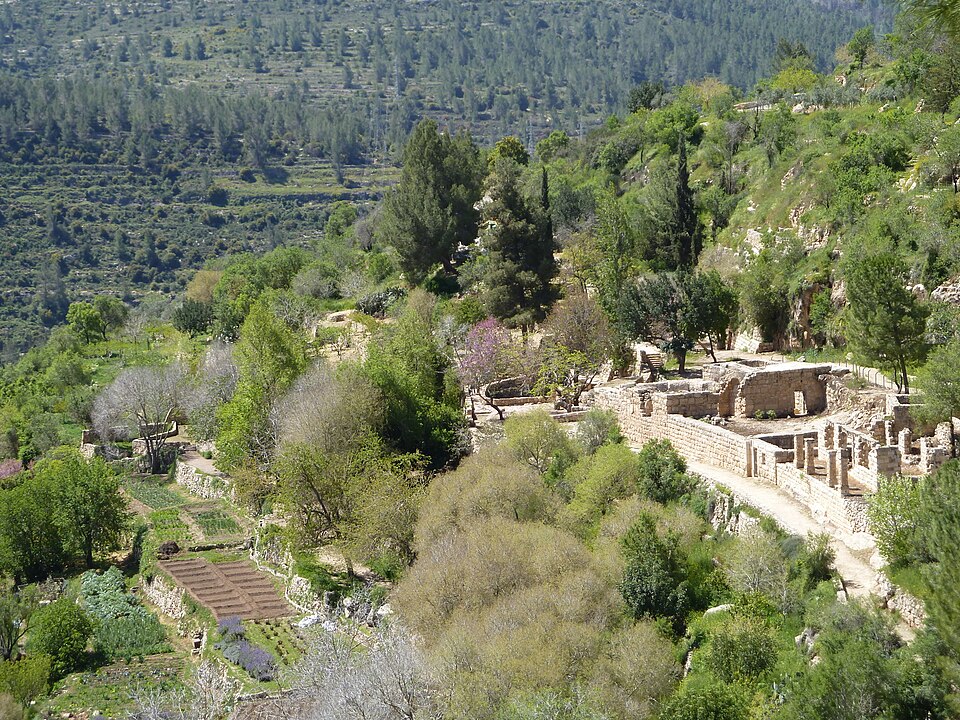
Ancient Terraces and Springs
The hillsides at Sataf are covered with ancient agricultural terraces, stone walls built into the slopes to create flat planting surfaces that prevent erosion and retain moisture. The terraces, some dating back over 2,000 years, were the primary method of farming in the rocky Judean hills. Without terracing, the thin soil would wash away in the winter rains. With terraces, the hills became productive farmland, growing the crops that sustained the population of ancient Judah.
Farmer’s Labor
The terraces at Sataf are a monument to the backbreaking work of the ancient farmer. The prophet Isaiah describes the effort required to prepare a hillside vineyard: “My loved one had a vineyard on a fertile hillside. He dug it up and cleared it of stones and planted it with the choicest vines. He built a watchtower in it and cut out a winepress as well” (Isaiah 5:1-2). Every step Isaiah lists is visible at Sataf: the digging, the stone-clearing (the terrace walls are built from the very stones cleared from the planting beds), the planting, the watchtower (foundations of ancient watchtowers are found throughout the Judean hills), and the wine press (rock-cut wine presses are carved into the bedrock at dozens of sites in the area). Farming these hills was not romantic. It was stone-by-stone, terrace-by-terrace labor that transformed a rocky wilderness into a land flowing with milk and honey.
But Isaiah’s poem is more than an agricultural description. The Song of the Vineyard (Shirat HaKerem) is one of the great metaphors of the Hebrew Bible. After describing the farmer’s exhausting labor, Isaiah reveals what the vineyard represents: “The vineyard of the Lord Almighty is the nation of Israel, and the people of Judah are the vines he delighted in. And he looked for justice, but saw bloodshed; for righteousness, but heard cries of distress” (Isaiah 5:7). God is the farmer. Israel is the vineyard. The digging, the stone-clearing, the planting, the watchtower, all the work visible in the terraces at Sataf, is a metaphor for everything God invested in his people. He expected justice and righteousness; he received violence and oppression. Standing among the terraces at Sataf, where the physical labor of farming these hills is written in every stone wall, the weight of Isaiah’s metaphor becomes real: this is what it costs to cultivate a vineyard, and this is what it means when the vineyard fails to produce good fruit.
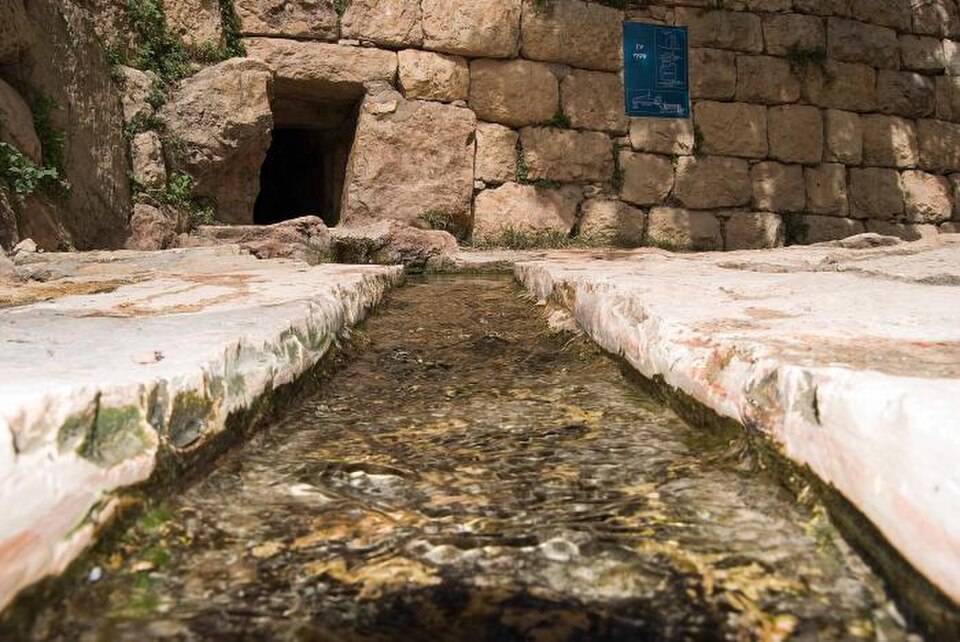
Shalchin and Ba’al: Two Ways to Farm
The Bible distinguishes between two types of agriculture that are both visible at Sataf. Shalchin (irrigated agriculture) uses water from springs and channels to water crops directly. The terraces at Sataf fed by the two natural springs are shalchin: the water flows through ancient channels to the planting beds, allowing the cultivation of vegetables, fruits, and herbs year-round. Ba’al (rain-fed agriculture) depends entirely on rainfall, with no irrigation. The hillsides above the springs, where grain, olive trees, and grapevines grow, are ba’al: they rely on the seasonal rains that fall between October and April. Moses described the Promised Land in these terms: “The land you are entering to take over is not like the land of Egypt, where you planted your seed and irrigated it by foot as in a vegetable garden. But the land you are crossing the Jordan to take possession of is a land of mountains and valleys that drinks rain from heaven” (Deuteronomy 11:10-11).
Seven Species
The terraces at Sataf grow the Seven Species that the Bible lists as the blessings of the land: “A land with wheat and barley, vines and fig trees, pomegranates, olive oil and honey [date honey]” (Deuteronomy 8:8). Walking through the terraces, you see each of these species growing in the landscape they were meant to occupy, and you understand the agricultural system that made the Judean hills habitable.
JNF and the Reforestation of the Judean Hills
The forests surrounding Sataf were planted by the Jewish National Fund (Keren Kayemeth LeIsrael, KKL-JNF), the organization founded in 1901 to purchase and develop land in the Land of Israel. Since its founding in 1901, JNF has planted over 250 million trees across Israel, transforming barren hillsides into forests. The Jerusalem hills, which were almost completely deforested under Ottoman rule (trees were cut for fuel and railroad construction), are now covered with planted pine, cypress, and oak forests that are among the most visible achievements of the Zionist project.
The Blue Box (Kupa Kchula), a small blue-and-white tin collection box, became one of the most recognizable symbols of the Zionist movement. Jewish families around the world kept a Blue Box in their homes and dropped coins into it to fund land purchases and tree planting in Israel. At its peak, over a million Blue Boxes were in circulation worldwide. The forests at Sataf and across the Jerusalem hills are, in a very real sense, the product of those coins.
Springs and Trails
Two natural springs, Ein Sataf and Ein Bikura, feed the terraces and pools. The trails at Sataf range from easy walks along the terraces to longer hikes through the surrounding forest. The spring pools are popular for wading, and the shaded picnic areas are among the best near Jerusalem. On weekends and holidays, the reserve fills with families, hikers, and school groups.
Sataf preserves ancient agricultural terraces and the story of JNF’s reforestation efforts. Hoshen Tours pairs it with the Crusader spring at Ein Hemed, the Stalactite Cave, the nature reserve at HaMasrek Nature Reserve, and the biblical landscape reserve at Neot Kedumim.
Explore Our Tour Collection
Ready to experience Israel in true colors?
Plan Your TourPrivate tours designed around your interests, schedule, and pace.