



On the northeastern slope of Mount Ebal, overlooking the valley of Shechem and the slopes of Mount Gerizim, the archaeologist Adam Zertal discovered a large stone structure in 1980 that he identified as Joshua’s altar, the altar described in the Bible as built by Joshua after the conquest of Canaan. The identification is one of the most debated claims in biblical archaeology, generating fierce scholarly argument and drawing visitors who want to see for themselves.
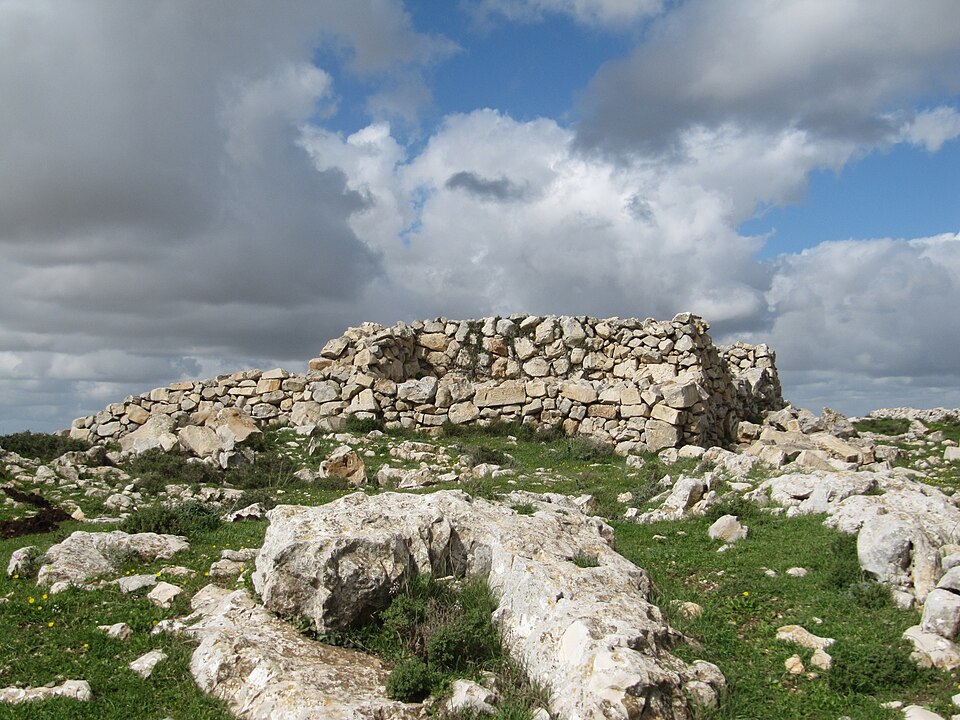
Biblical Account at Joshua’s Altar on Mount Ebal
The Book of Deuteronomy commands that upon entering the land, Israel must build an altar on Mount Ebal and offer sacrifices there (Deuteronomy 27:4-7). The Book of Joshua describes the fulfillment: “Then Joshua built on Mount Ebal an altar to the Lord, the God of Israel, as Moses the servant of the Lord had commanded the Israelites. He built it according to what is written in the Book of the Law of Moses: an altar of uncut stones, on which no iron tool had been used” (Joshua 8:30-31). After building the altar, Joshua copied the law of Moses onto stones and read it aloud to all Israel. Half the tribes stood on Mount Gerizim for the blessing and half on Mount Ebal for the curse, with the Ark of the Covenant in the valley between them (Joshua 8:33-35). This great covenant ceremony was a defining moment in the biblical narrative of Israel’s entry into the land.
Adam Zertal’s Discovery on Mount Ebal
Zertal’s structure is a large rectangular installation, approximately 9 by 7 meters, built of unworked stones (consistent with the biblical requirement) and filled with ash, animal bones (predominantly young male cattle, sheep, and goats, consistent with burnt offerings), and pottery dating to the Iron Age I period (approximately 1200 BCE). The structure has a ramp rather than steps, consistent with the biblical prohibition: “Do not go up to my altar on steps, or your private parts may be exposed” (Exodus 20:26). Zertal identified two construction phases: an earlier, smaller round altar enclosed within the later rectangular structure. Notably, no domestic artifacts such as cooking pots, spinning whorls, or storage jars were found, distinguishing the site from typical settlements or farmsteads. The animal bones showed signs of burning at high temperatures consistent with open-air incineration rather than cooking.
Altar or Iron Age Farm?
Zertal’s identification has been challenged by scholars who see the structure as a watchtower, a farmstead, or a non-Israelite installation. Archaeologist Aharon Kempinski proposed it was simply a farm tower, while others have suggested it may have been a cultic site but not necessarily Israelite or connected to Joshua. The dating is broadly correct for the period of the Israelite settlement, but whether the structure is an altar, and whether it is Joshua’s altar specifically, remains unproven. What is not debated is the structure’s location (on the slopes of Mount Ebal, exactly where Joshua 8:30 says the altar was built), its construction (unworked stones), and the animal bones and ash (consistent with sacrificial burning).
Joshua’s Altar Today
Visitors to the site can see the excavated stone structure, now partially exposed and protected by a metal covering. The surrounding landscape is largely unchanged from antiquity: the barren, rocky slopes of Mount Ebal contrast with the greener slopes of Mount Gerizim across the valley. Interpretive signs explain the find, and the panoramic view over Shechem below provides a powerful sense of the biblical geography described in Joshua and Deuteronomy. Access to the site requires coordination due to its location in the Samarian highlands.
Visit with Hoshen Tours
Joshua’s Altar on Mount Ebal is one of the most debated archaeological sites in the country. Hoshen Tours pairs it with the broader story of Mount Gerizim and Mount Ebal, the patriarchal site of Beit El, the overlook at Har Bracha, and Abraham’s first camp at Alon Moreh.
Explore Our Tour Collection
Ready to experience Israel in true colors?
Plan Your TourPrivate tours designed around your interests, schedule, and pace.