



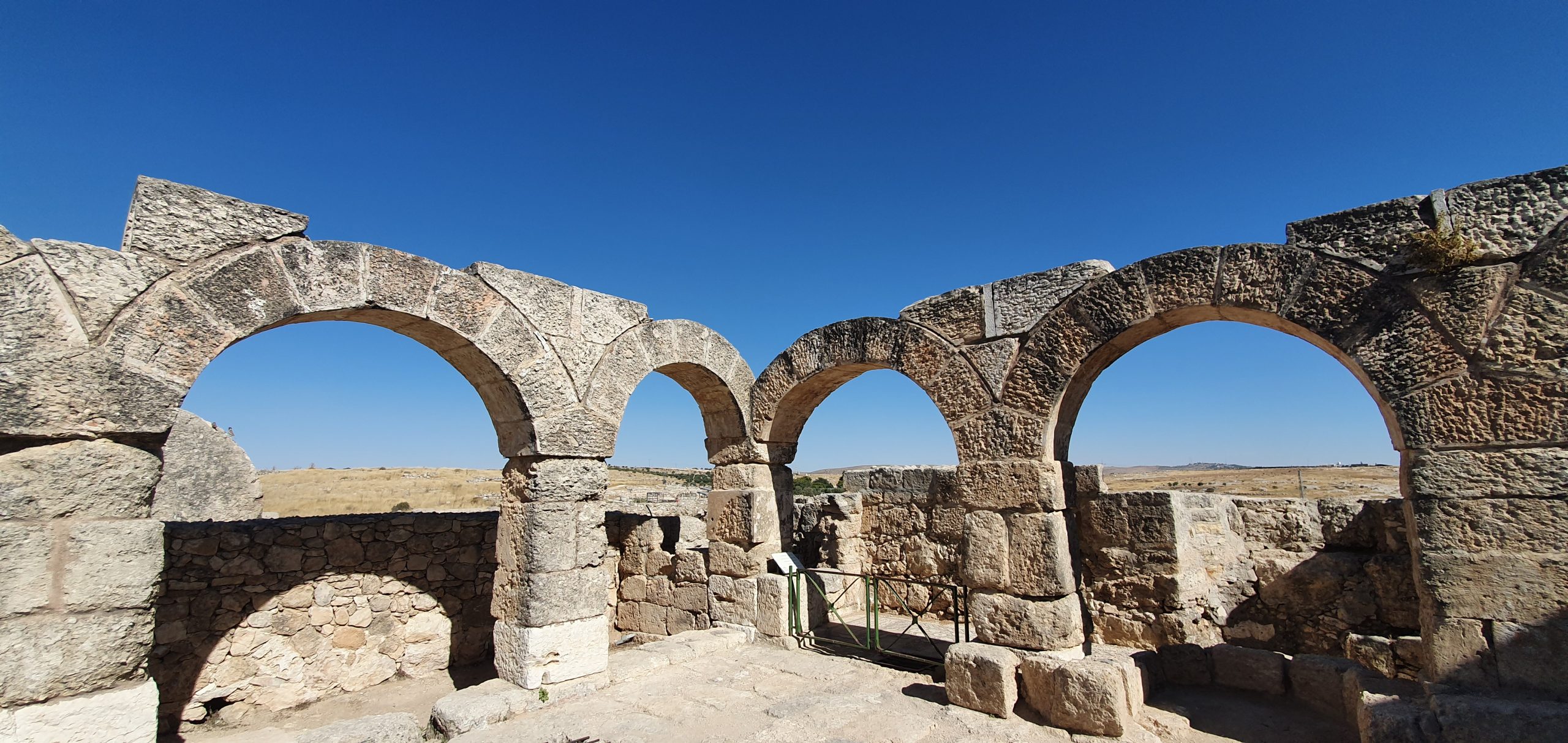
Susya (Susiya, Horvat Susya) is the remains of a Jewish city in the southern Hebron hills that flourished from the Roman period through the early Islamic period (4th-9th century CE), one of the most significant Jewish archaeological sites in the Judean heartland. The city, built on a hilltop overlooking the desert fringe, contains a monumental synagogue with elaborate mosaics, residential quarters, industrial installations, ritual baths, and an extensive network of underground caves and tunnels that served as hiding places during times of persecution.
The Susya Synagogue
The synagogue at Susya is one of the largest and finest ancient synagogues in the southern Hebron hills. The building, measuring approximately 16 by 9 meters, was oriented northward toward Jerusalem, like the Ein Gedi synagogue. The mosaic floor features a Torah ark flanked by menorot, a zodiac wheel (partially preserved), Daniel in the lions’ den, and geometric and floral patterns. The synagogue went through several building phases, reflecting the prosperity and continuity of the Jewish community over centuries.
Jewish Community
Susya was a thriving Jewish agricultural town in a region that is often assumed to have been predominantly non-Jewish in late antiquity. The city’s existence, along with other Jewish sites in the southern Hebron hills (Eshtamoa, Ma’on, Anim), demonstrates that Jewish communities continued to live and prosper in the Judean heartland centuries after the Roman destruction of Jerusalem. The residents farmed the terraced hillsides, produced wine and olive oil, raised livestock, and maintained their religious institutions, including the synagogue, ritual baths (mikvaot), and a bet midrash (study house).
Underground City
Beneath the houses and streets of Susya, an extensive network of underground chambers, tunnels, and cisterns was carved into the soft limestone. The underground spaces served multiple purposes: water storage, food storage, industrial production (olive presses and wine presses), and, crucially, hiding. During the Bar Kokhba revolt (132-135 CE) and later persecutions, the underground network provided refuge. The tunnels are narrow, connecting chambers that could be sealed from inside, and the system is extensive enough to shelter the entire population of the town. Walking through the underground passages gives a visceral sense of the vulnerability and ingenuity of a community that knew it might need to disappear beneath its own streets at a moment’s notice.
Ritual Baths
Several mikvaot (ritual baths) have been excavated at Susya, confirming the community’s observance of Jewish purity laws. The mikvaot are hewn from the bedrock, plastered, and supplied with rainwater collected from the surface. Their presence in a town this far south, in a landscape that receives limited rainfall, shows the importance the community placed on ritual observance even in challenging environmental conditions.
Disappearance and Rediscovery
The Jewish community at Susya survived the transition from Roman to Byzantine rule and even the early Islamic conquest, but it appears to have declined and disappeared sometime in the 8th or 9th century CE. The reasons are unclear: the community may have been absorbed into the surrounding population, forced to convert, or simply diminished through emigration. The ruins lay buried and forgotten until archaeological surveys in the 1970s and 1980s rediscovered the site.
Visit with Hoshen Tours
Susya tells the story of Jewish life in the Judean heartland long after the conventional narrative says it ended. Hoshen Tours visits the synagogue, the mosaics, and the underground tunnels, telling the story of a community that lived, worshipped, and hid in the hills south of Hebron.
Ready to experience Israel in true colors?
Plan Your TourPrivate tours designed around your interests, schedule, and pace.