



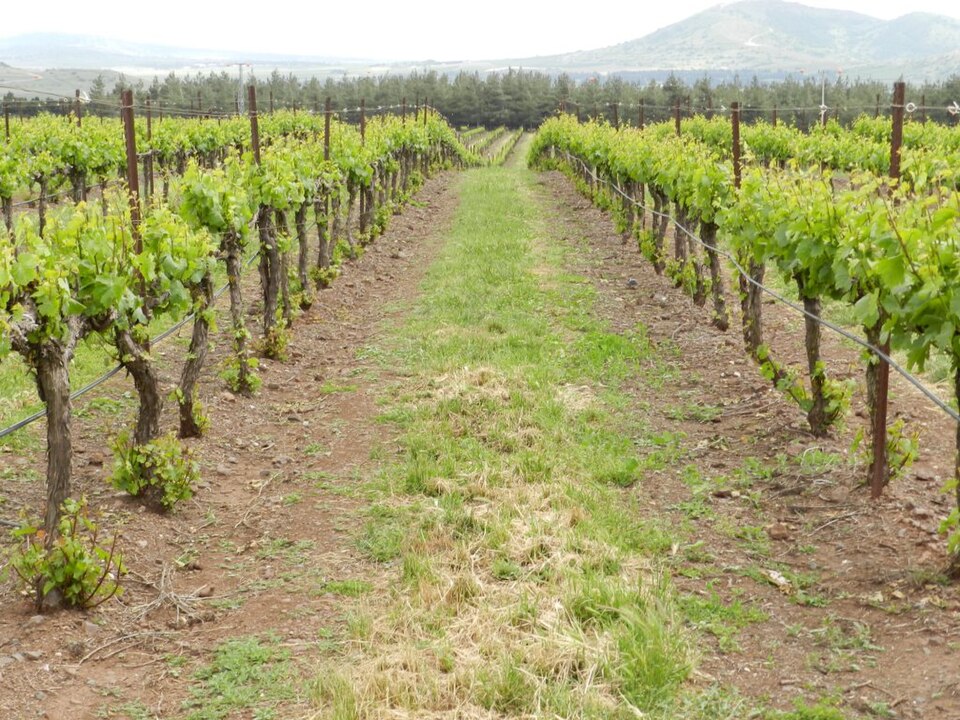
 The Golan Heights is not what most people picture when they think of Israeli agriculture. There are no greenhouses here, no drip irrigation systems feeding desert crops, no tomatoes ripening under plastic sheets. The Golan is cattle country, orchard country, vineyard country. It is a volcanic plateau sitting 1,000 meters above sea level where the soil is rich and dark, the winters are cold, and the growing conditions produce some of the best food and wine in the Middle East.
Volcanic Soil, Exceptional Produce – Agriculture on the Golan Heights
The Golan Heights was shaped by volcanic eruptions that deposited layers of basalt across the plateau over millions of years. The basalt weathers into a deep, mineral-rich soil that retains moisture and nutrients in a way that lighter Mediterranean soils cannot. This volcanic terroir, combined with the altitude, cool nights, and adequate rainfall, creates growing conditions that are unique in Israel.
The result is produce with intensity of flavor that is hard to match elsewhere in the country. Golan cherries, which ripen in late spring, are considered the best in Israel. Golan apples, grown primarily in the Druze villages on the slopes of Mount Hermon, are crisp, sweet, and sought after in markets across the country. And the beef cattle that graze on the Golan’s grasslands produce meat with a quality that reflects the open pastures and cool climate.
Wine Revolution
The Golan Heights wine industry began almost by accident. In the early 1980s, a group of kibbutzim and moshavim on the Golan decided to plant wine grapes, reasoning that the altitude and climate might be suitable. They were more than right. The Golan Heights Winery, established in 1983, produced wines that stunned the international wine world and put Israeli wine on the map for the first time.
Today, the Golan is home to dozens of wineries ranging from large producers like the Golan Heights Winery (whose Yarden label is exported worldwide) to small boutique operations producing a few thousand bottles a year. The combination of volcanic soil, altitude, and significant temperature variation between day and night produces wines with structure, complexity, and a mineral character that wine critics have compared favorably to the best of France and California.
Cattle and Dairy
The Golan Heights is Israel’s cattle country. The open grasslands, fed by winter rains and snowmelt, support herds of beef and dairy cattle that graze much as they would on a ranch in the American West. Several kibbutzim, including Merom Golan and El Rom, run large cattle operations, and the Golan’s beef has developed a reputation for quality that reflects the animals’ diet of natural grasses and the stress-free conditions of open-range grazing.
The dairy industry is equally strong. Golan dairies produce milk, cheese, and yogurt, and the local products are increasingly available in specialty shops and restaurants across Israel. The combination of volcanic-fed pastures and cool climate gives Golan dairy products a richness that lowland operations find hard to replicate.
Olive Oil, Honey, and Truffles
The lower slopes of the Golan, particularly in the southern region near Gamla and the Sea of Galilee, are planted with olive groves that produce high-quality extra virgin olive oil. The Golan’s olives benefit from the same volcanic soil and temperature swings that make the wine grapes exceptional, and several small producers have won international awards for their oils.
Honey production rounds out the agricultural picture. The wildflower meadows of the Golan provide exceptional foraging for bees, and Golan honey, with its complex floral character, is prized by chefs and food lovers across the country.
Perhaps the most surprising crop on the Golan is truffles. Since 2011, a company called Ilsar has been cultivating black Perigord truffles (Tuber melanosporum) in partnership with several kibbutzim and moshavim on the plateau, including Merom Golan, Ein Zivan, and Moshav Odem. Young oak seedlings are inoculated with truffle spores in greenhouses, raised for two years, and then transplanted into carefully prepared fields of limed basalt soil. The truffles grow underground in a symbiotic relationship with the oak roots, taking roughly a decade to mature. When ready, trained dogs sniff them out beneath the surface. Ilsar has also begun experimental plantings of the even more prized white Alba truffle (Tuber magnatum). Black Perigord truffles can fetch up to 5,000 euros per kilogram, and the Golan’s volcanic soil, cold winters, and adequate rainfall create conditions remarkably similar to the truffle regions of southern France.
Visit with Hoshen Tours
The agricultural Golan is one of the most rewarding experiences Israel has to offer for food and wine lovers. Hoshen Tours builds itineraries that include winery visits, farm tours, and meals that showcase the best of Golan produce, from a steak at Merom Golan to a wine tasting at a boutique vineyard to a Druze feast in Majdal Shams.
Because the Golan Heights proves that the best things grow where you least expect them. On a volcanic plateau, a thousand meters up, in a part of the world that most people only know from the news.
Ready to experience Israel in true colors?
Plan Your TourPrivate tours designed around your interests, schedule, and pace.