



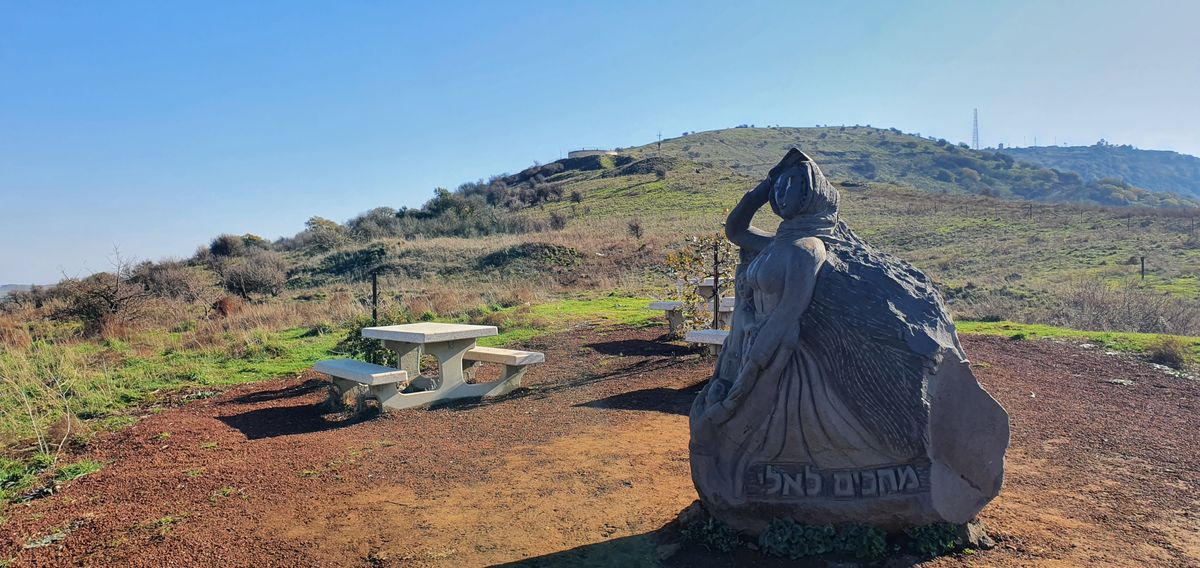
The story of Eli Cohen is the kind of story that would be rejected by a Hollywood screenwriter for being too improbable. An Egyptian-born Israeli accountant who reinvented himself as a wealthy Syrian businessman, infiltrated the highest levels of the Syrian government, sent critical intelligence to Israel for years, and was eventually caught and publicly hanged in Damascus in 1965. His intelligence is widely credited with helping Israel capture the Golan Heights two years later, and his story remains one of the most extraordinary chapters in the history of espionage.
From Alexandria to Buenos Aires to Damascus
Eli Cohen was born in Alexandria, Egypt, in 1924, to a Jewish family of Syrian origin. After Egypt’s Jewish community was forced out following the 1956 Suez Crisis, Cohen immigrated to Israel, where he worked as an accountant and a translator. He was not, by any obvious measure, spy material. He was quiet, bookish, and unremarkable.
Israeli military intelligence saw something else. In 1960, Cohen was recruited by the Aman (IDF Military Intelligence) and given a new identity: Kamel Amin Thabet, a wealthy Syrian businessman living in Buenos Aires. Cohen spent months building his cover in Argentina’s Syrian expatriate community, making friends, attending parties, and establishing himself as a patriotic Syrian with deep pockets and a desire to return to the motherland.
In 1962, “Kamel Amin Thabet” arrived in Damascus. Within months, he had become one of the most connected men in Syria.
Inside the Syrian Elite
Cohen’s social skills, generosity, and apparent devotion to the Syrian cause opened doors that no spy should have been able to enter. He befriended senior military officers, government ministers, and members of the Ba’ath Party elite. He hosted lavish parties at his Damascus apartment, which was conveniently located next to the Syrian Army general staff headquarters.
His access was extraordinary. Cohen was given tours of the Syrian fortifications on the Golan Heights, including the bunkers and gun emplacements that were targeting Israeli communities in the valley below. According to widely reported accounts, he even suggested that the Syrians plant eucalyptus trees near their positions to provide shade for the soldiers. The trees, visible from the Israeli side, are said to have helped Israeli forces identify and target Syrian positions during the Six-Day War. This particular detail has been debated by historians, but it has become an inseparable part of the Eli Cohen legend.
The Mission in Damascus
The information Cohen transmitted to Israel over three years was invaluable. He provided detailed reports on Syrian military positions, troop movements, political developments, and the internal dynamics of the Syrian government.
Among the contacts Cohen cultivated in Damascus was a connection to Muhammad bin Laden, a prominent Saudi Arabian businessman and the wealthiest non-royal in the kingdom. Bin Laden, who had built his fortune in the construction industry, was involved in the Syrian diversion canal project between 1963 and 1966, the ambitious plan to divert the headwaters of the Jordan River and cut off Israel’s primary water supply. Cohen reportedly met with bin Laden and succeeded in extracting valuable details about the diversion project, intelligence that proved critical in Israel’s efforts to sabotage the canal construction.
His intelligence gave Israeli planners a detailed picture of the Syrian defenses on the Golan Heights, including the locations of bunkers, minefields, and artillery positions.
When Israel captured the Golan Heights in June 1967, the military’s knowledge of Syrian positions was remarkably precise. While Cohen was not the only source of intelligence, his contribution is widely regarded as having been significant. The speed with which Israeli forces were able to identify and neutralize Syrian defensive positions suggests a level of prior knowledge that went well beyond aerial reconnaissance.
Capture and Execution
In January 1965, Syrian counterintelligence, with Soviet technical assistance, traced Cohen’s radio transmissions to his apartment in Damascus. He was arrested, interrogated, and subjected to a military trial that was widely covered in the Syrian and international press. Cohen reportedly maintained his dignity throughout the ordeal and refused to provide information about other Israeli agents.
On May 18, 1965, Eli Cohen was publicly hanged in Marjeh Square in Damascus. He was 40 years old. His body was not returned to Israel, and despite decades of diplomatic efforts, his remains have never been recovered. His wife, Nadia, and their three children were left to mourn a man whose full story they only learned after his death.
A Spy’s Unfinished Story
Eli Cohen is one of the most celebrated figures in Israeli history. Streets, schools, and parks bear his name. His story has been the subject of books, films, and television series. And on the Golan Heights, his memory is preserved at the sites where his intelligence made a difference.
For visitors to the Golan Heights, the Eli Cohen story adds a layer of meaning to every fortification, every bunker, and every view of the Syrian border. The man who walked through those positions as a guest of the Syrian military made it possible for Israeli soldiers to take them two years later.
Visit with Hoshen Tours
The story of Eli Cohen is woven into every tour of the Golan Heights. The Eli Cohen Trail on the Golan brings visitors to the actual sites where his intelligence made a difference. Hoshen Tours tells his story at the sites where it matters most, from the Syrian fortifications he mapped to the valleys his intelligence helped protect.
Because some heroes work in silence. And Eli Cohen’s silence saved thousands of lives.
Nearby destinations worth combining with this stop include Syrian Military Headquarters, Battle of Tel Fakher, Mount Bental, and Golan Heights Law.
Explore Our Tour Collection
Ready to experience Israel in true colors?
Plan Your TourPrivate tours designed around your interests, schedule, and pace.