



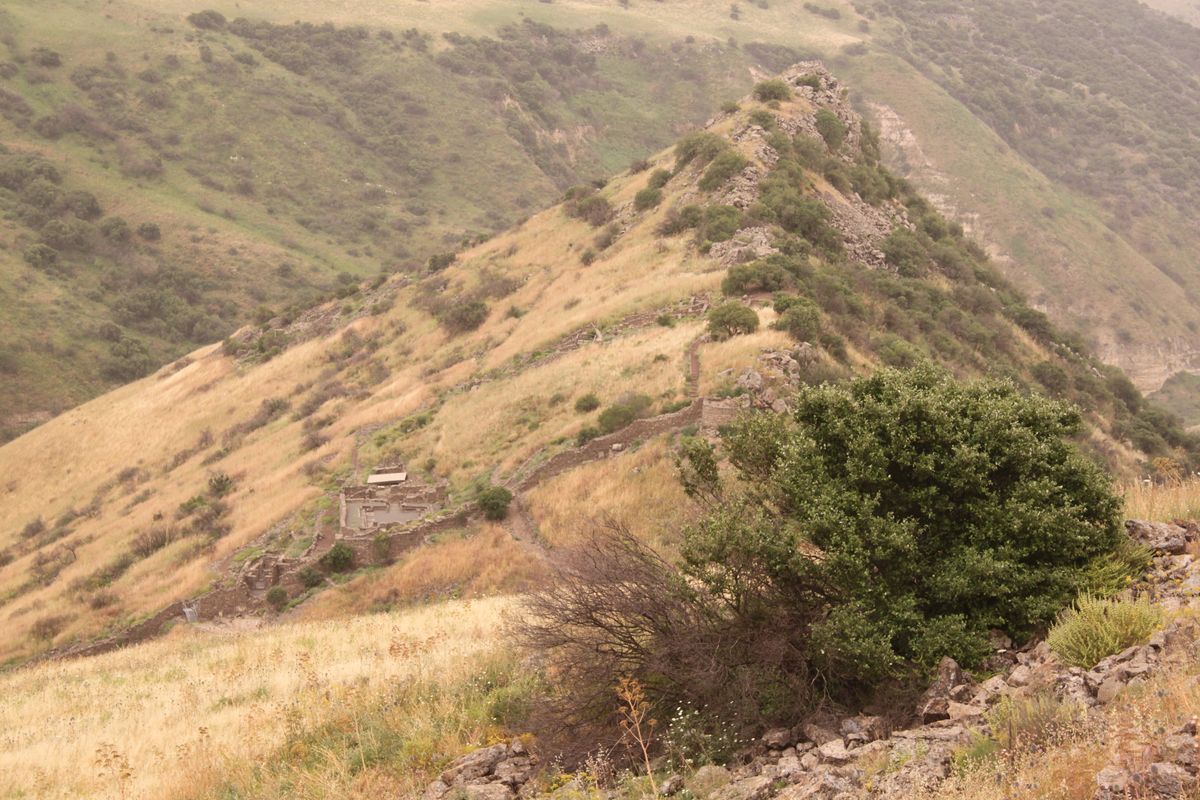
Gamla is often called “the Masada of the North,” and the comparison is not wrong, but it misses something. Masada is a fortress on a cliff in the desert. Gamla is a city on a ridge in a green valley, surrounded by vultures circling on thermals, with a waterfall visible from the ruins and a story that is every bit as tragic as Masada’s. If anything, Gamla might be the more powerful experience, because fewer people know about it and the landscape is breathtakingly beautiful.
Camel’s Hump
Gamla takes its name from the Hebrew word “gamal,” meaning camel. The city was built on a narrow, steep-sided ridge that rises from the valley floor like a camel’s hump, with cliffs dropping away on three sides. The location was a natural fortress, and the Jewish inhabitants of Gamla used the terrain to their advantage when the Romans came.
The city was one of the last holdouts of Jewish resistance during the Great Revolt against Rome in 66-67 CE. When the Roman general Vespasian (who would later become emperor) brought his legions to the Golan, Gamla was one of the toughest targets he faced.
The Roman Siege of Gamla Israel, 67 CE
Josephus Flavius, the Jewish historian who served as a commander during the revolt before defecting to the Romans, provides a detailed account of the siege of Gamla. The Romans attacked the city from the one side that was not protected by natural cliffs, breaching the wall and pouring into the narrow streets. But the city’s steep terrain worked against the attackers. The Romans found themselves fighting uphill through cramped alleys, and the defenders pushed them back, inflicting heavy casualties.
The first Roman assault failed. Vespasian had to regroup and launch a second attack, this time from multiple directions. When the Romans finally took the city, the result was catastrophic. According to Josephus, 4,000 inhabitants were killed by the Romans, and another 5,000 threw themselves from the cliffs rather than be captured. The numbers may be exaggerated, as Josephus was prone to dramatic figures, but the archaeological evidence confirms a violent end to the city.
The Gamla Synagogue
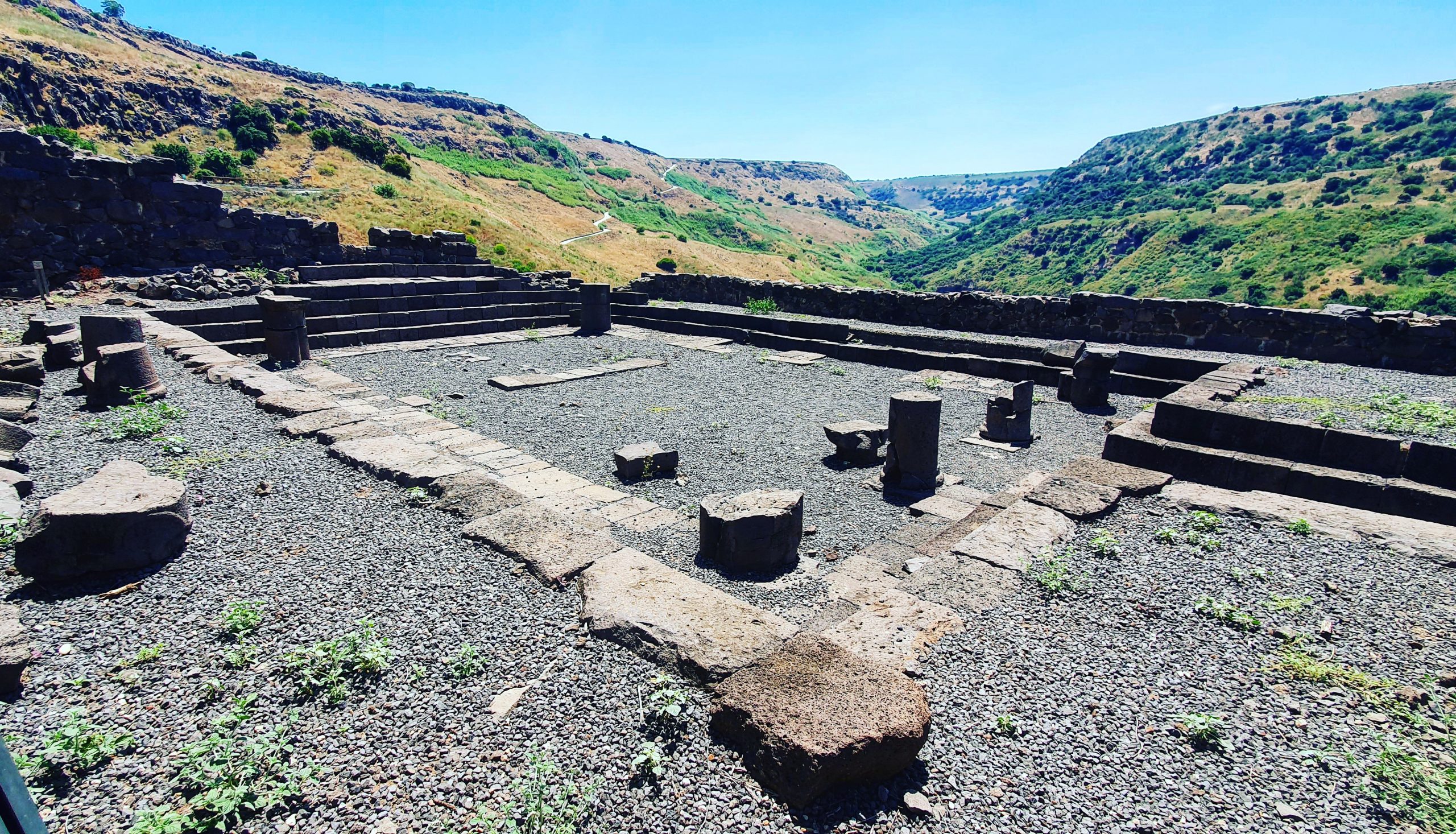
One of the most important discoveries at Gamla is an ancient synagogue dating to the Second Temple period, making it one of the oldest synagogues ever found in Israel. The building predates the destruction of the Temple in Jerusalem, which means it was in use while the Temple still stood. This finding is significant for understanding the early development of synagogue worship, which many scholars believe began as a complement to, rather than a replacement for, Temple ritual.
The synagogue is built of local basalt, with stone benches lining the walls and a central area that may have been used for Torah reading. It is small, simple, and deeply moving. Standing inside it, you are in a space where Jews prayed over two thousand years ago, in a city that would soon be destroyed.
Nature Reserve
Gamla sits within a national park that is one of the best nature reserves on the Golan Heights. The park is famous for its griffon vultures, which nest in the cliffs around the ancient city and can be seen soaring on the thermals rising from the valley. A dedicated observation point with telescopes allows visitors to watch the vultures at close range without disturbing them.
The Gamla waterfall, visible from the archaeological site, drops 51 meters into the valley below, making it one of the highest waterfalls in Israel. A hiking trail descends from the visitor center to the base of the waterfall, and the walk, though steep on the return, is well worth the effort.
The combination of a powerful archaeological site, circling vultures, and a dramatic waterfall in a single nature reserve is something that only the Golan Heights can deliver.
Visit with Hoshen Tours
Gamla is a highlight of any Golan Heights itinerary. Hoshen Tours combines it with the ancient synagogues of the region, the wineries, and the military history sites, creating a day that spans from the Jewish revolt against Rome to the modern story of the Golan.
Because Gamla deserves to be as famous as Masada. It has the same courage, the same tragedy, and views that Masada cannot match.
Ready to experience Israel in true colors?
Plan Your TourPrivate tours designed around your interests, schedule, and pace.