



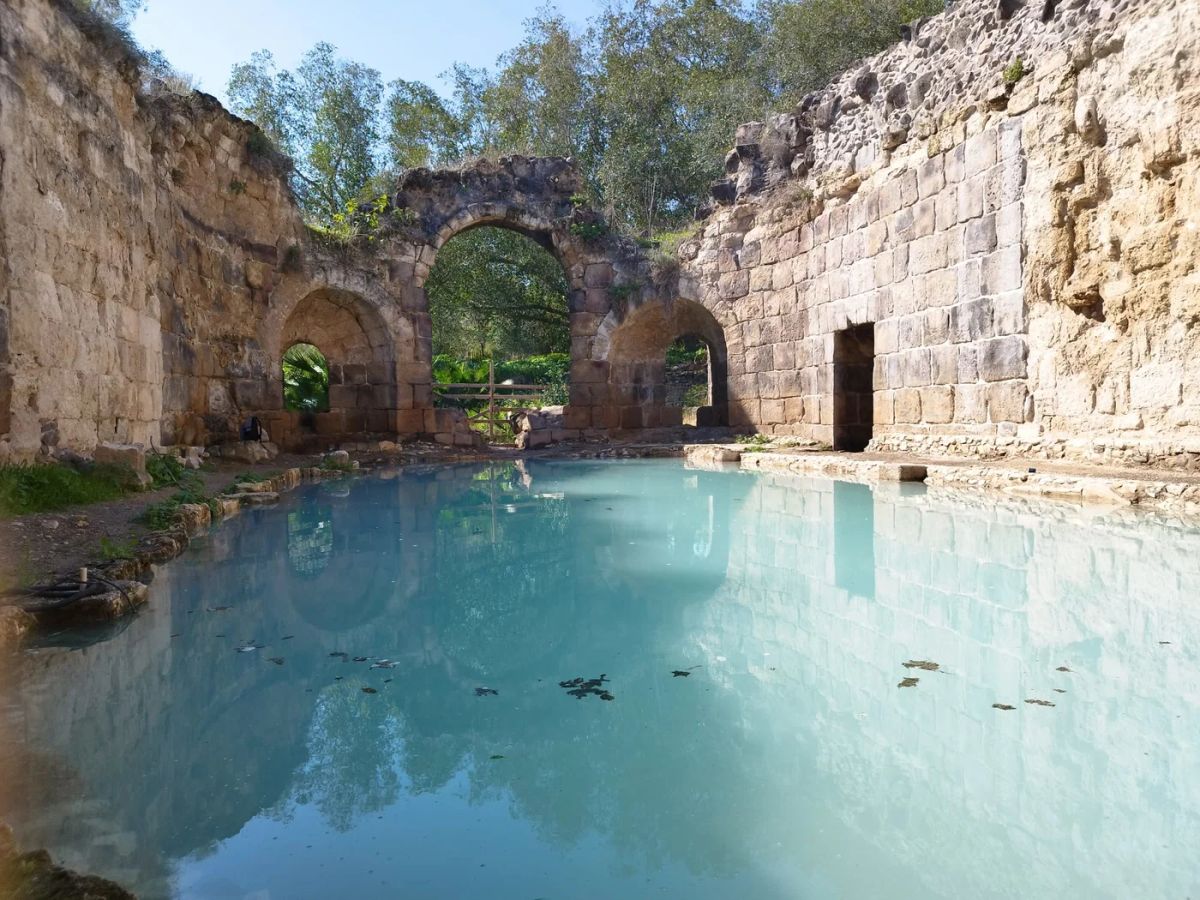
Hamat Gader is a hot spring resort in the Yarmuk Valley, on the border between Israel, Jordan, and Syria, where mineral-rich thermal waters have attracted bathers for over 2,000 years. The Romans built an elaborate bathhouse complex here in the 2nd century CE that was one of the largest and most luxurious in the entire Roman Empire, and the springs continue to draw visitors today. Tucked inside a dramatic gorge where the Yarmuk River cuts through basalt cliffs, it is one of the most layered sites in northern Israel: ancient ruins, natural geology, a working modern spa, and wildlife all in the same valley.
The Hot Springs
The springs at Hamat Gader emerge from deep underground at temperatures of up to 50 degrees Celsius, making them among the hottest natural mineral springs in the region. The water is rich in sulfur, potassium, magnesium, and calcium compounds. Ancient and medieval writers praised the waters for treating skin conditions, joint pain, and respiratory ailments, and the therapeutic reputation drew pilgrims and invalids from across the Roman world. The springs flow at a substantial rate year-round, which is what made it possible to supply the enormous Roman bathhouse complex at the scale the Romans demanded. The same geothermal system continues to feed the resort pools today.
The Roman Bathhouse
The bathhouse at Hamat Gader was one of the largest and best-preserved Roman bath complexes in the ancient Near East, covering several acres and containing multiple pools arranged by temperature. The standard Roman sequence of rooms is visible in the ruins: the frigidarium for cold plunges, the tepidarium for warm intermediate bathing, and the caldarium where the hottest waters from the springs were directed. A separate pool, known in later tradition as the leper pool, was set apart from the main baths, and Latin and Greek inscriptions on the walls and floors record the names of benefactors, emperors, and visiting dignitaries. Columns, vaulted passageways, and mosaic-inlaid floors remain visible in the archaeological site that sits directly adjacent to the modern resort, so visitors can move between ancient ruins and contemporary pools within the same visit.
The Synagogue Mosaic
A 5th-century synagogue discovered near the springs contains a mosaic floor that is among the most interesting of its period in Israel. Rather than depicting figurative scenes, the floor uses figurative images of lions and cypress trees alongside dedicatory inscriptions in Aramaic, listing the names of donors who funded the construction along with the amounts they contributed. The inscriptions provide an unusually detailed picture of the economics and social organization of a late-antique Jewish community living near a major Roman bathing resort. The synagogue indicates that Jewish settlement at Hamat Gader was substantial and prosperous during the Byzantine period, long after the Roman baths had made the site famous.
The Gorge and Its Setting
The physical setting of Hamat Gader is part of what makes it unusual. The site sits at the bottom of the Yarmuk River gorge, with steep basalt walls rising on both sides. The river itself forms part of the border between Israel and Jordan, and the Jordanian bank is visible from the site. The Syrian Golan Heights rise steeply to the north. The combination of enclosed canyon geography, the sound of flowing water, hot springs misting in the cool air, and ruins emerging from the gorge walls gives the site an atmosphere unlike anywhere else in the region. Access is via a winding road that descends from the Golan plateau into the gorge.
The Crocodile Farm
For decades Hamat Gader operated one of Israel’s most unusual attractions alongside the hot springs and ruins: a Nile crocodile farm that at its peak housed hundreds of animals. The farm drew families from across the country and became inseparable from the site’s identity in Israeli popular memory. The crocodile attraction has since closed, but older visitors will remember it vividly, and it remains part of the cultural history of the place.
The Modern Spa
Today’s resort at Hamat Gader operates pools at different temperatures fed by the original springs, allowing visitors to soak in mineral-rich thermal water while looking out over the same gorge the Romans chose for exactly the same purpose. Facilities include outdoor and indoor pools, a waterpark section, and access to the archaeological ruins. The site is busiest on weekends and holidays when Israeli families come to combine history with relaxation. A visit in the early morning on a weekday gives the ruins and the pools in something close to peace.
Visit with Hoshen Tours
Hamat Gader combines Roman archaeology with a hot spring soak in a dramatic gorge setting. Hoshen Tours includes it in Golan Heights itineraries, often paired with the Yarmuk Valley and the southern Golan.
Nearby destinations worth combining with this stop include Jordan River, Sea of Galilee, Bethsaida, and ancient synagogues of the Golan.
Explore Our Tour Collection
Ready to experience Israel in true colors?
Plan Your TourPrivate tours designed around your interests, schedule, and pace.