



On the morning of June 9, 1967, the fifth day of the Six-Day War, soldiers of the Golani Brigade began the assault known as the Battle of Tel Fakher, climbing toward one of the most heavily fortified positions in the Middle East. Tel Fakher, a Syrian military stronghold on the Golan Heights, was built to be impregnable. Concrete bunkers, trenches, minefields, and barbed wire covered the hilltop. The Syrians had been fortifying the position for 19 years, and every angle of approach was covered by interlocking fields of fire.
What followed was one of the bloodiest and most decisive battles in Israeli military history.
Nineteen Years of Shelling
To understand why Israel fought for the Golan Heights, you need to understand what life was like in the communities below. From 1948 to 1967, Syrian forces on the Golan Heights had a commanding view of the Israeli farming communities in the Hula Valley and the Sea of Galilee region. Syrian artillery regularly shelled these communities, sometimes without warning, sometimes targeting farmers working in their fields.
Children in the kibbutzim grew up sleeping in bomb shelters. Tractors were armored. Fishing on the Sea of Galilee meant risking sniper fire from the heights above. For 19 years, the communities of northern Israel lived under the shadow of the Golan, and the Syrian positions were close enough that residents could see the gun barrels pointed at them.
Tel Fakher was one of the key positions from which this shelling was directed. Taking it was not just a military objective. It was personal.
The Assault
The Golani Brigade’s attack on Tel Fakher was supposed to be supported by air strikes and artillery preparation. But coordination broke down. The infantry arrived at the base of the hill before the planned bombardment had softened the defenses, and the commanding officer made the decision to attack immediately rather than wait and lose the element of surprise.
The soldiers of the Golani’s 12th Battalion advanced uphill on foot, through minefields and tangles of barbed wire, into concentrated fire from bunkers built into the hillside. The Syrians had prepared interlocking fields of fire, and the attackers were caught in a killing zone. The first wave took heavy casualties before even reaching the perimeter fence. One soldier, David Shirazi, threw himself onto the coils of barbed wire blocking the advance and used his own body as a human bridge, allowing his comrades to climb over him and breach the perimeter. His act of sacrifice under fire became one of the most remembered moments of the battle.
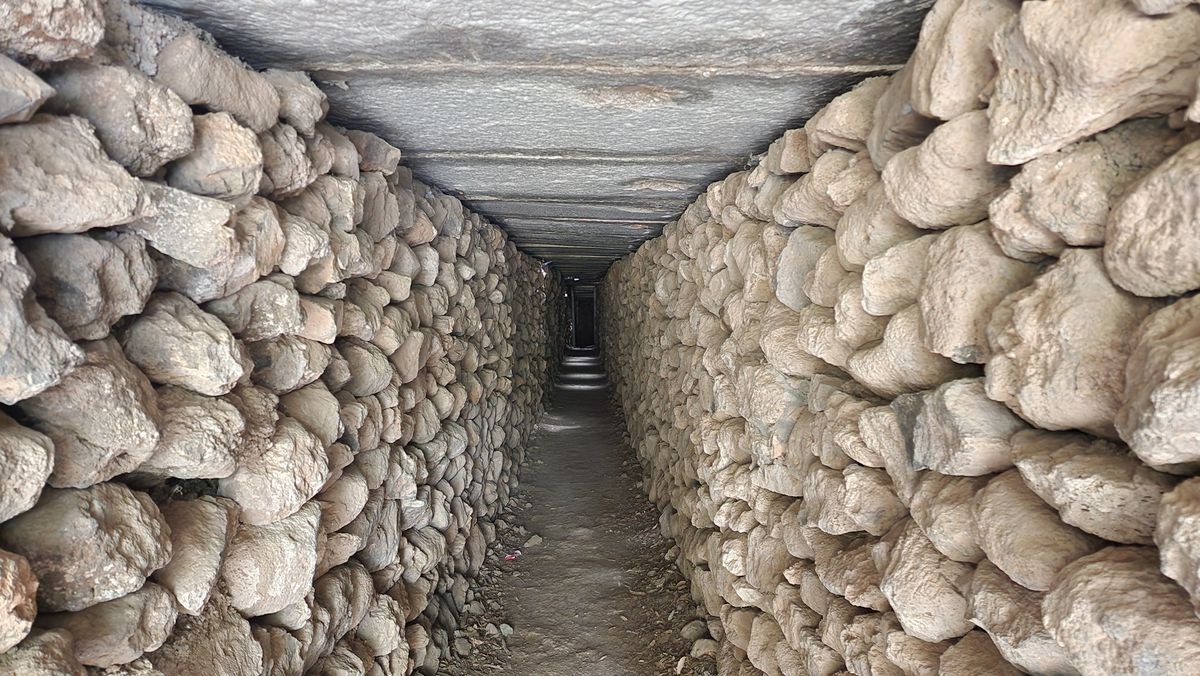
Once inside the compound, the fighting became close-quarters and brutal. The bunker complex was a maze of concrete rooms, narrow corridors, and connecting trenches. Soldiers fought room by room, clearing each position with grenades and small arms. In corridors so narrow that two men could barely stand side by side, the battle became personal. Golani soldiers and Syrian defenders fought at point-blank range, and in some cases hand to hand.
The battle lasted several hours. The company commander and several of his officers were among the casualties, and at points the chain of command broke down entirely, with individual soldiers and small groups fighting on their own initiative. Thirty-four Israeli soldiers were killed and dozens more wounded. The Syrian garrison fought tenaciously, and many of its defenders were killed at their positions.
When it was over, Tel Fakher was in Israeli hands, and the road to the Golan Heights was open. The capture of this single position broke the Syrian defensive line and allowed Israeli forces to advance across the plateau. Within 24 hours, the entire Golan Heights was under Israeli control.
The Tel Fakher Memorial Site
Today, Tel Fakher is a memorial site and one of the most powerful places to visit on the Golan Heights. The original bunkers, trenches, and fortifications have been preserved, and visitors can walk through the positions where the battle took place. The concrete walls are still scarred by bullets and shrapnel, and the narrow corridors give a visceral sense of how terrifying the close-quarters fighting must have been.
A memorial monument lists the names of the fallen, and the site is maintained with quiet dignity. Unlike some memorial sites that try to glorify combat, Tel Fakher simply shows you what happened and lets the place speak for itself. The bunkers are dark, the trenches are narrow, and the whole experience is a sobering reminder of the cost of the war that shaped the Golan Heights.
View That Explains Everything
From the top of Tel Fakher, you can see exactly why this position mattered. The Hula Valley stretches out below to the west, with its kibbutzim and fishponds clearly visible. Looking at the communities below from the height of the Syrian position, you understand immediately why 19 years of shelling were intolerable and why the battle to take this hilltop was considered worth the terrible price.
Visit with Hoshen Tours
Tel Fakher is an essential part of any Golan Heights itinerary. Hoshen Tours includes it alongside Mount Bental, the Oz 77 memorial, and the historic sites of the region, giving visitors a complete understanding of how the Golan Heights were won and why they remain one of the most strategically important areas in the Middle East.
Because some stories should not be read in a book. They should be walked through, in the silence of the bunkers where they happened.
Nearby destinations worth combining with this stop include Syrian Military Headquarters, Eli Cohen, Valley of Tears, and Tel Saki.
Ready to experience Israel in true colors?
Plan Your TourPrivate tours designed around your interests, schedule, and pace.