



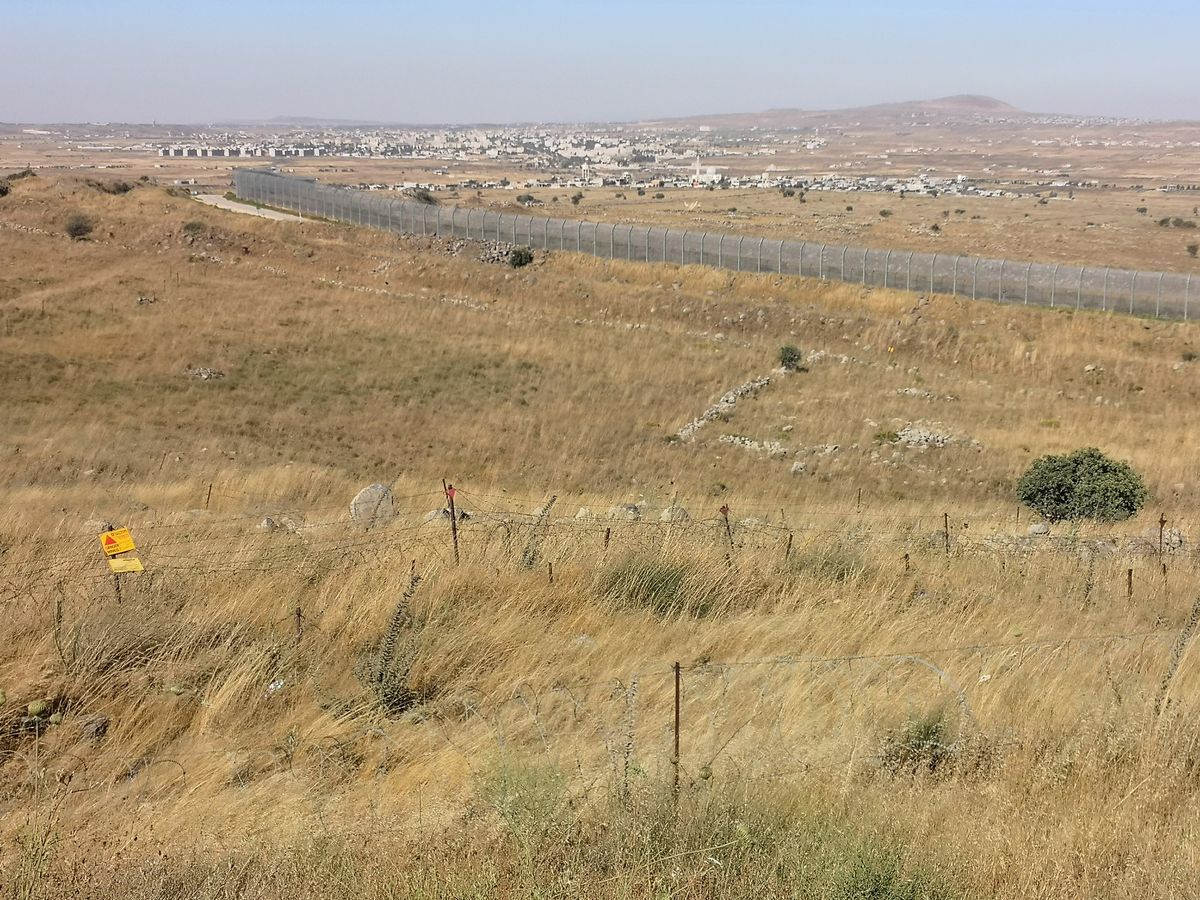
On December 14, 1981, the Israeli Knesset passed the Golan Heights Law, extending Israeli law, jurisdiction, and administration to the Golan Heights. The law was not technically an annexation, at least not in the language used by Israeli lawmakers, but the practical effect was the same: the Golan Heights, captured from Syria in the 1967 Six-Day War, would be governed as part of Israel rather than as occupied territory.
The decision was controversial then and remains so today. It is also one of those pieces of legislation that cannot be understood without understanding the geography, history, and strategic reality that produced it.
Why the Golan Matters – Golan Heights Law
The Golan Heights is a volcanic plateau that rises sharply from the eastern shore of the Sea of Galilee. From its western edge, the plateau provides a commanding view of the entire Galilee region, the Hula Valley, and the Sea of Galilee itself. From 1948 to 1967, when Syria controlled the Golan, Syrian forces used this elevated position to shell Israeli communities in the valleys below. Farmers were shot at in their fields. Fishermen were targeted on the Sea of Galilee. Children grew up sleeping in bomb shelters.
When Israel captured the Golan in 1967, the shelling stopped. For Israelis living in northern Israel, the Golan Heights Law was not an abstract political decision. It was a guarantee that the shelling would never resume.
International Reaction
The international community, with the notable exception of the United States in 2019, has not recognized Israeli sovereignty over the Golan Heights. UN Security Council Resolution 497, passed shortly after the law was enacted, declared the Israeli action “null and void and without international legal effect.” Most countries continue to regard the Golan as occupied Syrian territory.
The practical reality on the ground, however, has long since overtaken the diplomatic debate. Israeli communities, wineries, farms, and military installations have been operating on the Golan for over five decades. Israeli law governs daily life. Israeli courts adjudicate disputes. And the approximately 25,000 Israeli Jews who live on the Golan consider it home, not occupied territory.
Druze Question
The Golan Heights Law also affected the approximately 23,000 Druze who live on the Golan, primarily in four villages on the slopes of Mount Hermon. When the law was passed, the Druze were offered Israeli citizenship. Most declined, preferring to maintain their Syrian identity and their connection to family members on the other side of the border.
The Druze of the Golan live in a unique situation: they are permanent residents of Israel with access to Israeli services, healthcare, and education, but most carry travel documents rather than Israeli passports and maintain a Syrian national identity. The arrangement is complicated, sometimes tense, and thoroughly pragmatic.
American Recognition
In March 2019, the United States became the first major country to recognize Israeli sovereignty over the Golan Heights. The decision, announced by President Trump, broke with decades of American policy and was widely seen as reflecting the strategic reality that no peace agreement with Syria was foreseeable. The recognition did not change life on the Golan in any practical way, but it was symbolically significant.
Visit with Hoshen Tours
The Golan Heights Law is not just a piece of legislation. It is the legal framework for a landscape that includes wineries, kibbutzim, ancient synagogues, Druze villages, and military memorials. Hoshen Tours helps visitors understand the Golan in all its complexity, from the strategic heights that made the law necessary to the communities that make the Golan worth visiting.
Because the Golan Heights is not a political abstraction. It is a place where people live, work, and grow exceptional wine on volcanic soil. And understanding how it got there is part of understanding Israel.
Nearby destinations worth combining with this stop include Syrian Military Headquarters, Druze communities of the Golan, War Over Water, and Mount Bental.
Explore Our Tour Collection
Ready to experience Israel in true colors?
Plan Your TourPrivate tours designed around your interests, schedule, and pace.