



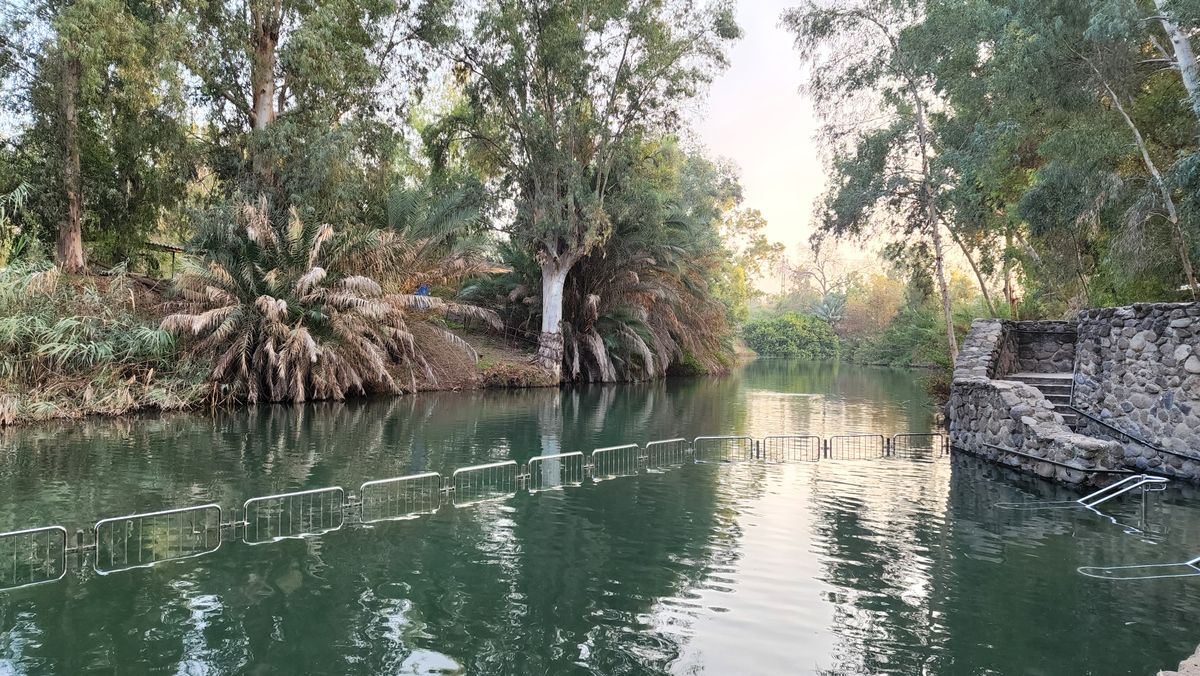
The Jordan River is arguably the most famous river in the world. It is the river where the Israelites crossed into the Promised Land. It is the river where John the Baptist baptized Jesus. It has been painted, sung about, and referenced in more sermons, hymns, and spirituals than any other body of water on earth. And when most visitors see it for the first time, their reaction is almost always the same: “That’s it?”
The Jordan River is small. In many places, it is narrow enough to throw a stone across. It is not the broad, majestic waterway that centuries of art and literature have prepared people to expect. But what it lacks in size, it makes up for in significance. No river in history has meant more to more people than this modest stream winding through the hills of northern Israel to the lowest point on earth.
Three Springs, One River – Jordan River
The Jordan River is born at the foot of Mount Hermon, where three springs converge to form a single stream. The Dan Spring, emerging in the lush nature reserve of Tel Dan, is the largest and most powerful, producing crystal-clear water that rushes through a forest of ancient trees. The Banias Spring flows from the cave where the Greeks once worshiped the god Pan. And the Hasbani, the longest of the three, originates in Lebanon and crosses the border into Israel before joining the others.
The three springs merge near the former Hula Lake to form the Jordan River proper, which flows south into the Sea of Galilee. From there, the river continues its journey south through the Jordan Valley, growing warmer and saltier as it descends, until it empties into the Dead Sea, 430 meters below sea level. The total distance from source to end is about 251 kilometers, making the Jordan one of the shortest major rivers in the world. But what a 251 kilometers it is.
Crossing Into the Promised Land
In the Book of Joshua, the Israelites crossed the Jordan River to enter the Land of Canaan after 40 years of wandering in the desert. The story describes the waters of the Jordan parting to allow the people to cross on dry ground, echoing the earlier parting of the Red Sea. The crossing point is traditionally identified as Qasr el-Yahud, near Jericho, where the river is narrow, shallow, and surrounded by the barren landscape of the Judean Desert.
Visiting Qasr el-Yahud today is a striking experience. The river at this point is genuinely small, barely more than a wide stream, and the Jordanian side is visible just a few meters away. Pilgrims in white robes wade into the water for baptism, and the atmosphere is one of quiet devotion. The contrast between the enormous significance of the site and the modest size of the river is one of those things that Israel does better than anywhere else: making you realize that history does not require grand settings.
Baptism of Jesus
The Gospel accounts place the baptism of Jesus by John the Baptist in the Jordan River, and the event is one of the most important moments in Christian theology. The traditional site is Qasr el-Yahud on the Israeli side and Al-Maghtas (Bethany Beyond the Jordan) on the Jordanian side, both of which have been recognized by UNESCO.
The Yardenit baptismal site, located where the Jordan River flows out of the Sea of Galilee, is the more accessible and developed of the Israeli baptism sites. Thousands of Christian pilgrims visit Yardenit each year to be baptized in the Jordan’s waters, and the site provides changing facilities, robes, and certificates. The experience is deeply moving for believers, and even for non-religious visitors, watching pilgrims from around the world step into the river is a powerful reminder of how much this small stream means to billions of people.
A River in Trouble
The Jordan River today is a fraction of its former self. Since the 1960s, Israel, Jordan, and Syria have diverted the vast majority of the river’s flow for agricultural and domestic use. The National Water Carrier, completed in 1964, pumps water from the Sea of Galilee and sends it south through pipelines, leaving the lower Jordan with a small fraction of its natural flow.
Environmental organizations have been campaigning for years to restore water to the river, and some progress has been made. Israel’s investment in desalination has reduced the country’s dependence on the Sea of Galilee, freeing up water for the river. But the lower Jordan remains depleted, and restoring it to anything resembling its biblical flow would require cooperation from multiple countries with competing water needs.
Visit with Hoshen Tours
The Jordan River is woven into itineraries throughout Israel, from the springs at its source in the Golan Heights to the baptism sites near the Sea of Galilee and the Dead Sea. Hoshen Tours helps visitors experience the river at its most beautiful and most meaningful, connecting the natural landscape to the stories that have made this small river the most significant waterway in human history.
Because the Jordan River proves that size is not what matters. Meaning is.
Nearby destinations worth combining with this stop include Gesher Bnot Yaakov, Sea of Galilee, and Bethsaida.
Explore Our Tour Collection
Ready to experience Israel in true colors?
Plan Your TourPrivate tours designed around your interests, schedule, and pace.