



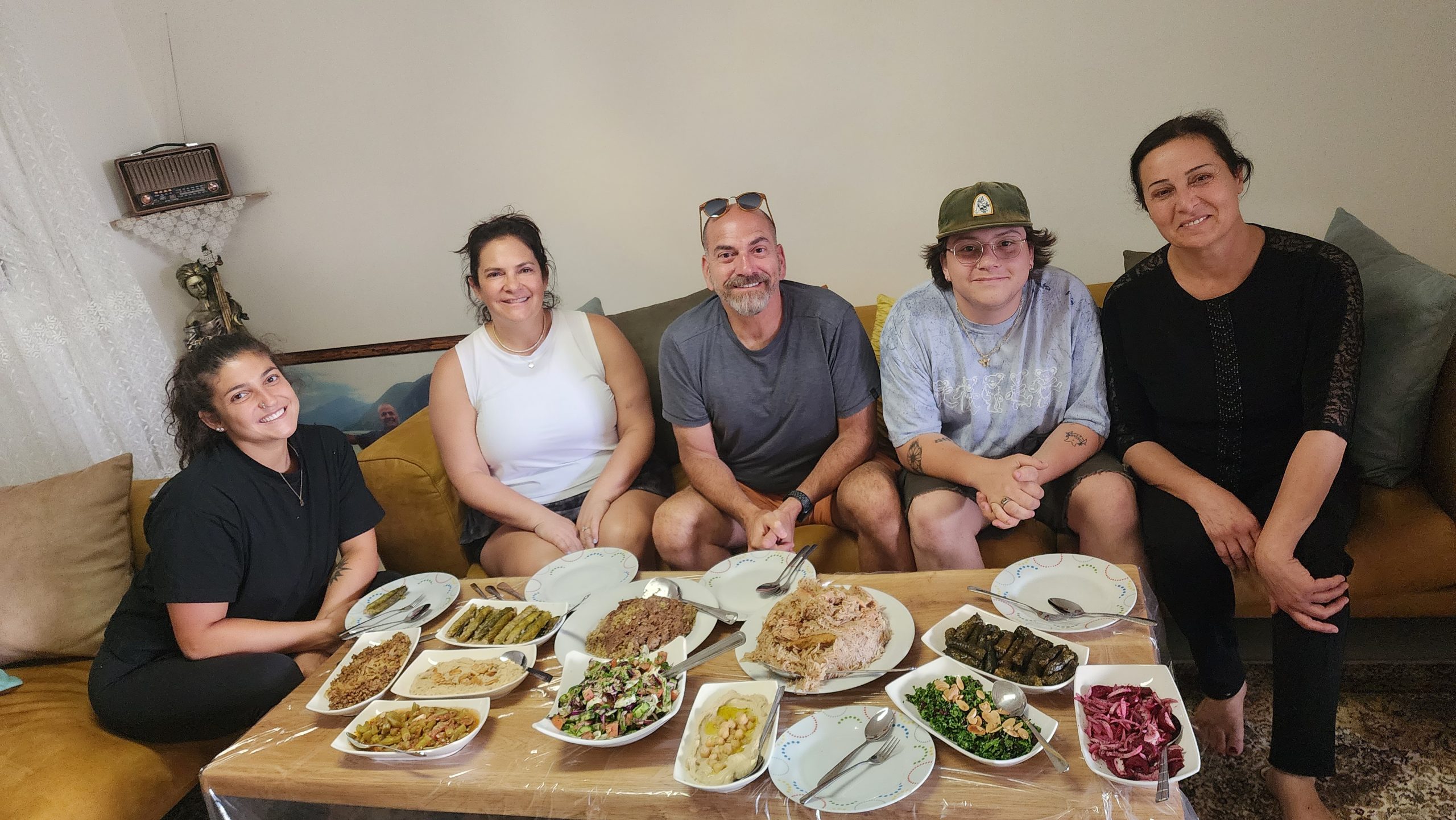
The Druze villages of Daliyat el-Karmel and Isfiya (Usifiyya) sit on the crest of Mount Carmel, perched high on the ridge above Haifa, and together they form the largest Druze community in Israel. These two villages, neighbors on the same ridge, offer visitors an encounter with one of the most distinctive and secretive communities in the Middle East, a people whose ancient faith, legendary hospitality, and deep roots in the Carmel landscape make them unlike any other community in Israel. A visit to the Carmel Druze villages is not merely a stop on an itinerary; it is an immersion in a living culture that has endured for nearly a thousand years.
The Druze: An Ancient and Distinct Faith
The Druze religion emerged in the early eleventh century as an offshoot of Ismaili Islam, founded in Cairo during the reign of the Fatimid Caliph al-Hakim bi-Amr Allah. Tradition holds that al-Hakim’s followers proclaimed him a manifestation of the divine, and after his mysterious disappearance in 1021, a circle of missionaries, most notably Hamza ibn Ali and Muhammad al-Darazi, from whose name the word “Druze” may derive, organized the movement into a closed, distinct faith. By 1043 the religion had shut its doors to new converts entirely: one is born Druze or one is not Druze, with no conversion in or out.
Beliefs and the Transmigration of Souls
The Druze are strictly monotheistic, believing in one God who is beyond all human description. Tradition holds that the faith also embraces the transmigration of souls (taqammus): when a Druze dies, the soul is immediately reborn into another Druze body, progressing through successive lifetimes. The faith venerates prophets from multiple traditions, including Adam, Noah, Abraham, Moses, Jesus, and Muhammad, and holds a particular reverence for Jethro (Shu’eib), the father-in-law of Moses, whose tomb at Nabi Shu’eib near Tiberias is the holiest Druze site.
Druze society is divided into two groups: the uqqal (“the initiated”), a spiritual elite of devout men and women who have undergone initiation and have access to the secret sacred texts; and the juhhal (“the uninitiated”), the majority, who follow the community’s ethical and social code but do not have access to the deeper mysteries of the faith. The uqqal are recognized by their dress, men in black trousers and white cap, women in a thin white veil, and they gather for prayer on Thursday evenings in the khalwa, a plain, undecorated prayer house.
The Druze flag displays five colors, each representing a cosmic principle revered in the faith: green for the Universal Mind, red for the Universal Soul, yellow for the Word or Truth, blue for the Preceding or Will, and white for the Following or Imagination. These five colors together represent the unity of the faith, and the star, forming a five-pointed shape, is displayed on homes, prayer houses, vehicles, and flags throughout the Carmel villages. The flag is a source of visible community pride, and seeing it flying from rooftops across Daliyat el-Karmel and Isfiya is one of the first signals to the visitor that this is a community with a distinct and self-conscious identity. Today approximately 150,000 Druze live in Israel, with larger communities in Lebanon and Syria, and a smaller community in the Golan Heights.
Daliyat el-Karmel
Daliyat el-Karmel, with a population of approximately 17,000, is the larger of the two villages and the largest Druze community in Israel. The village sits at the highest point of the Carmel ridge, commanding wide views across the valleys and coastal plain below. Its main street is both a working neighborhood and one of the most lively and authentic markets in the north of Israel, not a tourist bazaar but a real village market where locals shop alongside visitors. Stalls sell freshly baked Druze pita made on the saj griddle, labaneh drizzled with olive oil, hand-ground za’atar blended with sesame and sumac, local honey, spices sold by weight, handmade baskets, embroidered textiles, and traditional copper and pottery ware. The village has a strong sense of civic identity and cultural pride, with public spaces, mosques, and the khalwa prayer houses woven into the fabric of daily life.
Isfiya (Usifiyya)
Adjacent to Daliyat el-Karmel along the Carmel ridge, Isfiya, also spelled Usifiyya, is a smaller and somewhat quieter village, home to both Druze and Christian Arab families, a mix that reflects the broader pluralism of the Carmel uplands. Isfiya is notable for an important archaeological find: the remains of a fifth-century synagogue mosaic discovered in the village, evidence of a Jewish community on the Carmel in the Byzantine period and a reminder of the continuity of settlement on this ridge across many centuries and many faiths. The mosaic, depicting a menorah, a shofar, and a lulav, can be seen at the site and testifies to the layered history beneath the modern village. The presence of both Druze and Christian families in Isfiya, living alongside one another in a community defined by neighborly coexistence, gives the village a character distinct from Daliyat el-Karmel and worth experiencing on its own terms.
Druze Hospitality and Cuisine
Druze hospitality, diyafa, is legendary and is rooted in the ethical code of the faith itself. Welcoming the guest is not merely a social convention among the Druze; it is a religious obligation. Visitors to the villages may find themselves invited into a family home for coffee brewed in the traditional style: strong, dark, and spiced with cardamom, prepared in a long-handled finjan and poured into small handle-less cups. The conversation that accompanies the coffee is as important as the drink itself.
For a full meal, Druze cuisine draws on the agricultural traditions of the Carmel: lamb and rice dishes such as mansaf, the celebratory feast dish of the region; musakhan, roasted chicken over flatbread with caramelized onions and sumac; maqluba, an upside-down layered dish of rice, vegetables, and meat; stuffed grape leaves picked from garden vines; and kubbeh in its many forms. The market in Daliyat el-Karmel supplies the building blocks: fresh pita still hot from the saj, labaneh made from local goat milk, olive oil pressed from Carmel groves, and za’atar mixed by hand. The knafeh, sweet cheese pastry soaked in sugar syrup and topped with crushed pistachios, sold in Daliyat el-Karmel is widely regarded as among the finest in Israel. Several families in both villages operate small guest restaurants or receive groups for home meals, and the experience of eating a Druze meal in a family setting is one of the most genuine cultural encounters available to visitors anywhere in the country.
The Druze and Israel
The Druze community in Israel holds a distinctive status among the country’s non-Jewish citizens. In 1956, the Druze leadership reached an agreement with the Israeli government establishing compulsory military service for Druze men in the Israel Defense Forces, a request the state accepted. Since then, Druze men have served in the IDF alongside Jewish Israelis, and the community has a strong presence in the IDF, the Border Police, and the security services. This arrangement was initiated by the community itself, not imposed from outside, and it distinguishes the Druze from Arab Muslim and Christian citizens of Israel, for whom military service remains voluntary. Druze soldiers have served in every major conflict in Israel’s history. The community’s relationship with the state, built on shared military service over nearly seven decades, is one of the defining features of Druze identity within Israeli society and is a subject the community itself discusses openly and with pride.
Visit with Hoshen Tours
A visit to Druze Villages on the Carmel pairs beautifully with nearby destinations along your route. Consider combining it with a stop at Haifa or Nahal Mearot, both just a short drive away. Many travelers also enjoy exploring Stella Maris and Ein Afek on the same day, while Atlit Detention Camp offers another worthwhile addition to your itinerary. Your Hoshen Tours guide will craft a seamless route that brings each destination to life with expert commentary and insider knowledge.
Explore Our Tour Collection
Ready to experience Israel in true colors?
Plan Your TourPrivate tours designed around your interests, schedule, and pace.