



Ben Gurion Boulevard runs through the heart of Haifa like a memory in stone. Lined on both sides with handsome 19th-century limestone buildings, their red-tiled roofs warm in the afternoon light, the boulevard is one of the most atmospheric streets in Israel. Today it hums with the energy of a popular neighborhood, restaurants fill the ground floors of old houses, cafes spill onto the pavement, boutique shops occupy spaces that once held workshops and storerooms. But beneath the contemporary scene lies a remarkable history. This was once the heart of a German Protestant colony, founded in the 1860s by settlers who had come not for conquest or commerce, but out of deep religious conviction. They called it their home, built it with their hands, and shaped modern Haifa in ways that can still be read in the buildings along this boulevard.
The Templars, A German Protestant Sect – German Colony in Haifa
The people who built the German Colony were known as Templars, members of a movement called the Tempelgesellschaft, or Temple Society, and it is important to understand from the outset that they had nothing whatsoever to do with the medieval Knights Templar of the Crusades. They were entirely different: a 19th-century German Protestant sect founded by Christoph Hoffmann in Württemberg, in southern Germany, around 1861. Hoffmann and his followers grew dissatisfied with the established Lutheran Church and concluded that faithful Christians were called to do something bold and literal: to physically relocate to the Holy Land and establish righteous communities there in preparation for the Second Coming of Christ. Their name, “Templer,” reflected not military aspirations but a spiritual vision, they sought to build, through communal living and disciplined faith, the kind of spiritual temple of righteous humanity that they believed God required before the messianic age could dawn. They were farmers, craftsmen, teachers, and merchants, not soldiers. They came to build, not to conquer.
Haifa. Their First Colony
The Templars chose Haifa as the site of their very first colony, established in 1868 on the sandy slopes below Mount Carmel. It was a considered choice: Haifa had a natural harbor, a mild climate, and land that was available. The community that took root here was compact but energetic, and it grew steadily over the following years. Haifa’s success encouraged the Templars to expand: they founded a colony in Jaffa in 1869, in Sarona, on the land that is today central Tel Aviv, in 1871, and in Jerusalem in 1873. By the turn of the 20th century, the Templar network in Ottoman Palestine was home to roughly 2,000 settlers, and the Haifa colony remained among the most prosperous and well-organized of them all. The settlers built their houses along what is now Ben Gurion Boulevard, laid out in a planned grid, with wide streets, stone walls, and a sense of orderly intention that was unusual in the Ottoman Levant of that era.
What the Templars Built
The Templars transformed Haifa from a modest Ottoman port town into something approaching a modern settlement. Their contributions went far beyond the buildings along the boulevard. They built proper roads and introduced wheeled transport to the region, a genuine innovation at the time, when goods moved by pack animal. They established a regular carriage service connecting Haifa to Akko and Haifa to Nazareth, dramatically reducing travel times and opening up the hinterland to commerce. The colony’s economic activity was diverse and impressive: the Templars operated hotels, including the notable Hotel Carmel, general stores, carpentry workshops, and metalworking shops. They built a steam-powered flour mill and an olive oil soap factory. They planted vineyards and pressed wine. They introduced modern European agricultural methods and European construction standards, proper foundations, ventilated walls, drainage systems, at a time when much of the surrounding town lacked these basics. The Gemeindehaus, or community house, served simultaneously as church, school, and public meeting hall, the social and spiritual center of their tightly knit world. Their infrastructure laid the groundwork for much of what Haifa would later become.
The Architecture of the Colony
Walking along Ben Gurion Boulevard today, the Templar buildings are immediately recognizable. They are built of the pale limestone that the settlers quarried locally, solid and well-proportioned, with thick walls that keep the interiors cool in summer. The roofs are finished with the distinctive red clay tiles that the colonists imported from Germany and later manufactured locally, a visual signature that makes the German Colony instantly distinguishable from its neighbors. Arched windows and doorways, simple pilasters, and understated decorative detailing reflect a Protestant sensibility that valued dignity over ostentation. Look closely at the stone lintels above the doorways of the older buildings and you will find one of the colony’s most distinctive features: inscriptions in German, carved directly into the stone in Gothic script. These are Bible verses, passages from the Psalms and Proverbs, reminders in stone of the faith that had brought these families to this distant shore. Some buildings still bear the original family names or construction dates, small biographical details preserved in limestone for anyone curious enough to look. More than 50 original Templar structures survive along or near the boulevard, making this one of the best-preserved 19th-century European colonial streetscapes in the Middle East.
Rise, Decline, and the End of the Colony
The Templar community in Haifa thrived for seven decades, growing through the late Ottoman period and into the years of the British Mandate. By the early 20th century, the colony had expanded beyond the original boulevard, and many Templar families had become prosperous and well-established. But the 20th century brought pressures that the community could not survive. In the 1930s, a significant portion of the German-speaking Templar population was drawn toward National Socialism. When the Second World War broke out, the British Mandatory authorities interned the German Templar population as enemy aliens. Between 1939 and 1941, most of the community’s men were deported to internment camps in Australia and elsewhere; families followed later. Some Templars eventually settled in Australia, others returned to Germany. After 1948, when the State of Israel was established, the remaining Templar properties were classified as enemy property and confiscated by the new state. The community as a living presence in Haifa came to an end. Their buildings remained; the people who built them did not return.
The Colony Today
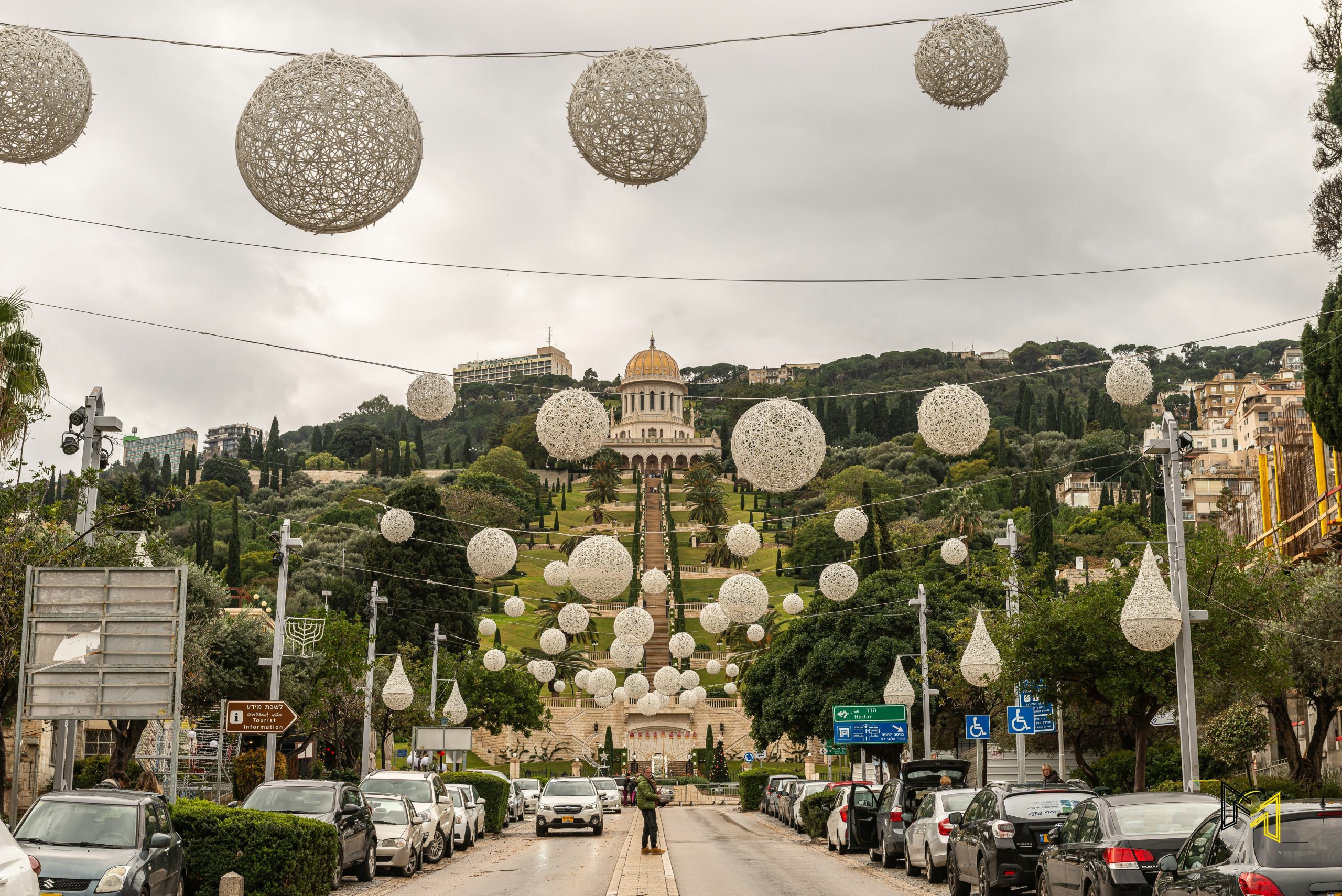
What the Templars left behind has been given new life as one of Haifa’s most vibrant and visited neighborhoods. Ben Gurion Boulevard today is Haifa’s main promenade, the place where the city comes out to walk, eat, and linger. The ground floors of the old Templar houses now hold an appealing mix of restaurants, wine bars, cafes, and boutique shops. The restored stone facades and architectural details have been carefully maintained, and the blend of historic architecture and contemporary activity gives the street a particular warmth. The boulevard’s setting adds enormously to its appeal: at the upper end, the immaculate green terraces and golden Shrine of the Bab of the Baha’i Gardens descend directly toward the street, creating one of the most striking visual axes in any Israeli city.
The alignment is not coincidental, this view, from the Shrine of the Bab down through the gardens and out along the length of Ben Gurion Boulevard to the bay, is one of the iconic images of Haifa. Friday afternoons and Saturday evenings are the liveliest times to visit, when locals crowd the boulevard and the neighborhood takes on a festive atmosphere that gives a vivid sense of how central this space has become to the life of the city.
Visit with Hoshen Tours
A visit to German Colony in Haifa pairs beautifully with nearby destinations along your route. Consider combining it with a stop at Haifa or Bahai Gardens, both just a short drive away. Many travelers also enjoy exploring Wadi Nisnas and Stella Maris on the same day, while Haifa Port offers another worthwhile addition to your itinerary. Your Hoshen Tours guide will craft a seamless route that brings each destination to life with expert commentary and insider knowledge.
Explore Our Tour Collection
Ready to experience Israel in true colors?
Plan Your TourPrivate tours designed around your interests, schedule, and pace.