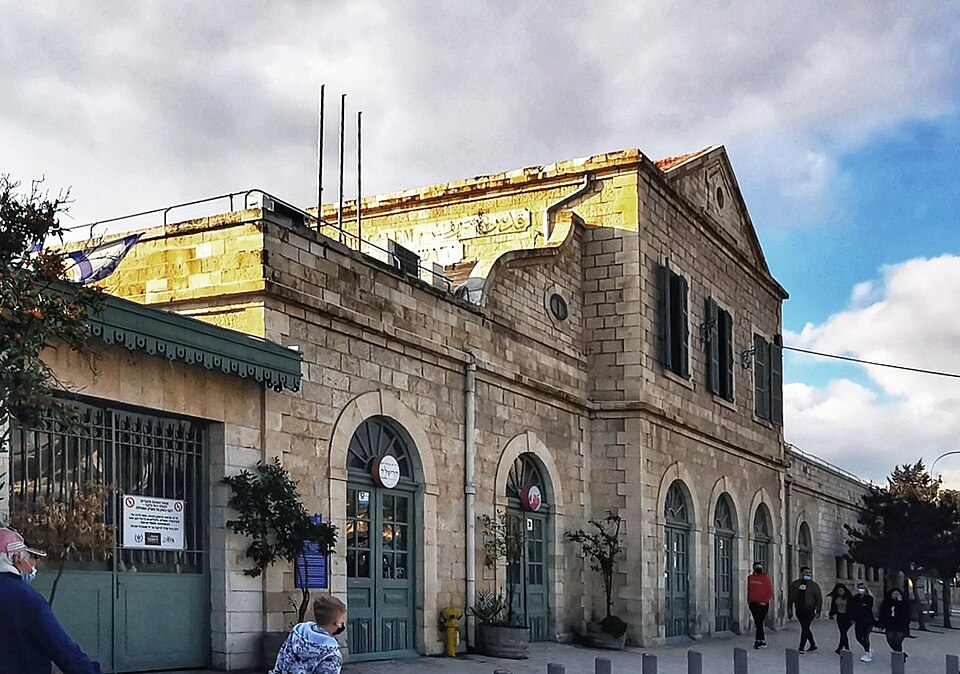
The First Station (HaTachana HaRishona) is Jerusalem’s restored Ottoman-era railway station, now a cultural and entertainment complex in the German Colony neighborhood. The station, built in 1892, was the terminus of the Jaffa-Jerusalem railway, the first railway line in the Ottoman Levant, which connected Jerusalem to the port of Jaffa and, through it, to the world. For over a century, this modest stone building marked the point where pilgrims, immigrants, and travelers arrived in the Holy City.
The Railway
The Jaffa-Jerusalem railway was built by a French company, the Societe du Chemin de Fer Ottoman de Jaffa a Jerusalem, and opened on September 26, 1892. The first train to pull into Jerusalem was a momentous event, residents lined the tracks and Ottoman officials marked the occasion with ceremony. The line covered 87 kilometers through the hills of the Judean lowlands, and the train took three and a half hours to make the journey, climbing from sea level to 800 meters through the narrow valleys and steep grades of the Jerusalem Corridor. The railway transformed travel to Jerusalem, replacing the grueling two-day journey by road or mule with a relatively comfortable train ride. Over the following decades, the railway carried soldiers during World War I, Jewish immigrants during the Mandate period, and supplies during the 1948 siege. The line gradually declined as roads improved, and the original route was finally closed in 1998.
The Ottoman authorities saw the railway as both a modernization project and a strategic asset, improving access to one of the empire’s most important cities. The French investors who funded the line negotiated a concession from Sultan Abdulhamid II, securing rights to build and operate the route for decades. The engineering challenge was considerable, as the line had to navigate the rocky terrain of the Judean hills with sharp curves and several tunnels cut through limestone ridges. A number of the original stone bridges and tunnel openings still stand along the old route today.
The Complex
After years of abandonment, the station was beautifully renovated and reopened in 2013 as a cultural and commercial complex. The restored station buildings house restaurants, cafes, galleries, and shops, and the outdoor spaces host concerts, markets, and cultural events. The original platform, tracks, and restored vintage train cars sit preserved on the rails, giving visitors a tangible sense of the station’s former life. On Fridays, a popular farmers market draws crowds who come for fresh produce, baked goods, and street food. On weekends and warm evenings, the First Station fills with families, and the atmosphere combines heritage architecture with contemporary urban culture. Throughout the year, the station hosts seasonal festivals, open-air film screenings, and live music performances that draw locals and visitors from across the city.
The Train Track Park
The old railway tracks south of the station have been converted into a linear park and walking trail that connects the First Station to the southern neighborhoods of Jerusalem. The path follows the original rail bed through neighborhoods and gardens, offering a peaceful walking route through the city. The park stretches for several kilometers, passing through the neighborhoods of Baka and Talpiot, with benches, play areas, and exercise stations set along the way. Walkers and cyclists share the path, and the route passes old railway markers and remnants of the original track infrastructure that recall the line’s working days.
Visit with Hoshen Tours
First Station is Jerusalem’s restored Ottoman-era railway terminus, now a cultural and dining complex that anchors the southern end of the city center. Hoshen Tours uses the station to tell the story of the Jaffa-Jerusalem railway and the modernization of Ottoman Palestine. The complex connects to the German Colony along Emek Refaim Street, sits below Mishkenot Sha’ananim and the Valley of Hinnom, and is near the Ketef Hinnom archaeological site.
Explore Our Tour Collection
Ready to experience Israel in true colors?
Plan Your TourPrivate tours designed around your interests, schedule, and pace.