



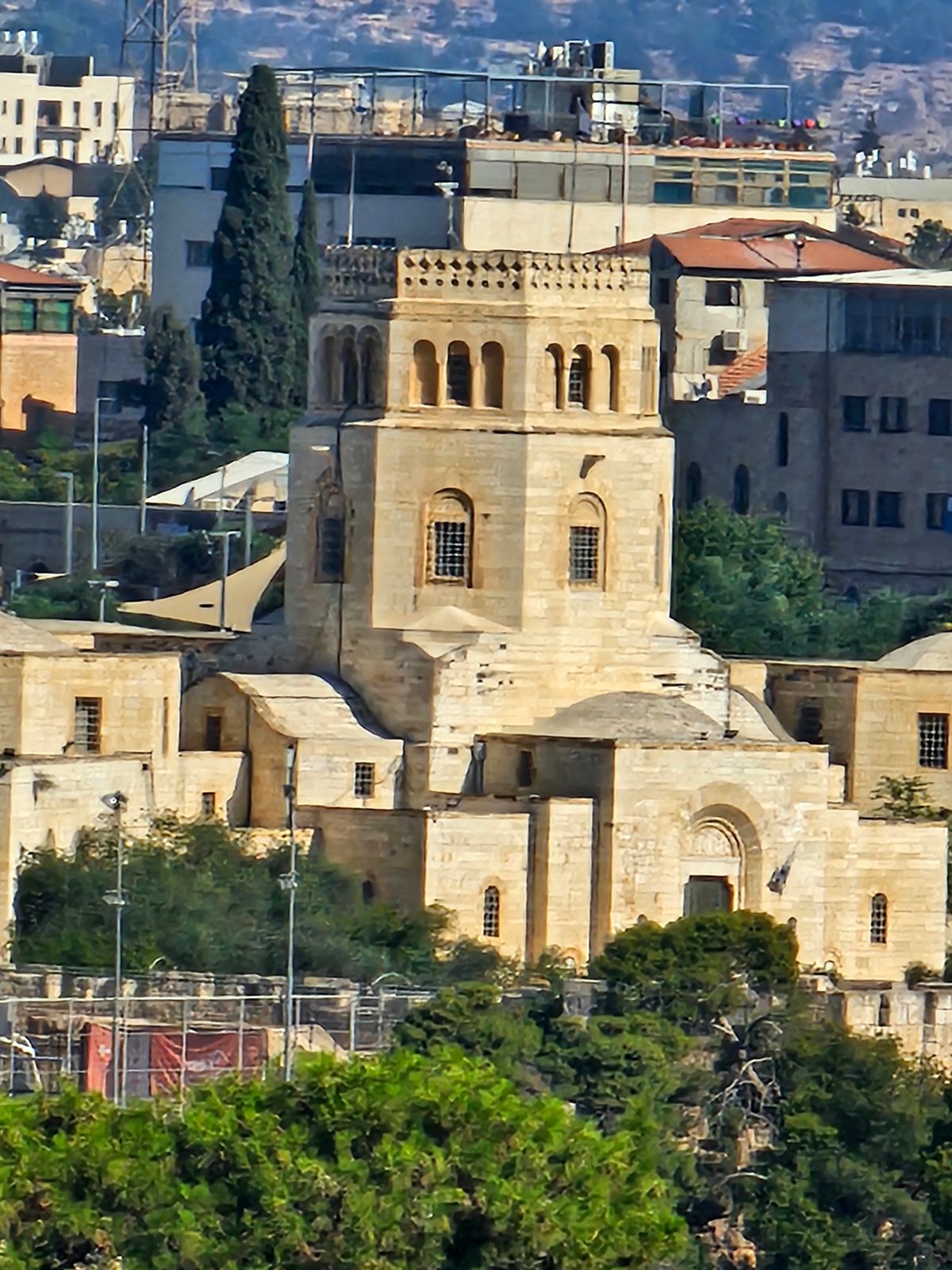
The Rockefeller Archaeological Museum Jerusalem stands outside the northeast corner of the Old City walls, directly opposite the spot where the Crusaders breached Jerusalem in 1099. Built between 1930 and 1938 with a generous two-million-dollar donation from John D. Rockefeller Jr., it is one of the finest archaeological museums in the Middle East and one of the most beautiful buildings in Jerusalem. The museum was a product of the British Mandate era’s ambitious program of archaeological exploration, and it remains a monument to that remarkable period of discovery.
The Rockefeller Archaeological Museum Jerusalem
The museum was designed by Austen St. Barbe Harrison, the chief architect of the British Mandate, who created a masterpiece that blends Art Deco elegance with Middle Eastern sensibility. The building itself is a masterpiece of 1930s architecture, constructed of white local limestone, organized around a central courtyard with a reflecting pool, flanked by cloistered galleries. A striking octagonal tower rises above the entrance. Turkish nut-wood doors, Armenian ceramic tiles, and carved stone details give the interior a warmth and craftsmanship that modern museums rarely achieve. Harrison drew on Ottoman, Romanesque, and Art Deco influences to produce something entirely original, and architectural historians consider it one of the finest buildings of the Mandate period. The building alone is worth the visit. The cloistered galleries, with their arched walkways opening onto the courtyard, recall a medieval monastery, appropriate for a museum that houses so much Crusader-era material. The reflecting pool in the courtyard, the play of light through the arches, and the silence of the galleries create an atmosphere that the noisy, crowded halls of modern museums cannot replicate. Harrison believed that the building should be as much a work of art as the objects inside it, and he succeeded.
Treasures from the British Mandate Excavations
The museum houses artifacts from the great excavations of the British Mandate period (1920s, 1940s), when some of the most important archaeological digs in history were taking place across Palestine and Israel. The collection includes the Lachish Letters, ink-inscribed pottery sherds from the last days of the Kingdom of Judah (c. 588 BCE), containing military correspondence written as the Babylonian army closed in, one of the most vivid documents of a civilization’s final hours. The Megiddo ivories, carved from elephant tusks in the Late Bronze Age, display scenes of mythology and royal life with a sophistication that rivals anything from Egypt or Mesopotamia. Among the most important objects are the Crusader-period marble lintels removed from the facade of the Church of the Holy Sepulchre. Carved around 1149, these extraordinary panels once framed the main entrance to Christianity’s holiest church. One lintel depicts scenes from the life of Jesus, the raising of Lazarus, the entry into Jerusalem, and the Last Supper, carved with a delicacy that rivals the finest Romanesque sculpture in Europe.
The other is a mysterious composition of beasts, birds, centaurs, and naked figures intertwined in vine scrolls, whose meaning has puzzled art historians for generations. The lintels were removed in the 1930s to protect them from weathering and have been in the museum ever since, one of the quiet tragedies of Jerusalem’s heritage is that most visitors to the Holy Sepulchre never realize that the original masterwork that once greeted them at the door now sits in a gallery across town. The museum also houses early Islamic carved wooden panels from the Al-Aqsa Mosque, and artifacts spanning from the Stone Age to the Ottoman period fill the rest of the galleries.
The Dead Sea Scrolls were first brought here after their discovery in the late 1940s and 1950s, and scholars worked in the museum’s famous “Scrollery” to piece together and decipher the ancient manuscripts. After 1967, the scrolls were transferred to the Shrine of the Book at the Israel Museum.
History of the Museum
Originally called the Palestine Archaeological Museum, the institution was conceived as an international trust. After the 1948 war divided Jerusalem, the museum found itself on the Jordanian side of the armistice line, sitting right on the border between the two halves of the city. It remained under Jordanian administration until King Hussein nationalized it in 1966. Seven months later, during the Six-Day War of June 1967, Israeli paratroopers captured the museum. It has since operated as a branch of the Israel Museum, though its collection remains distinct and its building retains its original Mandate-era character. Now part of the Israel Museum system, it offers a quieter, more intimate experience than its larger sibling on Ruppin Boulevard.
Visit with Hoshen Tours
The Rockefeller Museum is a treasure house that most tourists miss. Hoshen Tours includes it for visitors who want to see the Lachish Letters, the Megiddo ivories, and Harrison’s architectural masterpiece, and to stand in the building where the Dead Sea Scrolls were first studied, across the wall from the spot where the Crusaders broke into the Holy City. Hoshen Tours often combines this site with Zedekiah’s Cave, Mea Shearim, and Nachlaot for a memorable day exploring the region.
Explore Our Tour Collection
Ready to experience Israel in true colors?
Plan Your TourPrivate tours designed around your interests, schedule, and pace.