



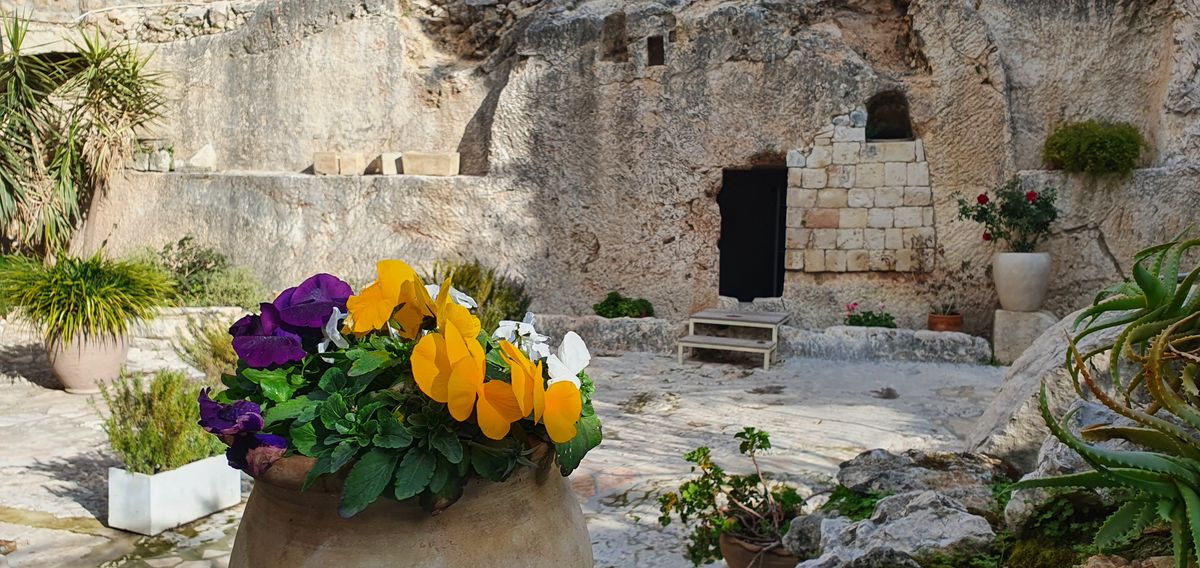
The Garden Tomb Jerusalem in Jerusalem, located just north of the Damascus Gate outside the Old City walls, is a rock-cut tomb in a garden setting that many Protestant Christians identify as the burial place of Jesus, as an alternative to the Church of the Holy Sepulchre. Whether or not the identification is historically correct, the Garden Tomb offers something that the Holy Sepulchre cannot: an open-air garden, an empty tomb cut from the rock, and the silence to reflect on the resurrection in a setting that matches the Gospel description.
General Gordon and the Skull-Shaped Hill
The site was popularized in 1883 by General Charles Gordon (of Khartoum fame), who noticed a skull-shaped rock face on the escarpment north of the Damascus Gate and suggested it might be the “place of the skull” (Golgotha) described in the Gospels: “They came to the place called Golgotha (which means ‘the place of the skull’)” (Matthew 27:33). Gordon, a devout Christian who was uncomfortable with the ornate, denominationally contested Holy Sepulchre, was drawn to the simplicity of the site: a garden, a tomb, and a rocky hill that looked like a skull. The identification was popularized by Gordon and later taken up by Protestant organizations who purchased the property and maintained it as a place of worship.
Skull Hill
The rocky escarpment behind the Garden Tomb does bear a resemblance to a skull, with two cave openings that look like eye sockets and a ridge that suggests a nose. The resemblance has eroded somewhat over the decades (a bus station was built at the base of the cliff), but from certain angles, the skull shape is still visible. Whether the Gospel writers intended the name “place of the skull” to describe the shape of the hill or simply referred to it as a place of execution (where skulls might be found) is debated. The identification of the Garden Tomb with Golgotha is not accepted by most archaeologists (the tomb itself dates to the 8th-7th century BCE, too early for the Gospel period), but the visual resemblance is striking.
The Rock-Cut Tomb and Rolling Stone
The tomb is a rock-cut chamber with a channel for a rolling stone at the entrance, consistent with Jewish burial practices. The interior contains a burial bench and a weeping chamber. The tomb was clearly reused in antiquity (it shows signs of modification), and the style of the original carving dates it to the Iron Age (First Temple period), several centuries before the time of Jesus. The Church of the Holy Sepulchre, by contrast, is built over a tomb that archaeologists date to the 1st century CE, which is the correct period.
However, the experience of approaching an empty tomb carved from rock, in a garden, matches the Gospel narrative with a directness that the Holy Sepulchre, buried under centuries of construction and denominational politics, cannot replicate: “At the place where Jesus was crucified, there was a garden, and in the garden a new tomb, in which no one had ever been laid” (John 19:41).
The Garden Tomb Jerusalem
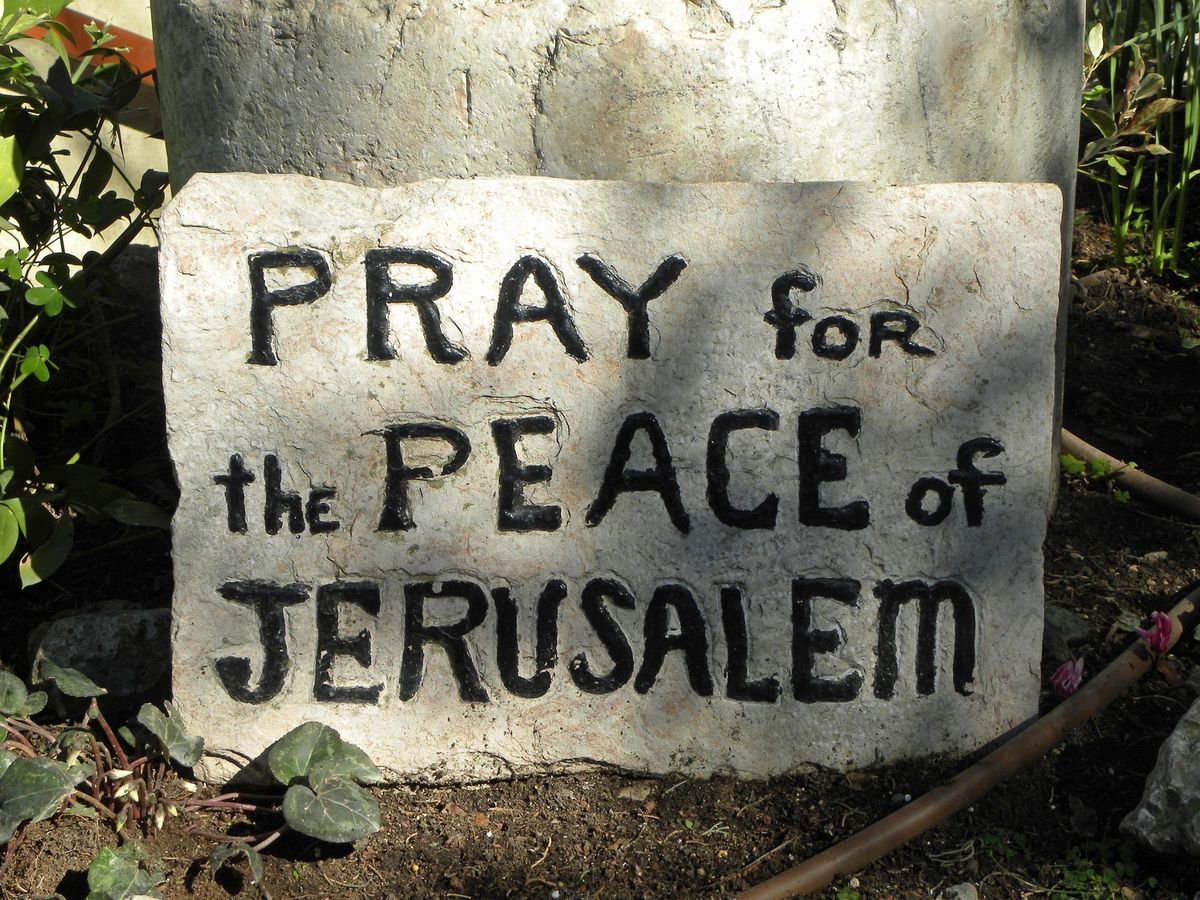
The garden surrounding the tomb is maintained by a British charitable trust, the Garden Tomb Association, and is one of the most peaceful spaces in Jerusalem. The garden is planted with olive trees, bougainvillea, grapevines, and flowers, and the paths are designed for quiet contemplation. Benches are placed at intervals, and the atmosphere is deliberately meditative. For groups who find the Church of the Holy Sepulchre overwhelming (the darkness, the crowds, the competing denominations, the jostling for position at the Edicule), the Garden Tomb offers a quieter, more intimate space for reflection on the resurrection.
Communion Service
Many Protestant groups hold communion services in the garden, and the experience of breaking bread and drinking wine in a garden beside an empty tomb, under the open sky, is deeply moving. The Garden Tomb provides what no church building can: the elements of the Gospel story in their natural form. A garden. A tomb. A stone rolled away. And the tomb is empty.
The Garden Tomb staff welcome groups of all denominations and no denomination, and the communion service is available in multiple languages. Groups can reserve a specific area of the garden for private worship, and the combination of the setting, the story, and the act of remembrance creates moments that many visitors describe as the spiritual highlight of their pilgrimage.
Archaeological Debate
Most archaeologists and historians identify the Church of the Holy Sepulchre as the more likely site of the crucifixion and burial. The evidence includes: the 1st-century dating of the tomb beneath the church, the quarry marks that prove the area was outside the city walls in the 1st century (as the Gospels require), the Judgment Gate discovery nearby, and the unbroken tradition of veneration dating to the 4th century. The Garden Tomb dates to the wrong period and lacks the archaeological support of the Holy Sepulchre.
But for many visitors, the question of which site is “authentic” matters less than the experience of encountering the resurrection story in a setting that feels alive. The Holy Sepulchre has the archaeology. The Garden Tomb has the garden. And both have the empty tomb.
The Garden Tomb is free to visit and open to all, with no admission charge (donations are welcome). Guided tours in English and other languages are available throughout the day. The site is closed on Sundays. The garden is wheelchair accessible, and the peaceful atmosphere makes it suitable for meditation and prayer at any time during opening hours.
Visit with Hoshen Tours
The Garden Tomb is where the resurrection story is told in the open air. Hoshen Tours includes it for groups who wish to visit both proposed sites of the crucifixion and resurrection, presenting the evidence for each and letting visitors decide for themselves. For groups who want to hold a communion service, Hoshen Tours arranges the logistics and provides the space for worship.
Ready to experience Israel in true colors?
Plan Your TourPrivate tours designed around your interests, schedule, and pace.