



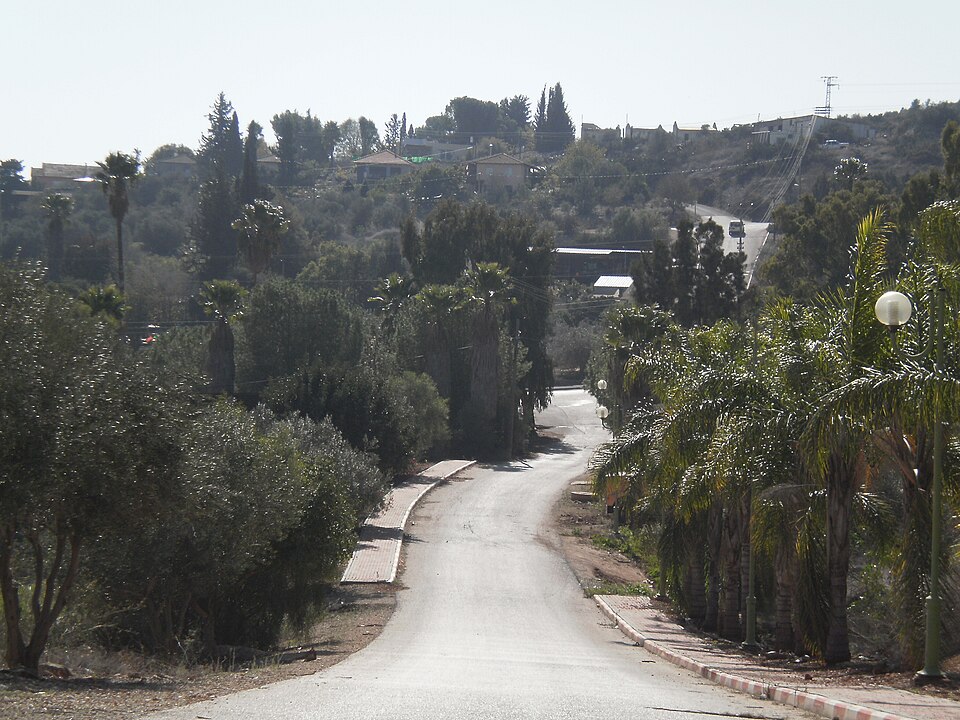
Ilaniya (formerly Sejera) is a small moshava in the Lower Galilee with a significance far beyond its size. This village was the birthplace of Jewish self-defense in the Land of Israel, the place where the HaShomer organization, the predecessor of all Israeli military forces, was founded in 1909, and a community where the pioneering idealism of the Second Aliyah was tested against the physical realities of life on the land. It is also one of the most unusual communities in the history of the Zionist project, home to Subbotniks, Russian Christian peasants who adopted Jewish observance and eventually made their way to the Galilee.
Founded as a Training Farm
Sejera was established in 1899 by the Jewish Colonization Association (ICA) as an agricultural training farm, a place where young Jewish immigrants could learn the practical skills of farming before being settled on their own land. The farm’s purpose was explicitly educational: it was equipped with tools, animals, and instructors, and immigrants were rotated through it in groups to learn plowing, planting, harvesting, and livestock management. The idea was that the Jewish return to the land required not just idealism and capital, but the acquisition of agricultural knowledge that had been absent from Jewish life in the diaspora for centuries. Sejera became one of the most important such training institutions in the country, and its graduates went on to found or lead agricultural settlements across the Galilee and the Jezreel Valley. The farm buildings, some of which survive in various states of preservation, date to this founding period.
Ben-Gurion and Ben-Zvi at Sejera
Among the young immigrants who came to work at Sejera in the early years of the twentieth century were David Ben-Gurion and Yitzhak Ben-Zvi, two men who would become defining figures of the Zionist project and the State of Israel. Ben-Gurion, who would become Israel’s first prime minister, worked as a farm laborer at Sejera in 1908–1909, loading hay, plowing fields, and absorbing the ethos of physical labor and self-reliance that the Second Aliyah considered central to the creation of a new Jewish identity. Ben-Zvi, who would become Israel’s second president, was at Sejera at the same period and was involved in the early discussions about Jewish self-defense that would lead to the founding of HaShomer. Their time at Sejera was formative: it was here that they encountered both the reality of agricultural labor and the problem of security that would preoccupy the Zionist movement for the next four decades.
Birth of Jewish Self-Defense: HaShomer
In the early 1900s, Jewish settlements in the Galilee relied on Arab and Circassian guards for protection, an arrangement that many of the Second Aliyah immigrants found deeply uncomfortable, both practically and ideologically. A group of young idealists, including Israel Shohat and Manya Shohat, believed that Jews needed to take responsibility for their own defense. In 1907, they established the Bar Giora organization at Sejera, named after Shimon bar Giora, a leader of the Jewish revolt against Rome. Bar Giora operated quietly, taking over guard duties at a small number of settlements to prove that Jewish guards could be as effective as hired Arab watchmen. In 1909, the organization expanded and was renamed HaShomer, “The Watchman”, which took over guard duty at Jewish settlements across the Galilee and the Jezreel Valley.
The Shomrim rode horses, carried weapons, dressed in a style influenced by local Bedouin and Circassian dress, and developed the fighting skills and local knowledge that made them effective. Their ethos of self-reliance, physical courage, and intimate connection to the land became foundational to Israeli military culture. HaShomer was dissolved in 1920 when the Haganah was formed as a larger, more formally organized defense force, but its founding at Sejera is commemorated as the origin point of Jewish armed self-defense in the modern Land of Israel.
The Subbotniks: Russian Peasants Who Became Jews
Ilaniya is also home to a community of Subbotniks, one of the most unusual groups in the history of Zionist settlement. The Subbotniks were Russian peasants, originally Orthodox Christians, who in the 18th and 19th centuries began adopting Jewish religious practices: observing the Sabbath (“Subbota” in Russian, hence the name), keeping kashrut, reading the Hebrew Bible in place of the New Testament, and eventually circumcising their sons. Their movement arose independently in several regions of rural Russia, without direct contact with Jewish communities in many cases, as a form of biblical primitivism, a return to what they read as the true religion of the scriptures. Over generations, some Subbotnik communities formally converted to Judaism, while others occupied an ambiguous status: practicing many Jewish observances while maintaining a separate identity. Several Subbotnik families immigrated to the Land of Israel in the early twentieth century and settled in Sejera, where their agricultural skills and their unusual religious history made them a distinctive part of the community. Ariel Sharon’s mother was from a Subbotnik family, one of the most famous connections between this group and the mainstream of Israeli life.
The Circassian Khan and Historic Farm Buildings
Among the historic structures at Ilaniya is a restored Circassian khan, a stone building originally used as a caravanserai and later repurposed as part of the farm complex. The Circassians, a Muslim people from the Caucasus who were resettled in the Galilee by the Ottoman authorities in the 1870s, had a significant presence in the region around Sejera, and their building traditions influenced the architecture of the area. The khan and several of the original ICA farm buildings have been preserved and form part of the Sejera heritage site, which includes a small memorial to HaShomer and the pioneering story of the moshava. The stone construction, the thick walls, and the arched openings of these buildings give Ilaniya a physical connection to its Ottoman-period past that few moshavot of its generation have retained.
Visit with Hoshen Tours
Ilaniya tells the story of how Jewish self-defense began, and of the remarkable variety of people who were drawn into the Zionist project. Hoshen Tours visits the HaShomer courtyard, tells the story of Ben-Gurion and Ben-Zvi working the fields here, explains the Subbotniks and what their presence says about the breadth of Jewish identity, and walks through the surviving farm buildings to connect the site to the wider narrative of Second Aliyah settlement in the Galilee. The site pairs well with nearby Kibbutz Kfar Tavor and the story of the Jezreel Valley.
Visitors exploring the Galilee often combine Ilaniya-Sejera with nearby destinations such as Yodfat, Beit Rimon, and Nahal Tavor, each offering its own distinctive perspective on the region’s layered history and landscape. A broader itinerary might also include Mount Tabor and Zippori, both within easy reach and rich in their own right.
Every Hoshen Tours itinerary is private and fully customizable. Contact us to begin planning your journey through the Galilee.
Ready to experience Israel in true colors?
Plan Your TourPrivate tours designed around your interests, schedule, and pace.