



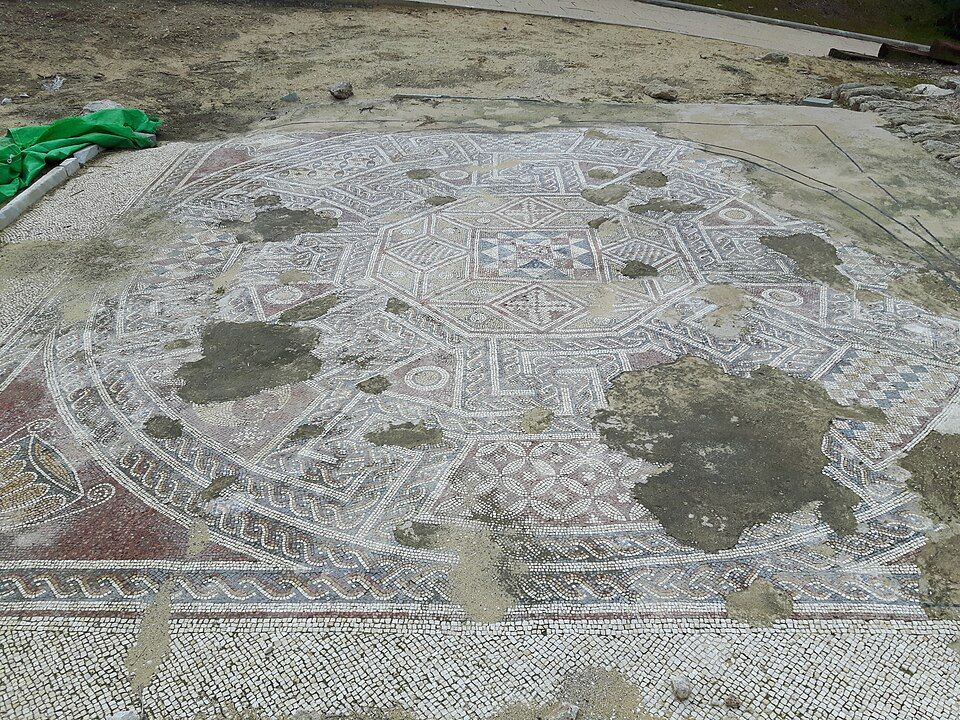
 Ashkelon is one of the oldest and largest cities in the ancient world, a Philistine capital on the Mediterranean coast with over 5,000 years of continuous habitation. The national park preserves ruins from the Canaanites, Philistines, Romans, and Crusaders within a massive Bronze Age rampart that still defines the site today.
The Canaanite City
Long before the Philistines arrived, Ashkelon was one of the largest and most powerful cities in the ancient Near East. By the Middle Bronze Age (c. 2000–1550 BCE), the city enclosed roughly 150 acres, an enormous urban footprint for the ancient world, protected by a massive semicircular earthen rampart still visible today. Ashkelon appears in Egyptian Execration Texts from the early second millennium BCE, in Thutmose III’s conquest lists, and in the Amarna Letters, where the city’s rulers corresponded with the Egyptian pharaoh. The famous silver calf figurine discovered at the site, a miniature bull calf covered in silver foil, is one of the most significant Canaanite cultic objects ever found in the Levant, and likely represents the young bull deity worshipped in the city’s temple.
Oldest Arched Gateway in the World
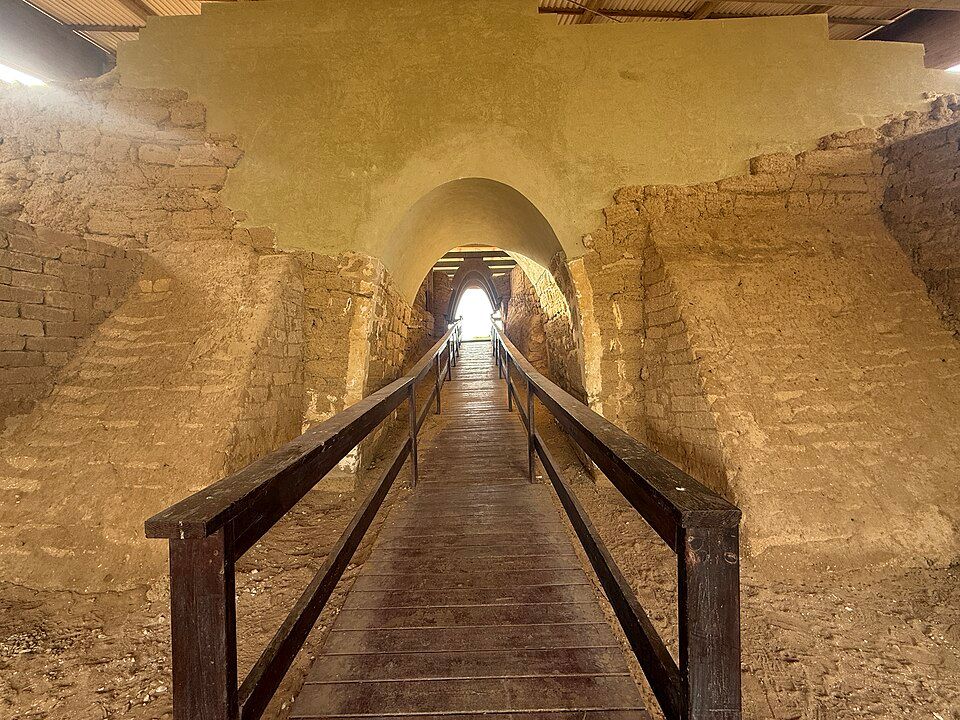 Discovered in 1992, Ashkelon’s Canaanite gate dates to approximately 1850 BCE and is one of the oldest known arched city gates in the world. Built of mud bricks on a stone foundation, it features a true voussoir arch, not a corbelled arch, predating the arched gates familiar from the Roman world by nearly two millennia. The gateway passage is approximately 2.4 meters wide and the arch stands about 3.5 meters high, with the gate complex extending some 15 meters in length with flanking towers. A roadway paved with compressed chalk led through the gate. The discovery challenged the long-held assumption that the true arch was a Roman invention.
Philistine Capital
Ashkelon was one of the five cities of the Philistine Pentapolis, together with Gaza, Gath, Ashdod, and Ekron, from approximately 1175 BCE, when the Sea Peoples migrated from the Aegean and settled the coastal plain. As a major port city, Ashkelon was the Philistines’ commercial gateway to the Mediterranean world. Their material culture was distinctive: Mycenaean-style bichrome pottery, evidence of pig consumption (which sets them apart from their Israelite neighbors), temples with elaborate cult stands, and imported goods from across the Aegean. Excavations uncovered a Philistine marketplace with large storage jars, loom weights, and evidence of wine and oil production. A dramatic destruction layer from Nebuchadnezzar II’s conquest in 604 BCE revealed collapsed buildings, burnt debris, and the remains of people killed in the assault. The Philistines’ European ancestry was confirmed in 2019 when DNA analysis of burials from the Ashkelon cemetery, the first and only Philistine cemetery ever found, containing approximately 210 burials (of which about 10 were analyzed for DNA), was published in Science Advances, showing southern European genetic signatures consistent with Aegean origins.
Biblical References
Ashkelon appears repeatedly in the Hebrew Bible. Judges 14:19 records that Samson went down to Ashkelon and killed thirty of its men to pay a debt. The city is listed in 1 Samuel 6:17 among the five Philistine cities that sent golden tumors as a guilt offering when they returned the Ark of the Covenant. David’s great lament over Saul and Jonathan in 2 Samuel 1:20 includes the famous line: “Tell it not in Gath, publish it not in the streets of Ashkelon, lest the daughters of the Philistines rejoice.” The prophet Jeremiah (47:5–7) pronounced doom against the city in a vivid oracle against Philistia. Ashkelon’s prominence in scripture reflects its importance as a symbol of Philistine power and coastal wealth throughout the biblical period.
The Ancient Dog Cemetery
In the Persian-period levels (5th century BCE), archaeologists discovered approximately 1,200 dogs carefully buried in individual shallow pits, most in a curled sleeping position. It is the largest known animal cemetery in the ancient Near East. The dogs show no signs of ritual slaughter, they appear to have died naturally and were respectfully interred. The leading theory connects the cemetery to a Phoenician healing cult: dogs were associated with healing deities in the ancient Near East and Mediterranean, and the cemetery may have been linked to an Asclepius-type healing shrine. Parallels exist in Greek healing cults where dogs were sacred to the god of medicine.
Roman
Under Rome, Ashkelon held the prestigious status of a civitas libera, a free city that was never part of Herod’s kingdom, minted its own coins, and was proud of its independence. Some ancient traditions hold that Herod the Great was born here before his family moved to Idumea, though this remains debated. The city’s wealth is reflected in its extraordinary archaeological remains: a well-preserved bouleuterion (council house) with semicircular seating for approximately 600, lined with Corinthian columns and graced by a marble statue of Nike; Roman sculptures including figures of Atlas, Isis, and a child riding a dolphin; and painted funerary tombs. Ashkelon was famous in antiquity for its onions, the English word “scallion” derives from “Ascalonia,” the Latin name for the city’s celebrated produce.
The Crusader Period
Ashkelon played a significant role in the Crusader wars for the Holy Land. When the First Crusade’s army swept down the coast, Ashkelon remained in Fatimid hands and was the staging point for the Fatimid army defeated by the Crusaders at the Battle of Ascalon in 1099. The city itself was not taken until 1153. During the Third Crusade, Saladin ordered the city’s walls demolished rather than let them fall into Crusader hands, Richard the Lionheart arrived in 1191 to find rubble. Richard oversaw the rebuilding of Ashkelon’s fortifications, and the city changed hands multiple times before Mamluk sultan Baybars demolished it thoroughly in 1270 to deny it to any future Crusader force. Portions of the Crusader wall remain visible in the national park today.
The Leon Levy Expedition
The modern understanding of Ashkelon rests largely on the work of Harvard’s Leon Levy Expedition, which excavated the site from 1985 to 2016, one of the longest-running archaeological projects in Israel’s history. Founded and directed by Lawrence Stager of Harvard University, and later by Daniel Master, the expedition published groundbreaking findings on Philistine origins, Bronze Age urbanism, Canaanite religion, and Roman civic life. Their discovery of the Philistine cemetery and the subsequent ancient DNA study transformed the academic understanding of who the Philistines actually were and where they came from.
Visit with Hoshen Tours
A visit to Ashkelon pairs beautifully with nearby destinations along your route. Consider combining it with a stop at Ashdod or Apollonia, both just a short drive away. Many travelers also enjoy exploring Caesarea and Tel Dor on the same day, while Caesarea Aqueduct offers another worthwhile addition to your itinerary. Your Hoshen Tours guide will craft a seamless route that brings each destination to life with expert commentary and insider knowledge.
Explore Our Tour Collection
Ready to experience Israel in true colors?
Plan Your TourPrivate tours designed around your interests, schedule, and pace.