



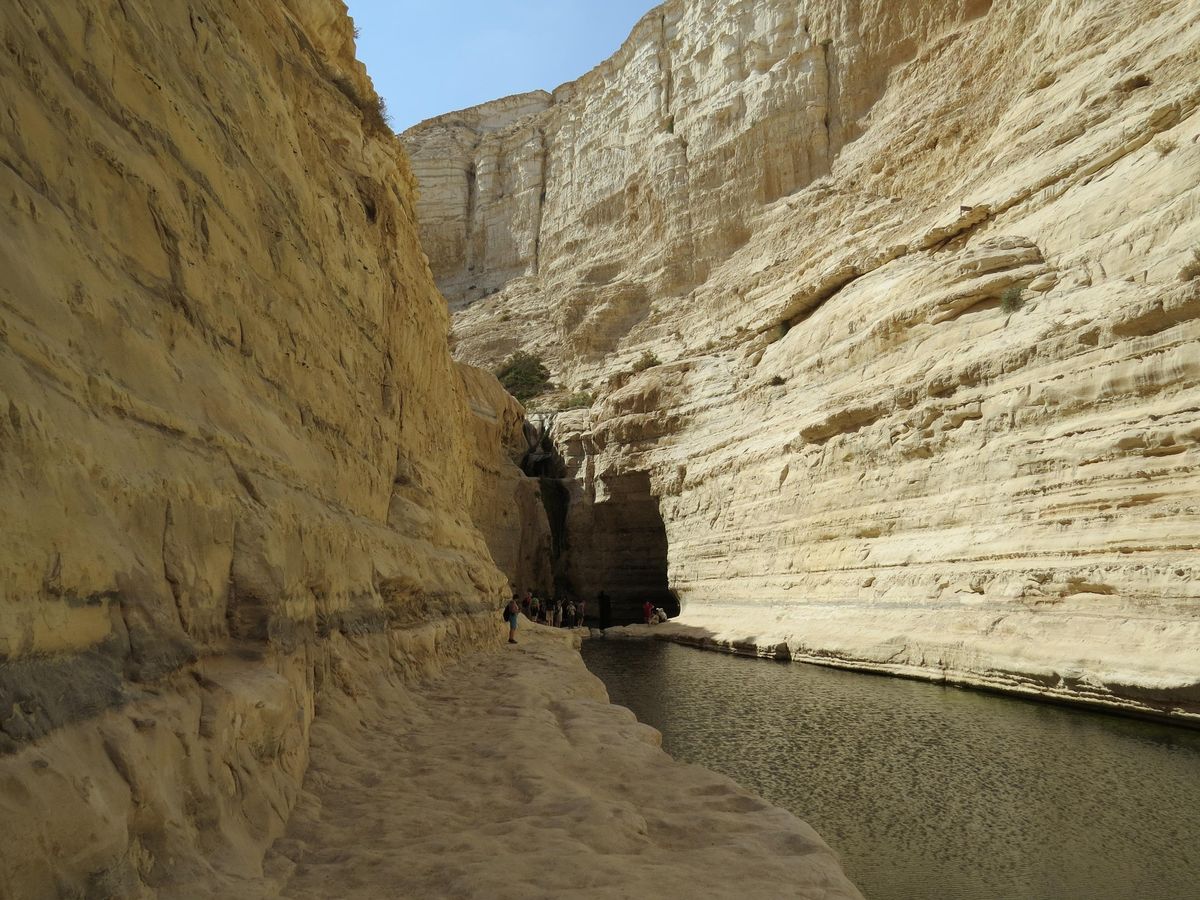
Ein Avdat (Ein Ovdat) is a deep canyon cut into the chalk and limestone cliffs of the central Negev, fed by perennial springs that create pools, waterfalls, and lush vegetation in the heart of one of the driest landscapes in Israel. The canyon, part of the Zin Valley Nature Reserve, is one of the most spectacular hiking destinations in the Negev and one of the few places in the desert where water flows year-round.
Pools and Waterfalls in the Desert
The Zin Valley is a deep, narrow gorge with walls rising over 100 meters on both sides. The white chalk cliffs glow in the desert sun, and the contrast between the bone-dry plateau above and the green, water-fed canyon below is dramatic. The springs that feed the pools emerge from the rock at several points, creating a chain of pools connected by small waterfalls. The largest waterfall, at the head of the canyon, drops into a deep pool surrounded by ferns, reeds, and hanging gardens of maidenhair fern that seem impossible in the Negev.
Two Routes Through the Canyon
Two main trails explore the canyon. The lower trail starts from the canyon floor and follows the stream upstream to the large waterfall and pool. This is the shorter and easier route (about 45 minutes each way) and is the most popular. The upper trail descends from the rim of the canyon (near Ben-Gurion’s grave) via a series of metal ladders and rock-cut steps carved into the cliff face. The descent is steep and dramatic, and the trail is one-way (you cannot climb back up). The upper trail connects to the lower trail at the canyon floor, so most hikers descend from above and exit at the lower parking area.
Ibex, Vultures, and Desert Wildlife
Ein Avdat is one of the best places in the Negev to see wildlife. Nubian ibex (ya’el), the desert wild goats with magnificent curved horns, are regularly spotted on the cliff edges and along the trails. They are remarkably agile, navigating vertical rock faces with ease. Griffon vultures nest on the high cliffs, and their enormous wingspan (up to 2.8 meters) makes them unmistakable as they soar on the thermal currents above the canyon. Rock hyraxes (shafan sela, the biblical “coney”) sun themselves on boulders near the pools. And in the pools themselves, small fish and crabs survive in the spring-fed water.
Nabatean Farms
Above the canyon, the remains of ancient Nabatean agricultural terraces are visible on the plateau. The Nabateans developed ingenious techniques for capturing rainwater runoff and channeling it to terraced fields, allowing them to grow crops in a region that receives less than 100 millimeters of rain per year. The terraces at Ein Avdat, combined with the nearby city of Avdat, demonstrate the full range of Nabatean desert agriculture.
Connection to Sde Boker
Ein Avdat is directly below Sde Boker, and Ben-Gurion’s grave overlooks the canyon from the rim above. The combination of visiting the grave, looking down into the canyon, and then hiking through it is one of the most powerful experiences in the Negev: the man who dreamed of making the desert bloom, buried above a canyon where the desert already blooms on its own.
Visit with Hoshen Tours
Ein Avdat is a stunning desert canyon of pools and waterfalls. Hoshen Tours pairs it with Sde Boker, the Nabatean city of Avdat, the craters of the Makhteshim, and the the Incense Route for a full day in the heart of the Negev.
Explore Our Tour Collection
Ready to experience Israel in true colors?
Plan Your TourPrivate tours designed around your interests, schedule, and pace.