


Call us today!
+1-917-9055850

Magazine
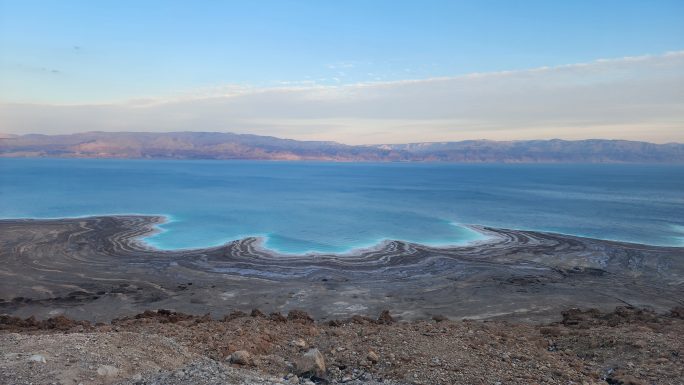
The Dead Sea Is Disappearing: What's Happening and Can It Be Saved?
The Dead Sea — the lowest point on the surface of the earth, sitting at approximately 439 meters (1,440 feet) below sea level — is shrinking at an alarming rate. Its water level drops by more than one meter (over three feet) every single year. Since the 1960s, the Dead Sea has lost approximately one-third of its surface area, and there is no sign of the decline slowing down.
For thousands of years, the Dead Sea has been one of the most iconic natural wonders in the world. Its extreme salinity — nearly ten times saltier than the ocean — allows visitors to float effortlessly on its surface. Its mineral-rich mud and waters have attracted travellers seeking therapeutic benefits since the time of King Herod and Cleopatra. Today, the Dead Sea remains one of Israel’s most visited tourist destinations, drawing hundreds of thousands of visitors each year. But behind the postcards and the mud selfies, a serious environmental crisis is unfolding.
The Dead Sea has no outlet — water enters but never flows out. Historically, the Jordan River was the Dead Sea’s primary water source, providing approximately 1.7 billion cubic meters of water per year. However, since the 1950s and 1960s, large-scale water infrastructure projects by Israel, Jordan, Syria, and Lebanon have diverted the vast majority of the Jordan River’s flow for domestic and agricultural use. Today, the Jordan River delivers only a fraction of its original volume to the Dead Sea — an estimated 80% reduction.
At the same time, mineral extraction operations on both the Israeli and Jordanian sides of the Dead Sea use large evaporation pools that accelerate water loss. The result: more water leaves the Dead Sea through evaporation and industrial use than enters it, and the gap grows wider each year.
As the Dead Sea retreats, it leaves behind one of the most dramatic and dangerous geological phenomena on the planet: sinkholes. More than 6,000 sinkholes have formed along the Dead Sea’s shores, with 75% of them appearing since 1997. New sinkholes open at a rate of hundreds per year, and they range from 1 to 10 meters deep and up to 25-30 meters in diameter.
The mechanism is straightforward but destructive: as the sea level drops, underground freshwater streams flow into areas that were previously submerged. This freshwater dissolves ancient layers of salt buried beneath the surface, creating underground cavities that eventually collapse without warning.
The impact on local communities has been severe. Kibbutz Ein Gedi, one of the most beloved nature reserves and tourist destinations on the Dead Sea, has lost approximately 300 dunams (75 acres) of land to sinkholes. The famous Ein Gedi beach has been closed to the public for several years due to the danger. Roads, infrastructure, and agricultural land have been damaged or destroyed.
The most ambitious proposal to save the Dead Sea has been the Red Sea-Dead Sea Water Conveyance project — a 177-kilometer (110-mile) pipeline that would carry water from the Red Sea near Aqaba to the Dead Sea, while also producing desalinated drinking water along the way. In 2013, Israel, Jordan, and the Palestinian Authority signed an agreement to move forward with the project.
However, the project has faced enormous challenges — political tensions, environmental concerns about mixing Red Sea and Dead Sea waters (which could trigger algae blooms and alter the Dead Sea’s unique chemistry), and the sheer cost. The project was effectively shelved in 2021, and current geopolitical realities make its revival unlikely in the near term.
Environmental organizations have long argued that the most effective solution is to restore water flow to the Jordan River. This would require cooperation between Israel, Jordan, Syria, and Lebanon to reduce water extraction from the river and its tributaries.
Reforming the mineral extraction industry’s water practices on both sides of the Dead Sea is another potential lever. The massive evaporation pools operated by companies such as ICL (Israel Chemicals) and the Arab Potash Company on the Jordanian side contribute significantly to water loss.
Despite the crisis, the Dead Sea remains a must-visit destination for travelers to Israel. Visitors can still float in the hyper-saline waters, cover themselves in therapeutic mineral mud, and take in the otherworldly desert landscape. The views from the cliffs of Masada overlooking the Dead Sea at sunrise are among the most breathtaking in Israel.
For the more adventurous, guided tours now visit the sinkhole fields themselves — a stark and fascinating reminder of the geological forces reshaping this landscape in real time. Travelers should be aware that the shoreline has receded significantly in recent years, and some beaches and facilities that were once at the water’s edge are now hundreds of meters from the shore. Planning your visit with a knowledgeable local guide ensures you’ll reach the best access points safely.
The Dead Sea is not dead yet — but it is dying. Without dramatic intervention, scientists project that it will continue shrinking for decades to come, leaving behind a landscape of sinkholes, abandoned infrastructure, and lost heritage.
For visitors to Israel, seeing the Dead Sea today is not just a tourist experience — it is witnessing one of the most significant environmental challenges of our time, playing out in one of the most historically and spiritually significant places on earth.
Contact Us
Related articles
Tours and Activities
Israel's Missile Defense Systems: How a Small Country Built the World's Most Advanced Air Defense
Born from WarIn the summer of 2006, the Second Lebanon War exposed a critical vulnerability in Israel's defences. Over 34…
Bird Migration in Israel
Israel: A Crossroad for Bird Migration Israel, a crossroad between three continents, is situated on one of the busiest bird…

Israeli Innovation: How the Startup Nation Changed the World
Israeli Innovation: How the Startup Nation Changed the World"Necessity is the mother of invention." When Israel was established in 1948,…