



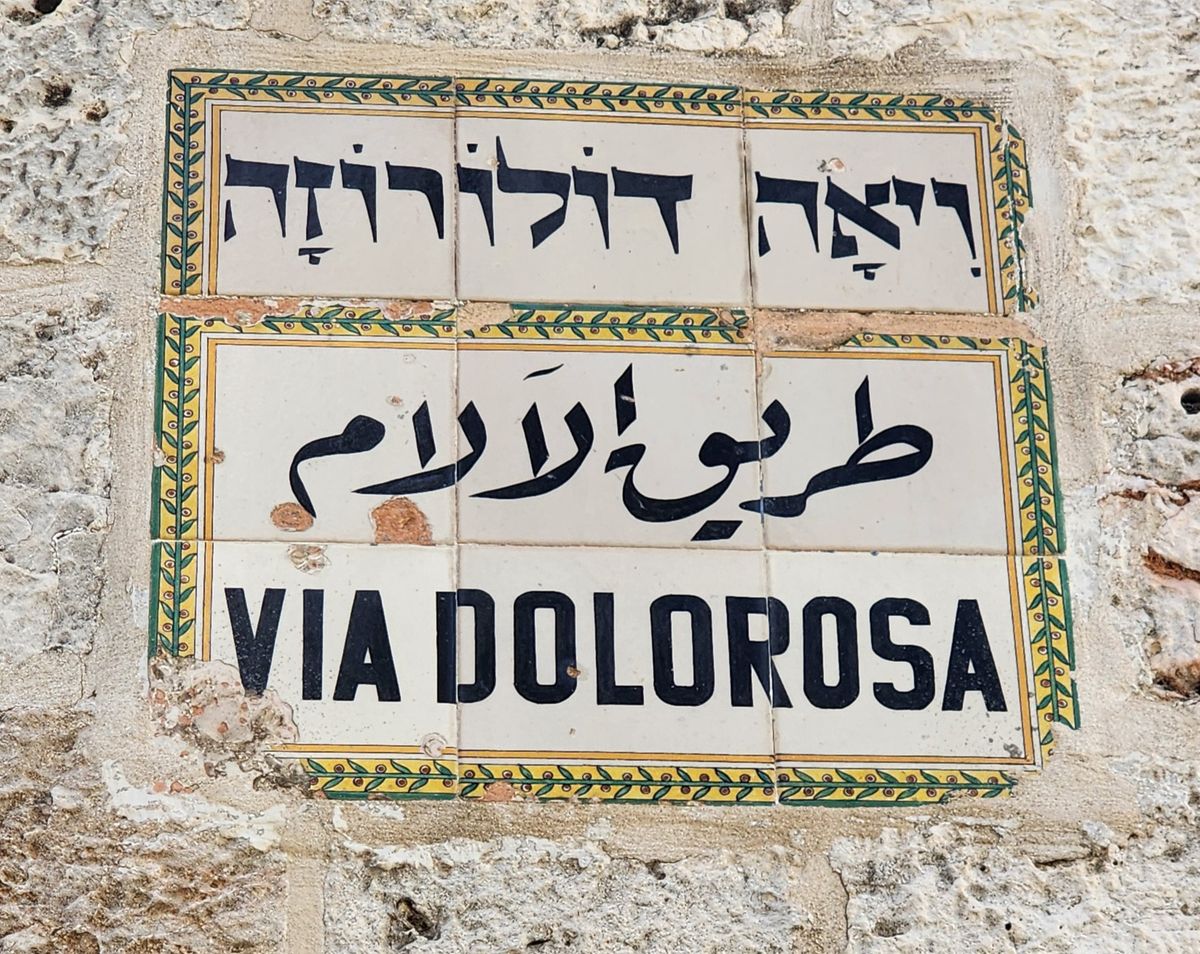
The Via Dolorosa (Way of Suffering) is the traditional route that tradition holds that Jesus walked from his condemnation by Pontius Pilate to his crucifixion at Golgotha. The path winds through the narrow streets of the Old City, marked by fourteen stations that commemorate events along the way. Nine stations are on the streets, and the final five are inside the Church of the Holy Sepulchre. For millions of Christians, walking this path is the most profound experience of their pilgrimage to the Holy Land. The Latin name means “Way of Suffering” or “Way of Grief,” and the route has been walked by pilgrims since at least the Byzantine period, though its current form dates to the 18th century. Today it passes through some of the busiest market streets in the Old City, where the sacred and the mundane exist side by side in a way that is quintessentially Jerusalem.
The Route from Lions’ Gate to the Holy Sepulchre
The Via Dolorosa begins near the Lions’ Gate in the Muslim Quarter and ends inside the Church of the Holy Sepulchre in the Christian Quarter. The route passes through the busiest market streets of the Old City, which means pilgrims carrying crosses walk past vendors selling spices, souvenirs, and falafel. The juxtaposition of sacred procession and daily commerce is quintessentially Jerusalem, and depending on your temperament, either adds to the reality of the experience or detracts from its solemnity. The total distance is approximately 600 meters, but with stops at each station, readings, and the crowds, the walk typically takes one to two hours.
Fourteen Stations
Station I: Jesus is condemned to death by Pontius Pilate. Located at the Omariya School, near the Lions’ Gate. The school sits on the site of the Antonia Fortress, where Roman governors held court.
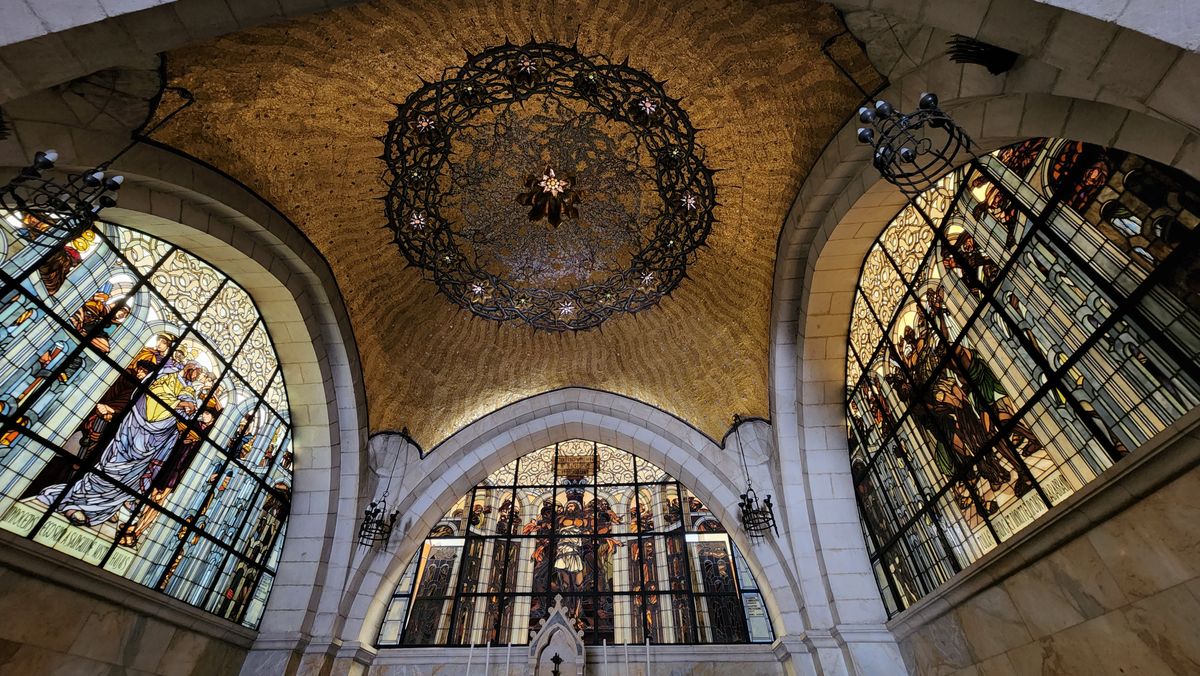
Station II: Jesus receives the cross and is scourged. The Chapel of the Condemnation and the Chapel of the Flagellation, both Franciscan, mark this station. The Flagellation Chapel features stained glass windows depicting the scourging, the crown of thorns, and Pilate washing his hands (Matthew 27:24).
Station III: Jesus falls the first time. A small Polish chapel marks the spot with a relief sculpture above the door.
Station IV: Jesus meets his mother Mary. The Armenian Catholic Church of Our Lady of the Spasm contains a 5th-century mosaic floor depicting sandaled feet, traditionally identified as Mary’s footprints.
Station V: Simon of Cyrene is forced to help carry the cross. “They compelled a passerby, Simon of Cyrene, who was coming in from the country, to carry his cross” (Mark 15:21). A Franciscan chapel marks the spot where the Via Dolorosa begins to climb toward Golgotha.
Station VI: Veronica wipes the face of Jesus. According to tradition (not recorded in the Gospels), a woman named Veronica stepped out of the crowd and wiped the sweat and blood from Jesus’ face, and his image was imprinted on the cloth. The Church of St. Veronica, maintained by the Little Sisters of Jesus, marks this station.
Station VII: Jesus falls the second time. A Franciscan chapel at the intersection with the Suq Khan ez-Zeit (the main market street) marks the second fall.
Station VIII: Jesus speaks to the women of Jerusalem. “Daughters of Jerusalem, do not weep for me; weep for yourselves and for your children” (Luke 23:28). A cross carved in the wall of the Greek Orthodox Monastery of St. Charalambos marks this station.
The Gospel Connection
Station IX: Jesus falls the third time. A Roman column at the entrance to the Coptic Patriarchate, near the rooftop of the Holy Sepulchre, marks the third fall. From here, the Ethiopian monastery on the roof is visible.
Station X: Jesus is stripped of his garments. A small chapel at the entrance to the Church of the Holy Sepulchre marks this moment. Visitors climb the steep stairs to the Golgotha chapel above.
Station XI: Jesus is nailed to the cross. A Latin (Catholic) altar on the upper floor of the church marks the spot. A mosaic ceiling above depicts the scene, and pilgrims kneel at the altar in prayer.
Station XII: Jesus dies on the cross. The Greek Orthodox altar stands where tradition holds the cross stood. Beneath the altar, a silver disk surrounds a hole in the rock where tradition holds the cross was inserted. Pilgrims reach under the altar to touch the bare rock of Golgotha.
Station XIII: Jesus is taken down from the cross and his body prepared for burial. The Stone of Unction (Stone of Anointing) lies at the entrance level of the church. Pilgrims kneel to touch the pink limestone slab and anoint it with oil and perfume, following the description in John 19:39-40.
Station XIV: Jesus is laid in the tomb. The Edicule, the small structure at the center of the Rotunda, encloses what tradition holds is the rock-cut tomb where Jesus was buried and from which he rose. This is the holiest site in Christianity. The line to enter can take an hour or more, and the time inside is brief, but for many pilgrims it is the defining moment of their journey to the Holy Land.
Finding Your Way
The stations are marked by small plaques on the walls, but in the busy market streets they can be easy to miss. Stations I and II are in the quiet eastern end near Lions’ Gate, but from Station III onward the route passes through the crowded souks of the Muslim Quarter. The path turns south at Station V and climbs steeply toward Station IX. Without a guide or a clear map, many pilgrims walk past stations without noticing them. The numbered plaques are typically at head height, in Roman numerals, on the right-hand side of the street.
Friday Procession
Every Friday afternoon at 3:00 PM (the traditional hour of Jesus’ death), the Franciscan friars lead a public procession along the Via Dolorosa, carrying a large wooden cross. The procession is open to all, and pilgrims from around the world join in, singing hymns in dozens of languages as they move through the narrow streets. The procession stops at each station for a reading and a prayer, and the experience of walking the Via Dolorosa in community, carrying the weight of the story together, is one of the most powerful rituals in Jerusalem.
Historical Question
The current route of the Via Dolorosa was established in the 18th century and does not necessarily correspond to the actual path tradition holds that Jesus walked. The identification of Pilate’s judgment hall with the Antonia Fortress is one of two possibilities (the other being Herod’s palace near the Jaffa Gate). Some of the stations have no basis in the Gospel texts (the three falls and Veronica are traditions, not scripture). And the street level of the Old City has risen by several meters since the 1st century, meaning the modern route runs above the original ground level.
None of this diminishes the experience. The Via Dolorosa is not an archaeological reconstruction. It is a devotional path, walked by millions of pilgrims over centuries, and the accumulated faith of those millions has made the route sacred regardless of its historical precision.
Visit with Hoshen Tours
Walking the Via Dolorosa with a knowledgeable guide transforms the experience from a simple walk into a meaningful pilgrimage. Your Hoshen Tours guide will lead you from the Pools of Bethesda near the start of the route, through the winding lanes of the Muslim Quarter, past the Sisters of Zion convent with its ancient Lithostrotos pavement, and all the way to the Church of the Holy Sepulchre where the route ends. Along the way, a stop at the Austrian Hospice rooftop offers a stunning panoramic view of the Old City.
Explore Our Tour Collection
Ready to experience Israel in true colors?
Plan Your TourPrivate tours designed around your interests, schedule, and pace.