



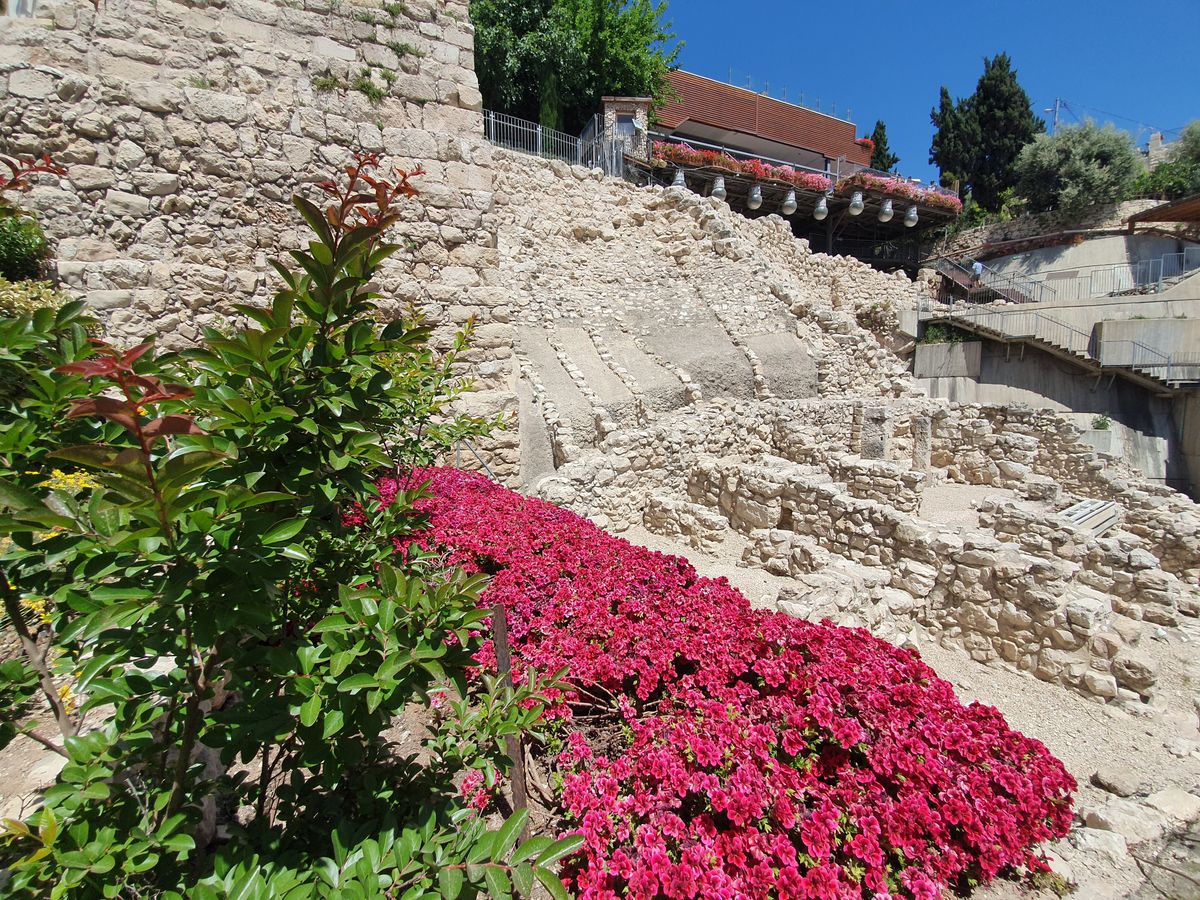
The City of David is where Jerusalem began. This narrow ridge south of the Temple Mount is the site of the original Jebusite city that King David conquered around 1000 BCE, making it his capital and transforming a small hilltop fortress into the center of the Israelite kingdom. “David then took up residence in the fortress and called it the City of David” (2 Samuel 5:9). Archaeological excavations here have uncovered 3,800 years of continuous habitation, and the discoveries continue to reshape our understanding of biblical Jerusalem.
David’s Conquest
The Jebusites who held the city before David were so confident in their fortifications that they taunted the Israelite army: “You will not get in here; even the blind and the lame can ward you off” (2 Samuel 5:6). David responded by sending his men through the tsinnor, a word variously translated as “water shaft,” “tunnel,” or “gutter.” Joab, David’s general, was the first to enter, and the city fell. The identity of the tsinnor has been debated for over a century, and the excavation of ancient water systems in the City of David has only made the debate more interesting.
The Stepped Stone Structure
The most imposing visible remain in the City of David is the Stepped Stone Structure, a massive retaining wall of stone blocks descending the eastern slope of the ridge. The structure, over 15 meters high and dating to approximately the 10th century BCE, though some archaeologists date the earliest phases to the 12th, 11th centuries BCE, may have supported a royal building at the top of the ridge. Some archaeologists identify a large structure above it as David’s palace; others dispute both the dating and the identification. The debate is fierce, but the scale of the construction is not in dispute: whoever built it commanded significant resources.
The Gihon Spring
The Gihon Spring, emerging from a cave at the base of the eastern slope, is the reason Jerusalem exists. In a landscape with almost no water, the Gihon was the only perennial spring for miles, and every settlement on this ridge, from the Chalcolithic period to the present, depended on it. The spring’s name comes from the Hebrew word for “gushing,” and its intermittent flow (it surges several times a day) may have given it a reputation for mystery and divine power. The anointing of Solomon as king took place at the Gihon: “Zadok the priest took the horn of oil from the sacred tent and anointed Solomon. Then they sounded the trumpet and all the people shouted, ‘Long live King Solomon!’” (1 Kings 1:39).
The Canaanite Water System
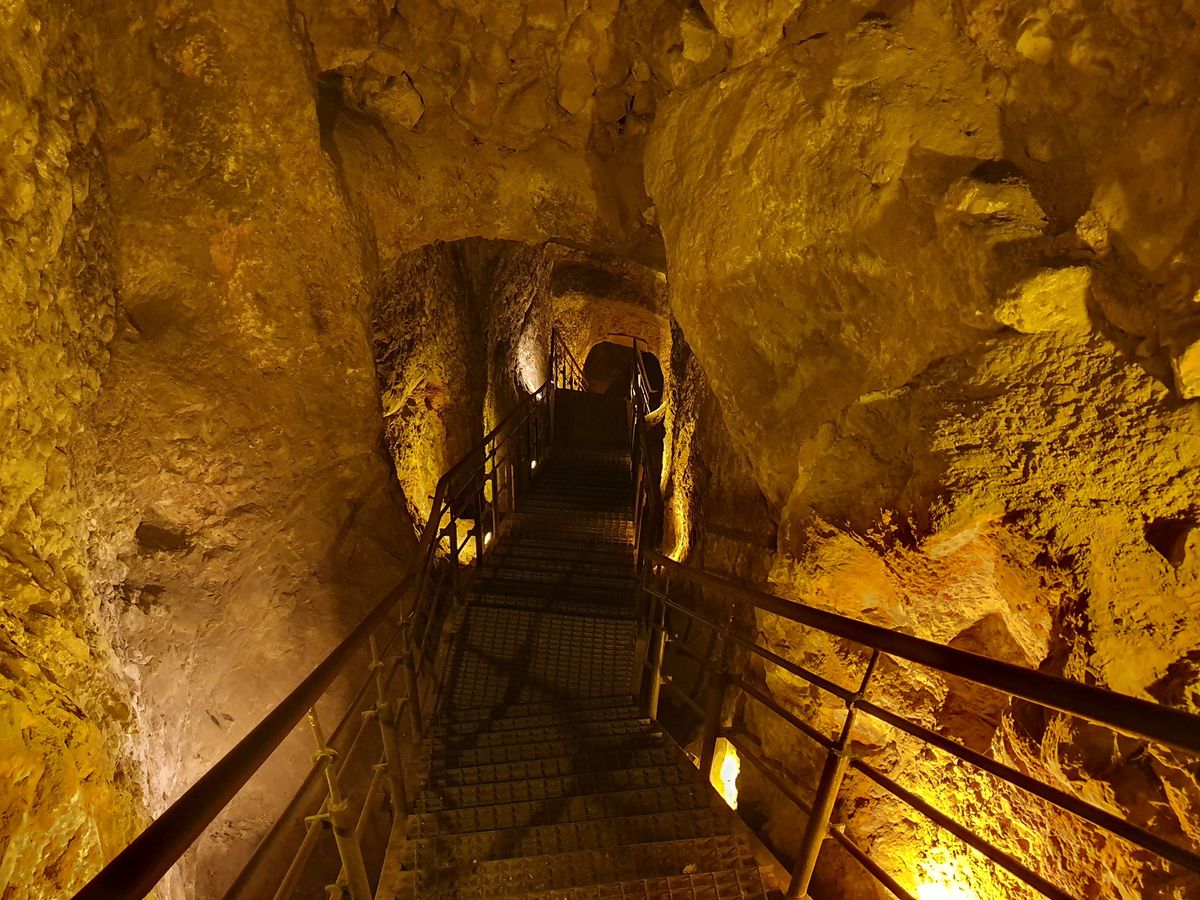
Long before Hezekiah carved his tunnel, the Canaanite (Jebusite) inhabitants of Jerusalem built an earlier water system to access the Gihon Spring from inside the city walls. The system, discovered by the British Royal Engineers officer Charles Warren in the 1860s and known as Warren’s Shaft, consists of a tunnel leading from inside the city to a vertical shaft that drops down to the level of the spring. The Canaanites could lower buckets down the shaft and draw water without leaving the protection of the walls.
This water system may be the key to one of the most famous conquests in the Bible. When David besieged the Jebusite city, the inhabitants mocked him, saying that even the blind and the lame could defend the walls. David challenged his men: “Anyone who conquers the Jebusites will have to use the water shaft” (2 Samuel 5:8). The Hebrew word used is “tzinnor,” and many scholars identify it with the water system beneath the city. Joab, David’s commander, apparently climbed up through the water system and entered the city from below, capturing Jerusalem and making it the City of David. Whether Warren’s Shaft is the actual tzinnor is debated (some archaeologists question whether the shaft was accessible in David’s time), but the water system is genuine, and visitors can walk through the Canaanite tunnel and look down the vertical shaft to the spring below.
Hezekiah’s Tunnel
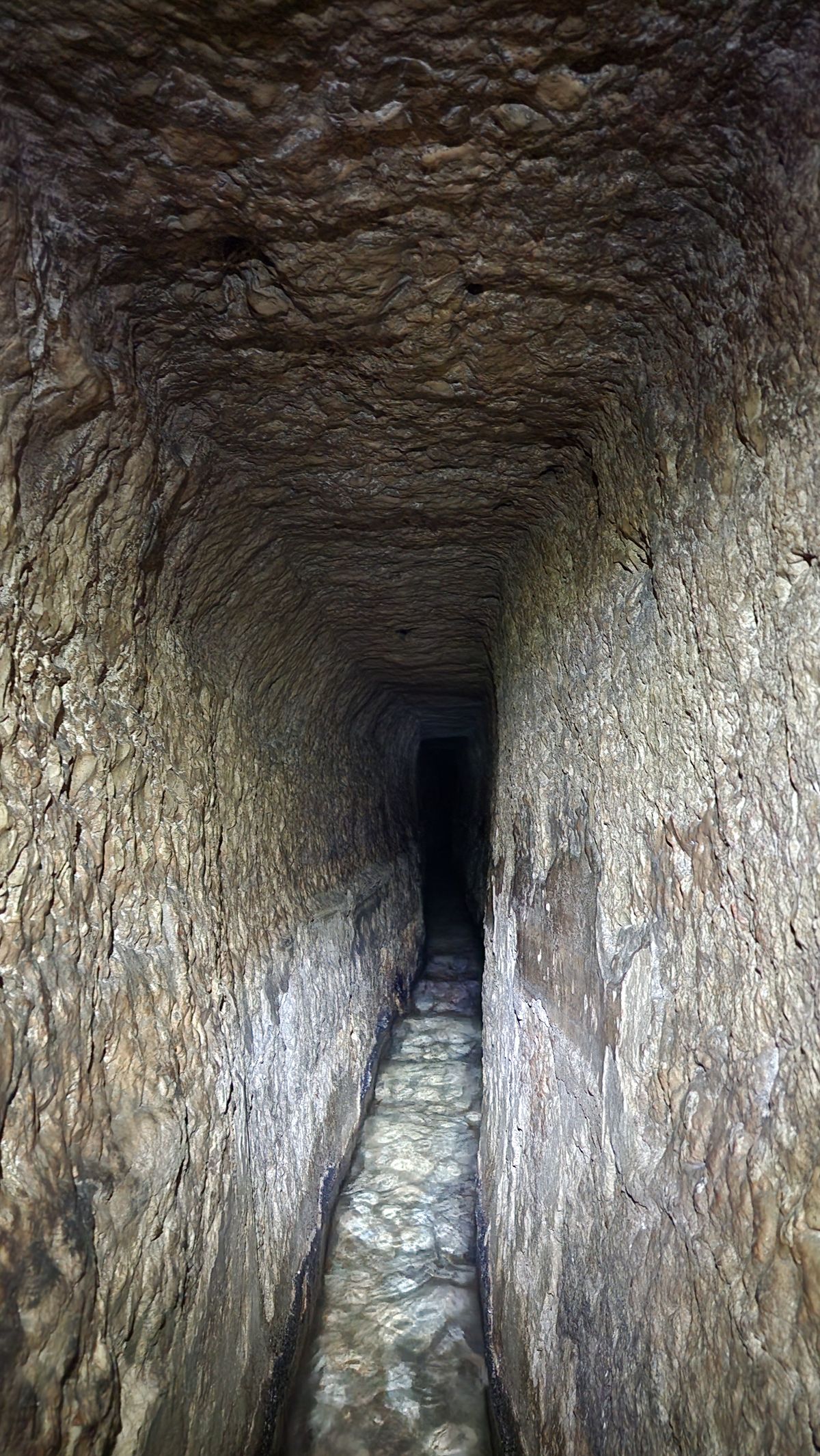
The most famous feature of the City of David is Hezekiah’s Tunnel, a 533-meter water channel carved through solid rock in the late 8th century BCE. King Hezekiah, facing an Assyrian invasion under Sennacherib, ordered the tunnel built to divert water from the Gihon Spring to a protected pool inside the city walls: “It was Hezekiah who blocked the upper outlet of the Gihon spring and channeled the water down to the west side of the City of David” (2 Chronicles 32:30).
Visitors can wade through the tunnel today, knee-deep in cool spring water, following the same route the water has taken for 2,700 years. The tunnel is narrow (about 60 centimeters wide in places), dark, and approximately 20 to 30 minutes long. The experience of walking through a tunnel carved by hand in the 8th century BCE, with only a flashlight and the sound of water, is one of the most unforgettable in Jerusalem.
In 1880, a student of Conrad Schick, exploring inside the tunnel, discovered the Siloam Inscription, a carved text in ancient Hebrew describing the moment the two teams of diggers, working from opposite ends, met in the middle: “While the hewers were still lifting up the pick, each toward his fellow, and while there were still three cubits to be hewn through, the voice of a man was heard calling to his fellow.” The original inscription is in the Istanbul Archaeological Museum; a cast is displayed at the Israel Museum.
The Pool of Siloam
At the southern end of the City of David, where the waters of the Gihon Spring emerge after their 533-meter journey through Hezekiah’s Tunnel, lies the Pool of Siloam — one of the most important water installations in ancient Jerusalem. The pool served as both a vital water reservoir and a ritual gathering point: during the Second Temple period, pilgrims immersed themselves here before ascending to the Temple Mount for the festivals. The pool’s significance extends beyond its practical function. According to the Gospel of John (9:1-11), Jesus encountered a man who had been blind from birth, made clay with his saliva, spread it on the man’s eyes, and told him: “Go, wash in the Pool of Siloam.” The man went, washed, and came home seeing. The association with healing and renewal has made the Pool of Siloam one of the most revered sites in Christian tradition.
The pool was accidentally rediscovered in 2004 during sewer repair work, when archaeologists identified large stone steps dating to the late Second Temple period. Major new excavations beginning in 2023 have dramatically expanded our understanding of the site, uncovering a large, stepped pool far grander than previously imagined. The pool’s broad stone steps descend toward the water on multiple sides, suggesting it could accommodate large crowds of pilgrims simultaneously. In 2025, archaeologists announced the discovery of a massive dam at the pool, approximately 12 meters high, 8 meters wide, and at least 21 meters long — the largest dam ever found in Israel and the earliest discovered in Jerusalem.
The dam was built between 805 and 795 BCE, during the reigns of the biblical kings Joash or Amaziah (2 Kings 12, 14), revealing that Jerusalem’s water engineering was far more advanced than previously understood, nearly a century before Hezekiah built his famous tunnel. The dating was published in the Proceedings of the National Academy of Sciences. After years of excavation, the Pool of Siloam is now being opened to the public for the first time, allowing visitors to stand at the place where ancient pilgrims began their ascent to the Temple.
The Pilgrimage Road (Derech Olei HaRegel)
Rising from the Pool of Siloam toward the Temple Mount, the Pilgrimage Road — known in Hebrew as Derech Olei HaRegel, “the Way of Those Who Go Up on Foot” — is a monumental stepped stone street dating to the Second Temple period. The road stretches approximately 600 meters and was the main route that Jewish pilgrims walked when ascending to the Temple for the three pilgrimage festivals: Passover, Shavuot, and Sukkot. Coins found beneath the paving stones date the road’s construction to the period of Pontius Pilate’s governorship of Judea (26–36 CE), suggesting that the Roman administration built or renovated this grand thoroughfare. The street was lined with shops and drainage channels, and its broad stone steps were designed to accommodate the massive crowds that filled Jerusalem during the festivals.
The Pilgrimage Road was excavated over the course of 13 years in a painstaking tunnel excavation beneath the modern streets of the Silwan neighborhood, and it opened to the public in January 2026. Walking the road today is one of the most dramatic archaeological experiences in Jerusalem: visitors descend underground and walk the same stone steps that pilgrims walked two thousand years ago, passing ancient drainage channels where residents hid during the Roman destruction of Jerusalem in 70 CE. Archaeologists found coins, stone vessels, and other artifacts in the drainage channels, left behind by families who took shelter there in the city’s final hours. The road is one of the most significant archaeological discoveries in Jerusalem in recent decades, providing physical confirmation of the city’s role as a pilgrimage center and offering visitors an unparalleled connection to the ancient world. For more on this extraordinary site, see our blog post: The Pilgrimage Road: Walking to the Temple, 2,000 Years Later.
Solomon’s Anointing at the Gihon Spring
The Gihon Spring, the water source that made Jerusalem habitable, is also where one of the most dramatic moments in the story of the monarchy took place. When King David was old and dying, his son Adonijah declared himself king without David’s approval. The prophet Nathan and Bathsheba rushed to David and reminded him of his promise that Solomon would succeed him. David acted immediately: “King David said, ‘Call in Zadok the priest, Nathan the prophet and Benaiah son of Jehoiada.’ When they came before the king, he said to them: ‘Take your lord’s servants with you and have Solomon my son mount my own mule and take him down to Gihon. There have Zadok the priest and Nathan the prophet anoint him king over Israel. Blow the trumpet and shout, May King Solomon live!’” (1 Kings 1:32-34). Solomon was anointed at the Gihon Spring, at the foot of the City of David, and the shouts of celebration were so loud that Adonijah’s party heard them across the valley and fled. The spring where Solomon became king is the same spring that visitors see today.
The Givati Parking Lot Excavation
At the entrance to the City of David, adjacent to the Dung Gate, one of the most important active excavations in Jerusalem is taking place at what was once a public parking lot. The Givati excavation has uncovered layers spanning from the Iron Age to the Ottoman period, including a monumental structure from the Hellenistic period, a large Roman-era building, Byzantine mosaics, and finds from the Crusader and Mamluk periods. The excavation is significant because it sits at the junction between the City of David, the Temple Mount, and the Old City, a crossroads that has been in continuous use for over 3,000 years. Visitors can watch the excavation in progress from viewing platforms above the dig.
Visit with Hoshen Tours
The City of David is where Jerusalem began, a narrow ridge south of the Temple Mount where David established his capital 3,000 years ago. Hoshen Tours leads visitors through the active excavations, Warren’s Shaft, Hezekiah’s Tunnel, and the Pool of Siloam, connecting each discovery to the biblical narrative. The site sits at the junction of the Kidron Valley and the Valley of Hinnom, with the Mount of Olives rising directly to the east.
Explore Our Tour Collection
Ready to experience Israel in true colors?
Plan Your TourPrivate tours designed around your interests, schedule, and pace.