


Call us today!
+1-917-9055850

Magazine
The Pilgrimage Road: Walking to the Temple, 2,000 Years Later
For two thousand years, scholars and pilgrims have known that a monumental road once led from the Pool of Siloam at the southern end of the City of David up to the Temple Mount. Josephus described it. The Talmud referenced it. Coins and pottery fragments hinted at its existence beneath the modern streets of Jerusalem. But nobody had seen it. Until now.
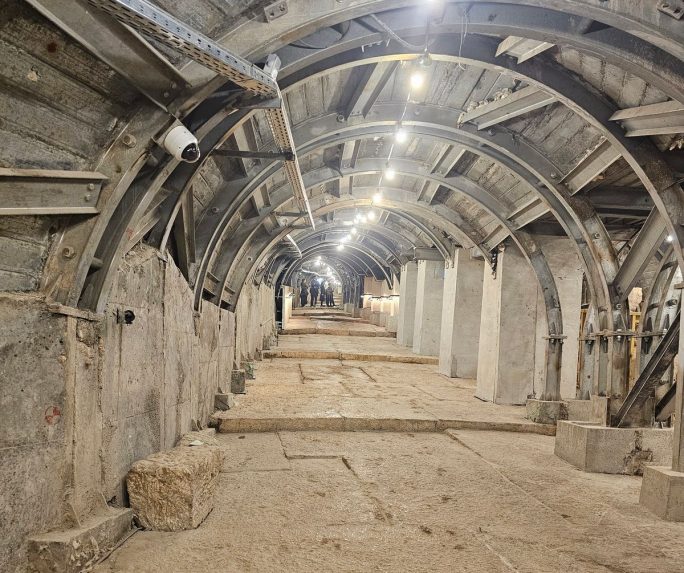
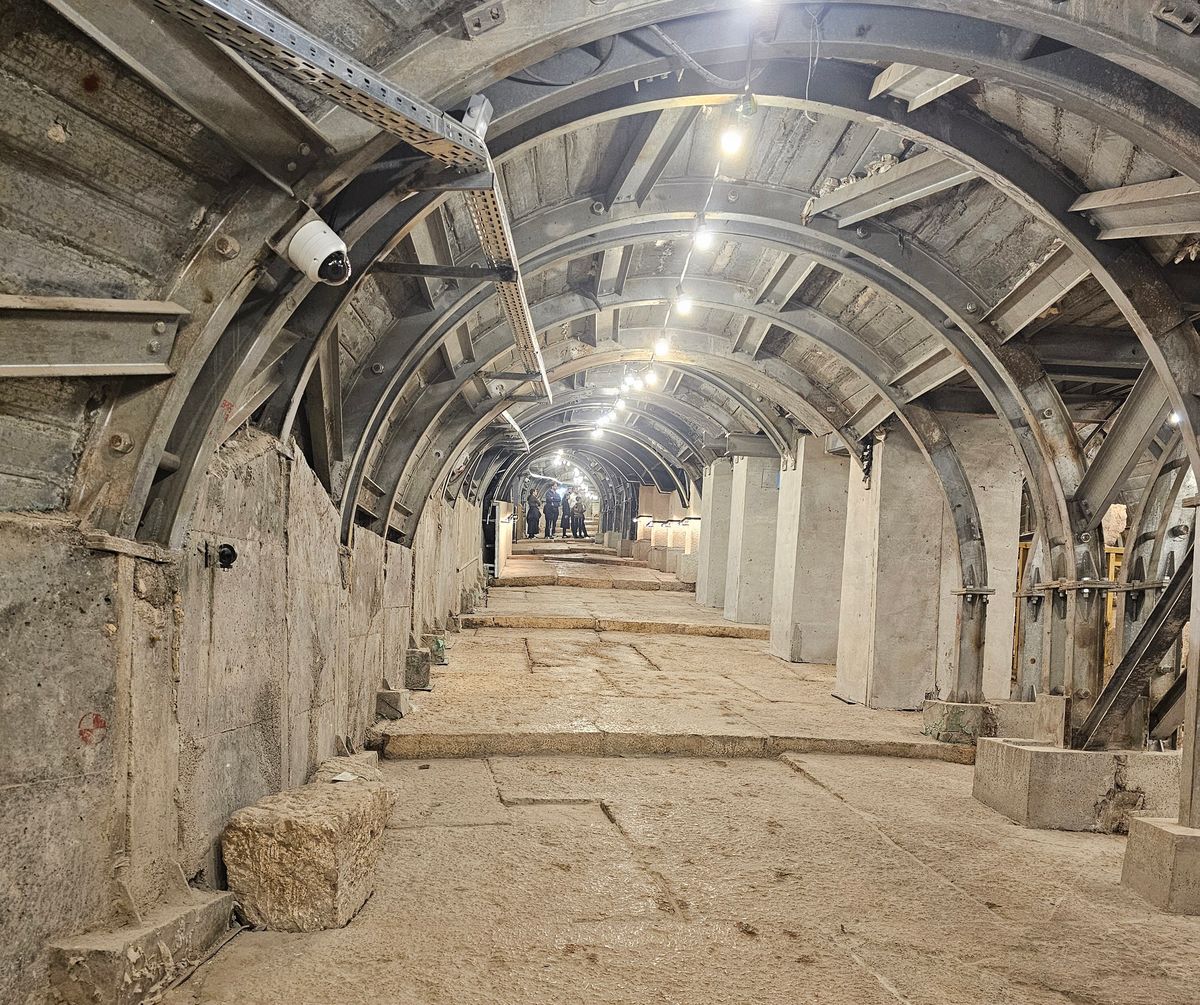
The Pilgrimage Road, a 600-meter stone-paved street dating to the Second Temple period, was opened to the public on January 20, 2026, after 13 years of excavation, beneath the Arab neighborhood of Silwan, in the City of David. Walking it today, underground, lit by modern lighting but paved with stones that were laid during the time of Jesus, is one of the most extraordinary archaeological experiences available anywhere in the world.
Three times a year, on the festivals of Passover, Shavuot, and Sukkot, Jewish law required every able-bodied man to make a pilgrimage to the Temple in Jerusalem. They came from across the Land of Israel, from the Galilee, from the coast, from the desert, converging on a city that swelled to many times its normal population during the festivals. And when they arrived, they followed a route.
The pilgrims would first immerse in a ritual bath (mikveh) to purify themselves. Many would descend to the Pool of Siloam, a large public pool at the lowest point of the city, fed by the waters of the Gihon Spring through Hezekiah’s Tunnel. From there, they would begin their ascent. The Pilgrimage Road, eight meters wide and paved with massive limestone slabs, climbed from the pool northward through the heart of the city, past shops and public buildings, up to the gates of the Temple Mount.
The road was not just a path. It was an experience. The width of the street, the quality of the paving, and the monumental stepped construction were designed to create a sense of ascending toward something sacred. With every step uphill, the pilgrim was moving closer to the presence of God.
The excavation of the Pilgrimage Road, led by archaeologists from the Israel Antiquities Authority, has uncovered the street in remarkable condition. The limestone paving stones are still in place, worn smooth by centuries of foot traffic. Drainage channels run beneath the road, and the foundations of buildings that once lined the street are visible on both sides.
Among the most significant finds are hundreds of coins dating to the period just before the destruction of the Temple in 70 CE. Stone measuring weights used in commerce were found in what appear to have been shops along the road. Fragments of stone vessels, which were used by Jews who observed strict purity laws (stone, unlike pottery, does not become ritually impure), confirm the Jewish character of the street. And a Roman sword, still in its scabbard, was found in a drainage channel beneath the road, likely dropped or hidden during the chaos of the Roman destruction.
The experience of walking the Pilgrimage Road is unlike any other archaeological site in Israel. The road runs beneath the modern streets of Silwan, and visitors descend through the City of David visitor center to reach the ancient street level. The tunnel is well-lit and ventilated, and the path follows the original road surface, climbing gradually from south to north.
As you walk, you pass the same stones that pilgrims walked on their way to the Temple. The scale of the road becomes apparent: this was not a narrow lane but a broad boulevard, built to handle the crowds of festival pilgrims. The shops and buildings along the sides, the drainage system below, and the stepped construction all speak to a city that was built for a purpose: bringing people to God.
The road ends near the Western Wall area, completing a journey that takes visitors from the lowest point of ancient Jerusalem to the foot of the Temple Mount. The emotional arc, from the purification pool at the bottom to the holy precinct at the top, mirrors the spiritual journey that the pilgrims themselves would have experienced.
The Pilgrimage Road begins at the Pool of Siloam, which has its own significance in both Jewish and Christian tradition. In the Second Temple period, the pool was a major public gathering place where pilgrims immersed before ascending to the Temple. In the Gospel of John (9:1-11), Jesus healed a blind man and told him to wash in the Pool of Siloam, after which his sight was restored.
The pool was rediscovered in 2004 during construction work and has been partially excavated. Its full dimensions are still being uncovered, but it is already clear that it was a monumental public pool, befitting its role as the starting point of the pilgrimage route.
The excavations continue to produce remarkable finds. For the first time, a structure from the Hasmonean period was discovered along the road, adding another layer to the sequence of civilizations that used this route. A rare coin was discovered by a young girl participating in the archaeological experience program, which scholars believe was extracted from the silver reserves kept in the Second Temple. And a specialized weighing table, used for commercial transactions along the road, confirms that the Pilgrimage Road was not just a ceremonial route but also a commercial thoroughfare, lined with shops and businesses that served the pilgrims.
In 2025, archaeologists announced the discovery of a massive dam at the Pool of Siloam, the largest dam ever found in Israel and the earliest discovered in Jerusalem. The dam, approximately 12 meters high, 8 meters wide, and at least 21 meters long, was built between 805 and 795 BCE during the reigns of the biblical kings Joash or Amaziah of Judah (2 Kings 12, 14). The dating, determined by carbon-14 analysis of wood and plant remains in the mortar and published in the Proceedings of the National Academy of Sciences, is accurate to within a 10-year window.
The dam was built in response to a severe climate crisis: limited rainfall combined with sudden, intense storms. Together with a tower blocking the Gihon Spring and a channel feeding the Pool of Siloam, the dam formed a sophisticated hydraulic system designed to protect the growing city from both drought and flash floods. The discovery reveals that Jerusalem’s water engineering was far more advanced than previously understood, nearly a century before King Hezekiah built his famous tunnel (2 Kings 20:20).
The Pilgrimage Road is more than an archaeological discovery. It is a physical confirmation of what ancient texts described: a city organized around the act of pilgrimage, designed to channel hundreds of thousands of people from every corner of the country toward a single point of worship. For Jews, it is a tangible connection to the Temple that was destroyed two thousand years ago. For Christians, it is the street that Jesus walked during his visits to Jerusalem. For everyone, it is a reminder that beneath the modern city, the ancient one is still there, waiting to be found.
The Pilgrimage Road was officially inaugurated in September 2025 in a ceremony attended by Israeli Prime Minister Benjamin Netanyahu, US Secretary of State Marco Rubio, and US Ambassador to Israel Mike Huckabee. The public opening on January 20, 2026, made the road accessible to all visitors for the first time, completing a project that began in 2013 and is considered one of the most expensive and complex excavations currently taking place in Israel.
The excavations at the City of David and the Pool of Siloam are ongoing, and new discoveries emerge with every digging season. The information in this article reflects the state of research at the time of writing (May 2026). The archaeological picture continues to evolve, and what we know today will almost certainly be enriched by tomorrow’s findings. That is part of what makes this site extraordinary: the Pilgrimage Road is not a finished exhibit in a museum. It is a living excavation, and the story it tells grows deeper with every layer that is uncovered.
The Pilgrimage Road is a centerpiece of Hoshen Tours’ Jerusalem itineraries. Our guides walk you through the excavation, connecting the stones beneath your feet to the texts that described them and the people who walked them. Because some roads lead not just to a destination, but back through time.
Contact Us
Related articles
Tours and Activities
The Prophet Isaiah: His Prophecies, the Great Isaiah Scroll, and Where to See It
The Prophet Isaiah: His Prophecies, the Great Isaiah Scroll, and Where to See It in Israel If you have ever…
The Desert Kingdom That Was Never Desolate: Israel and Egypt Through the Ages
The Desert Kingdom That Was Never Desolate: Israel and Egypt Through the Ages Egypt is often imagined as an endless…
The Dead Sea Is Disappearing: What's Happening and Can It Be Saved?
The Lowest Place on Earth Is Getting LowerThe Dead Sea — the lowest point on the surface of the earth,…