


Call us today!
+1-917-9055850

Magazine
Water Desalination in Israel: How a Desert Nation Became a Global Water Superpower
Israel is one of the driest countries on earth. Over 60% of its territory is desert, rainfall is limited to a few winter months, and for decades, the country faced chronic water shortages that threatened its agriculture, industry, and daily life.
Today, the story is completely different. Israel produces approximately 80% of its drinking water through desalination — turning Mediterranean seawater into fresh, drinkable water. It is widely regarded as the world leader in desalination technology, and countries across the globe look to Israel as a model for solving their own water challenges.
For visitors touring Israel, this remarkable achievement is visible everywhere — from the lush agricultural fields of the Negev desert to the fountains of Tel Aviv and the carefully maintained gardens of Jerusalem’s luxury hotels.
Israel’s desalination revolution is powered by five major seawater reverse osmosis plants along the Mediterranean coast — Ashkelon (2005), Palmachim (2007), Hadera (2009), Sorek (2013), and Ashdod (2015) — producing a combined output of approximately 600 million cubic meters of fresh water per year. In addition, Israel’s first reverse osmosis plant was built in Eilat in 1997, providing fresh water to the remote Red Sea city.
The Sorek plant, currently the largest, produces roughly 20% of Israel’s entire municipal water demand and is considered one of the most advanced and energy-efficient desalination facilities in the world. Most recently, the Sorek B plant entered full operation, adding another 200 million cubic meters of annual capacity, making it one of the largest desalination plants on the planet.
All of these plants use reverse osmosis technology — a process in which high pressure forces seawater through semi-permeable membranes that block salt and impurities, allowing only pure water molecules to pass through. Israeli engineers have pioneered innovations such as a chemical-free filtration system using porous lava stone, and optimized pre-treatment processes that make the entire operation remarkably energy-efficient and cost-effective.
Desalination is only half the story. Israel also leads the world in wastewater recycling. Approximately 90% of Israel’s wastewater is treated and reused — primarily for agricultural irrigation. No other country comes close to this figure (Spain, the second highest, recycles about 20%).
This means that over 80% of Israel’s agriculture runs on recycled or non-traditional water sources. The combination of desalination for drinking water and recycled water for agriculture has transformed Israel from a water-stressed nation into a water-secure one.
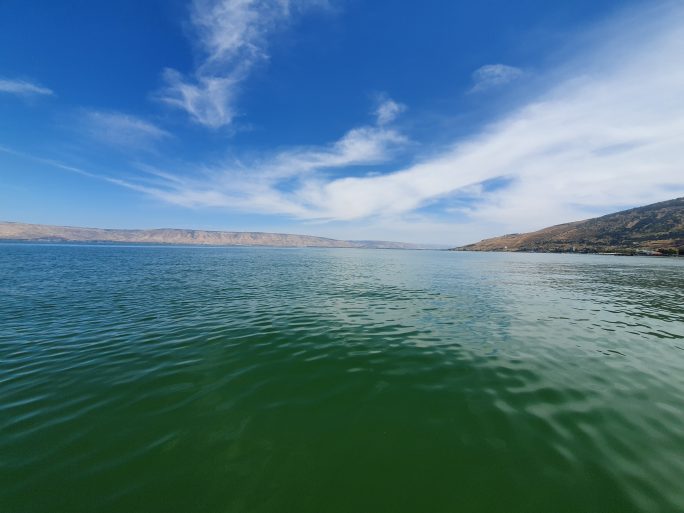
The Sea of Galilee (known in Hebrew as the Kinneret) has been Israel’s primary freshwater source for generations. It holds deep cultural and religious significance — this is where, according to the New Testament, Jesus walked on water and performed many of his miracles. For Jewish tradition, it is the heart of the ancient land of Israel.
For decades, over-extraction caused the lake’s water levels to drop dramatically. Between 2001 and 2019, Israel’s annual use of Galilee water dropped from 513 million cubic meters to just 25 million — as desalinated water replaced it. In a world first, Israel has begun pumping desalinated Mediterranean water back into the Sea of Galilee through a specially built pipeline, helping restore water levels and maintain this iconic lake for future generations.
Today, the Sea of Galilee serves as Israel’s emergency water reservoir — a strategic backup in case of natural disaster or disruption to the coastal desalination plants. Israel has also doubled the volume of water it supplies to neighbouring Jordan from the Kinneret, from 50 million to 100 million cubic meters per year.
Tourists visiting Israel often don’t realize they are witnessing one of the greatest water engineering achievements in modern history. When you drink tap water in your Tel Aviv hotel, there’s an 80% chance it came from the Mediterranean Sea just hours earlier. When you pass the green fields of the Arava desert on your way to Eilat, you’re seeing crops irrigated with recycled water in one of the hottest, driest places on earth.
Some desalination-related sites that visitors can explore include:
Israel’s water challenges are far from over. Climate change, population growth, and regional instability continue to put pressure on water resources. Projections suggest that Israel may need to desalinate as much as 3.7 billion cubic meters annually by 2065 — compared to approximately 800 million today — potentially requiring the construction of 30 additional desalination units.
But if history is any guide, Israel will continue to innovate. The country that turned seawater into drinking water, recycled 90% of its wastewater, and refilled an ancient lake with desalinated water is already developing the next generation of water solutions.
For a small country in the Middle East, water is not just a resource. It is a story of survival, innovation, and determination — a story that visitors can see, taste, and experience firsthand when they travel to Israel.
Contact Us
Related articles
Tours and Activities
Museums in Israel
A Country Rich in Museums and Heritage Israel is a very young country, just over 70 years old, but its…

Israeli Innovation: How the Startup Nation Changed the World
Israeli Innovation: How the Startup Nation Changed the World"Necessity is the mother of invention." When Israel was established in 1948,…
The Prophet Isaiah: His Prophecies, the Great Isaiah Scroll, and Where to See It
The Prophet Isaiah: His Prophecies, the Great Isaiah Scroll, and Where to See It in Israel If you have ever…