


Call us today!
+1-917-9055850

Magazine
Bird Migration in Israel
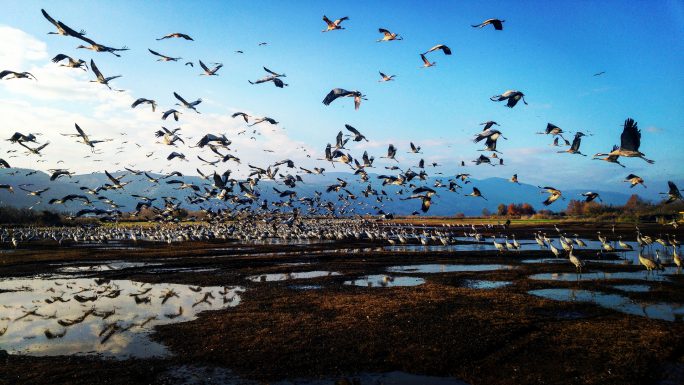
Israel, a crossroad between three continents, is situated on one of the busiest bird migration hubs in the world. Twice a year, over 500 million birds fly across the skies of the country, on their journey from their distant winter habitat to their summer homes and back.
Blessed with a comfortable Mediterranean climate and a wide range of geographical zones, Israel has a bit of everything – high mountains with snowy peaks, green and lush nature reserves, humid valleys and arid deserts. This diversity welcomes over 400 species every year that have a wide choice of feeding ground, and can fulfill your deepest desires of seeing some of the most colorful birds in the world.
Among the many birds that are found in Israel, one can observe:
Autumn and spring are the main seasons for bird migration. Autumn migration is busier than the spring. It starts at the end of June and continues until January, with a peak in October-November. Spring migration starts at the end of February and continues until June.
It means that bird-watching is possible the entire year. The last birds flying north at the end of the spring can be seen at the same time as the first birds of autumn fly south.
The migrating birds can be divided into three main groups:
Where is the ideal place to see all of those beautiful birds? There are 9 bird-watching centers in Israel and many more are under construction. The country is blessed with a wide range of climates and geographical areas. Each area offers a different experience and specific birds that can be seen only there. For example, the flamingos can be seen mostly along the Mediterranean and Red Sea shores, because they prefer the humidity and saltiness of the coast.
A world-renowned bird-watching center, wedged between the Golan Heights, Galilee and Mount Hermon, the Hula Valley story began in the 1950s when it was decided to drain the large body of water for agricultural purposes. This move raised an uproar against the farmers, and soon the government allowed the restoration of a small portion of the lake and proclaimed the area around it a nature reserve.
Today, the park is an important habitat for waterfowl, birds of prey and songbirds, and it houses an annual festival around the autumn migration season. As for the farmers, they eventually understood the importance of cooperating with the ecologists. They provide the park with over 2 tons of maize daily during winter to feed the cranes that otherwise will graze on their crops.
Additional fascinating visitors of the park are the black storks, the spoonbills with their interesting looking beak, the black francolins, and many more.
The southernmost city in Israel is located in what was once a saltmarsh on the shores of the Red Sea. For thousands of years, it was a bird’s key refueling spot before their journey towards the vast Sahara Desert. However, in recent decades the habitat was severely diminished due to the industrial growth of the port city.
Today, the Eilat observatory works on keeping necessary conditions for the existence of this nature habitat, and promotes its importance in the world’s ecosystem. Among the 480 bird species that were recorded passing through here are the Nubian nightjar that comes from Africa, the Spanish Sparrow, and the Flamingo. The Flamingo arrives from Turkey and Iran and enjoys the salt pools north of Eilat.
The best time to visit the park is during the Eilat Birds International Migration Festival held in March.
The Jerusalem Bird Observatory is situated in the government area, next to the Knesset (Israeli Parliament) and the Supreme Court. It is an urban-wildlife site expanding over an area of one hectare, with a tiny pond that attracts magnificent bird-life throughout the year.
The observatory has a bird ringing station that is active throughout the day and helps to identify and research the migratory birds and their migration routes.
With many majestic birds of prey soaring over the magnificent Zin Valley, Ramat HaNegev Birding Center offers a unique bird-watching spectacle in the heart of the Negev Desert. The ideal time to visit is during March and April, when the migratory birds fly back from Africa to Europe.
Located in one of the hottest and most humid areas in the country, the bird-watching center of the Jordan Valley is positioned perfectly on the main bird flyways between Asia, Europe and Africa. The climate and abundance of springs set the perfect background for thriving agriculture, which attracts local and migratory birds to feed here throughout the entire year.
Israel offers a truly remarkable bird-watching experience, with hundreds of species visible throughout the year. If you are planning a trip to Israel and want to include bird watching in your itinerary, Hoshen Tours can help you create a personalized tour that takes you to the best birding locations across the country. Contact us to start planning your adventure.
Contact Us
Related articles
Tours and Activities

Best Israeli Souvenirs to Bring Home
One of the joys of traveling in Israel is discovering unique products that capture the essence of the land. From…
Water Desalination in Israel: How a Desert Nation Became a Global Water Superpower
From Water Crisis to Water SecurityIsrael is one of the driest countries on earth. Over 60% of its territory is…

Museums in Israel
A Country Rich in Museums and Heritage Israel is a very young country, just over 70 years old, but its…