



ANU, the Museum of the Jewish People, sits on the campus of Tel Aviv University and is the largest museum in the world dedicated to telling the story of the Jewish people. The name means “we” in Hebrew, and the museum’s premise is simple and ambitious: to tell the story of a people who have been scattered across the world for two thousand years yet remained, against all probability, one people.
From Beit Hatfutsot to ANU
The museum was originally opened in 1978 as Beit Hatfutsot (the Museum of the Diaspora), founded by Nahum Goldmann, longtime president of the World Jewish Congress. The original museum was groundbreaking for its time, it told the story of Jewish life outside of Israel, at a time when Israeli culture tended to focus on the Land of Israel and dismiss diaspora life as passive and secondary. In 2021, after a comprehensive renovation that took several years and cost hundreds of millions of shekels, the museum reopened as ANU, with a completely redesigned exhibition space, new technology, and a broader scope that encompasses the full arc of Jewish civilization from Abraham to the present day.
The Thematic Exhibition: Jewish Life Across the Globe
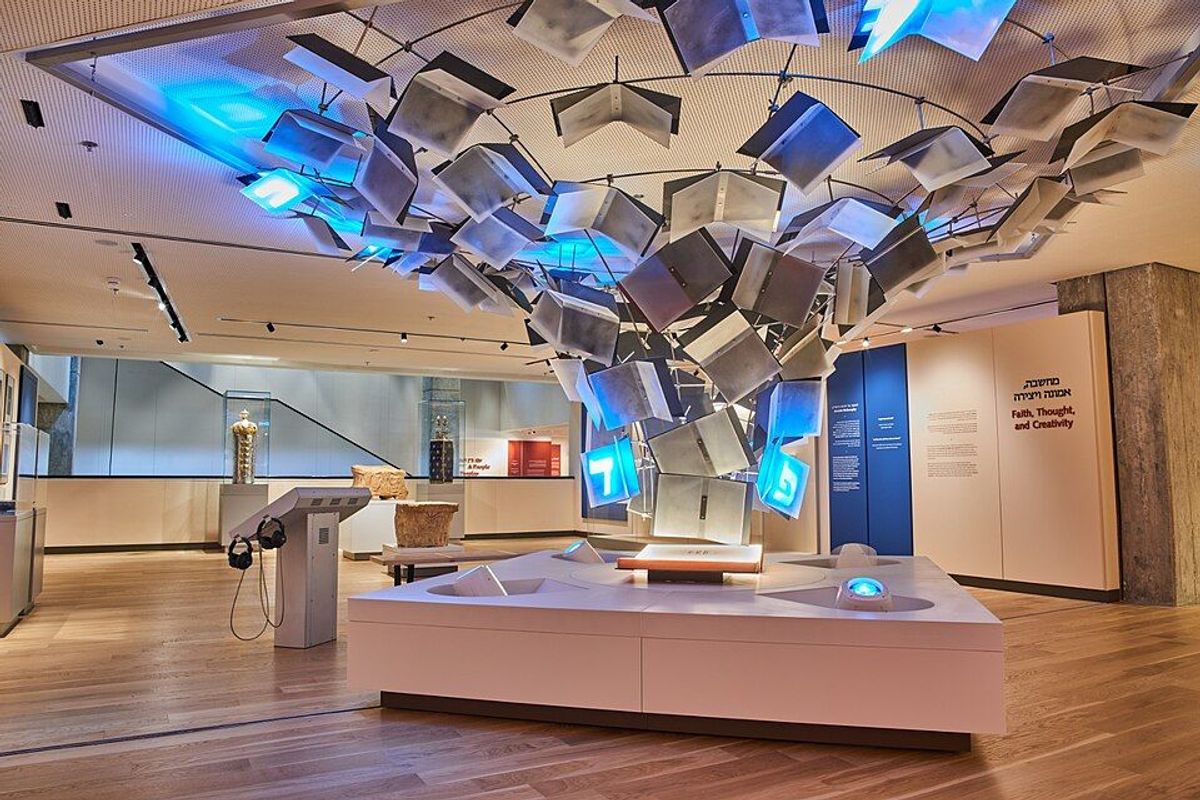
ANU is organized around themes rather than chronology, family, community, faith, culture, connections, and the relationship between Jewish communities across the globe. The approach is deliberately personal: visitors encounter individual stories, faces, and voices alongside the sweep of history. Interactive displays allow visitors to explore their own Jewish heritage through databases of family names, communities, and genealogical records. The museum makes a deliberate effort to represent the full diversity of Jewish life: Ashkenazi and Sephardi and Mizrahi, religious and secular, Israeli and diaspora, ancient and contemporary, triumphant and tragic.
The galleries move through the foundational stories, the patriarchs, the Temple, the exile, into the great centers of Jewish life that flourished and were destroyed: Babylon, Spain, the Rhine Valley, Poland, Lithuania, the Ottoman Empire, North Africa, Yemen, Iraq. The Holocaust is presented not as an isolated catastrophe but as the destruction of a civilization that had produced some of humanity’s greatest achievements in philosophy, literature, science, music, and law. And the story continues into the modern era: the establishment of Israel, the ingathering of exiles, and the ongoing tension between Israeli identity and diaspora identity that defines Jewish life in the 21st century.
Synagogue Models
One of the museum’s most beloved collections, carried over from the original Beit Hatfutsot, is the display of scale models of historic synagogues from around the world. The models include synagogues that no longer exist, the great wooden synagogues of Poland, burned by the Nazis; the synagogues of Baghdad, abandoned when the Iraqi Jewish community was expelled; the ancient synagogues of Alexandria, Cordoba, and Prague. Each model preserves the memory of a community and its architectural expression of faith. Standing before them, visitors see the full range of Jewish sacred architecture: from the ornate Moorish style of the Iberian synagogues to the simple wooden structures of the shtetl.
The Databases
ANU maintains extensive digital databases that allow visitors to search for their family names, trace the history of specific Jewish communities, explore Jewish music traditions from around the world, and even find connections to other visitors with shared ancestry. For many visitors, especially those from diaspora communities, the databases provide a personal dimension that no other museum can offer, the moment when a family name appears on screen, linked to a town, a history, and a story.
Visit with Hoshen Tours
A visit to ANU Museum pairs beautifully with nearby destinations along your route. Consider combining it with a stop at Tel Aviv or Tel Aviv Museum of Art, both just a short drive away. Many travelers also enjoy exploring Rothschild Boulevard and Dizengoff on the same day, while Independence Trail offers another worthwhile addition to your itinerary. Your Hoshen Tours guide will craft a seamless route that brings each destination to life with expert commentary and insider knowledge.
Explore Our Tour Collection
Ready to experience Israel in true colors?
Plan Your TourPrivate tours designed around your interests, schedule, and pace.