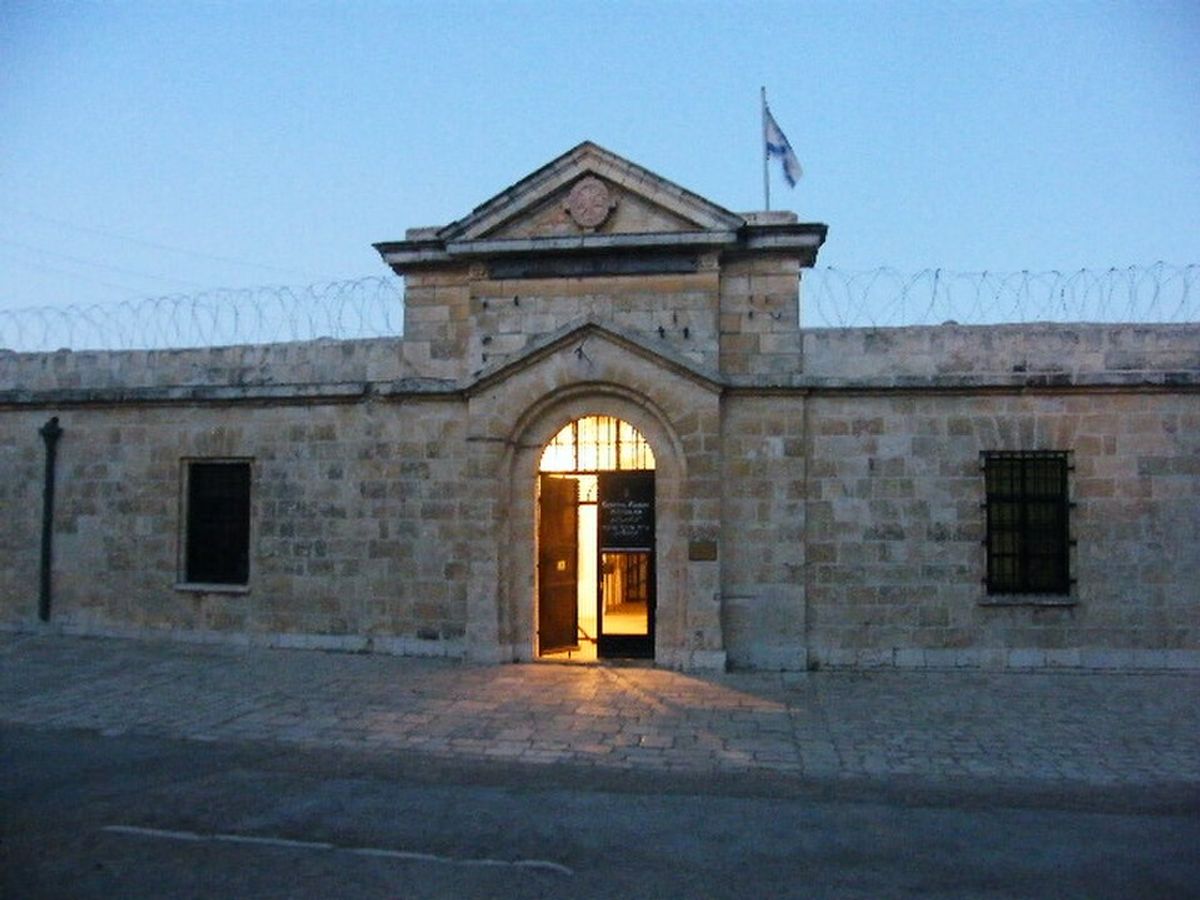
The Underground Prisoners Museum in Jerusalem, Israel, located in the former British Mandate central prison in the Russian Compound, tells the story of the Jewish underground organizations that fought against British rule during the Mandate period (1920-1948). The building served as the British Mandate’s central prison in Jerusalem, and it was here that Jewish underground fighters from the Irgun (Etzel), Lehi (the Stern Gang), and Haganah were held, interrogated, and in several cases executed. The prison’s thick stone walls and iron doors still bear witness to that turbulent chapter in the struggle for Israeli independence.
The Prison
The prison cells, interrogation rooms, and condemned prisoners’ wing have been preserved as they were during the Mandate period. The cells are small, dark, and oppressive, and the condemned prisoners’ cells are among the most sobering rooms in any Israeli museum. Prisoners were held in overcrowded conditions, sometimes dozens to a cell designed for far fewer, with limited access to light, exercise, and sanitation. Despite the harsh conditions, the prisoners organized themselves, held clandestine study sessions, and maintained a chain of command that connected them to their organizations outside. The personal stories of the prisoners, told through diaries, letters, and photographs, humanize what could otherwise be an abstract political narrative.
The Breakout and Escape Attempts
In 1947, the Irgun carried out a daring prison break, blasting through the walls of the Acre Prison in Akko (the Akko Citadel) to free 27 prisoners out of a planned 41. The Jerusalem prison also saw escape attempts, and the museum documents the ingenuity of the prisoners and the determination of their organizations to free them. Prisoners dug tunnels, passed messages in food containers, and coordinated with fighters outside to plan breakouts. Some attempts succeeded, while others were discovered and resulted in punishment, including solitary confinement and transfer to more secure facilities. The combination of defiance and resourcefulness that characterized these efforts reflects the spirit of the underground movement as a whole.
Dov Gruner
Among the most famous prisoners was Dov Gruner, whose story has become inseparable from the history of the Jewish underground. Born in Hungary in 1912, Gruner served in the British Army during World War II before immigrating to Palestine. He joined the Irgun and took part in the April 1946 raid on the Ramat Gan police station, an operation aimed at seizing weapons. Gruner was wounded and captured during the raid. At his trial, he refused to recognize the authority of the British military court, declaring that a foreign occupying power had no right to judge those fighting for their homeland. He was sentenced to death. Despite international pressure and appeals for clemency, Gruner remained steadfast. His last letter to Irgun commander Menachem Begin, written the night before his execution, became one of the defining documents of the underground struggle. “Of course I want to live,” he wrote. “Who does not? But if I am sorry that I am about to finish, it is mainly because I did not succeed in doing enough.” Gruner was hanged at Acre Prison on April 16, 1947. He was 34 years old.
Barazani and Feinstein
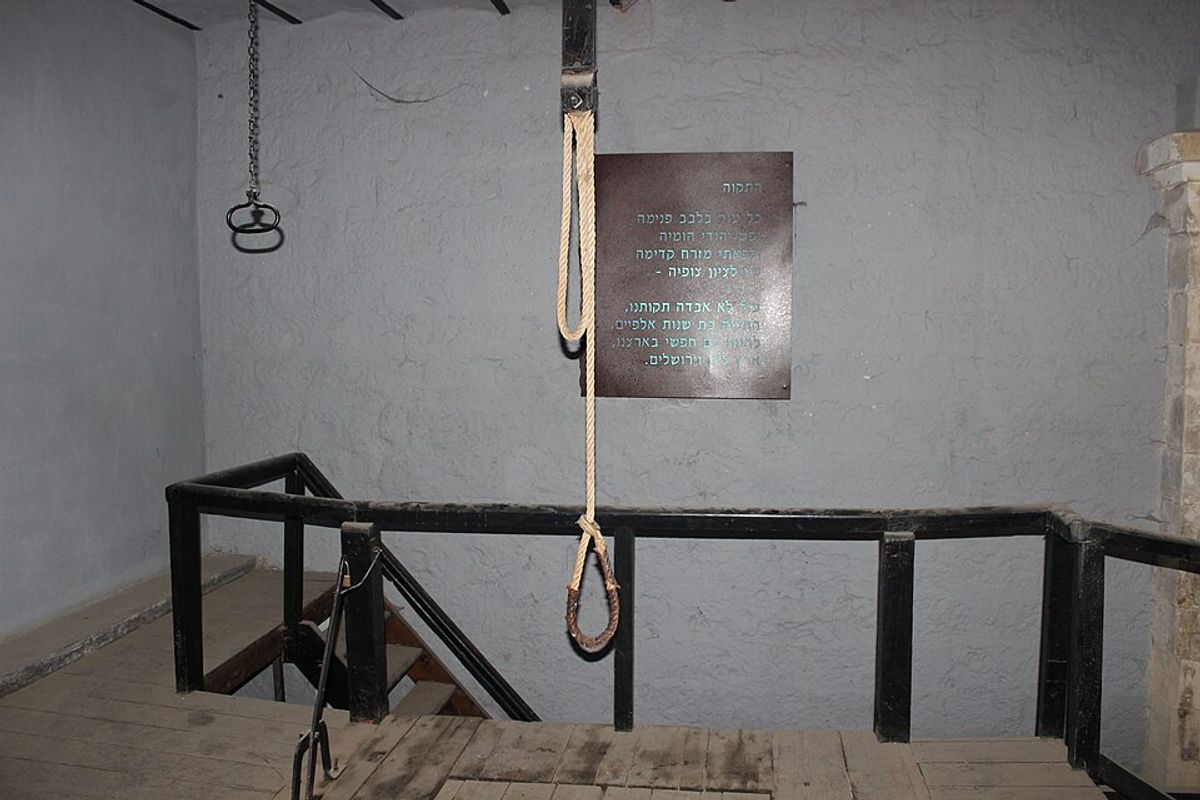
No Jewish fighter was executed in this prison. All hangings took place at Acre Prison in the north. But the Jerusalem Central Prison had its own act of defiance that left a mark on Israeli memory no less deep. Meir Feinstein of the Irgun and Moshe Barazani of Lehi were held here under sentence of death, each in a separate cell on the condemned prisoners’ corridor. Feinstein had been captured after a failed attack on a Jerusalem railway station. Barazani had been caught carrying a grenade intended for a British officer. Both were sentenced to hang. In the days before their scheduled execution, a visitor smuggled a grenade into the prison, hidden inside a hollowed-out orange. On the night of April 21, 1947, rather than allow the British the satisfaction of the gallows, Feinstein and Barazani held the grenade between them, embraced, and detonated it together. They were buried on the Mount of Olives, and their story became one of the most powerful chapters in the history of the Jewish underground. The condemned cells where they spent their final days are preserved in the museum exactly as they were.
The Museum Today
Walking through the preserved corridors, visitors can see the original graffiti scratched into walls by prisoners, the cramped conditions they endured, and the improvised tools they fashioned for communication and escape attempts. The museum’s displays include original weapons, forged identity documents, and personal effects recovered from the cells. Audio recordings and video testimonies from surviving prisoners add another layer to the experience, giving voice to the men and women who passed through these walls. The building itself, with its heavy stone construction and narrow barred windows, needs no theatrical staging to convey its history. It speaks for itself.
Visit with Hoshen Tours
The Underground Prisoners Museum preserves the British Mandate-era detention cells where Jewish resistance fighters were held and, in some cases, executed. Hoshen Tours guides visitors through the cells and gallows room, connecting the stories of the Irgun and Lehi fighters to Israel’s path to independence. The museum sits within the Russian Compound, near HaNeviim Street and Musrara, making it a natural stop on a walk through the modern city center.
Explore Our Tour Collection
Ready to experience Israel in true colors?
Plan Your TourPrivate tours designed around your interests, schedule, and pace.