



Beneath the modern Jewish Quarter archaeologists uncovered a series of grand mansions from the Herodian period (1st century BCE to 70 CE) that belonged to the priestly aristocracy of Jerusalem. The Herodian Quarter, also called the Wohl Archaeological Museum, preserves these mansions with their frescoed walls, elaborate mosaic floors, ritual baths, and stone vessels, revealing a lifestyle of luxury and piety that existed just steps from the Temple.
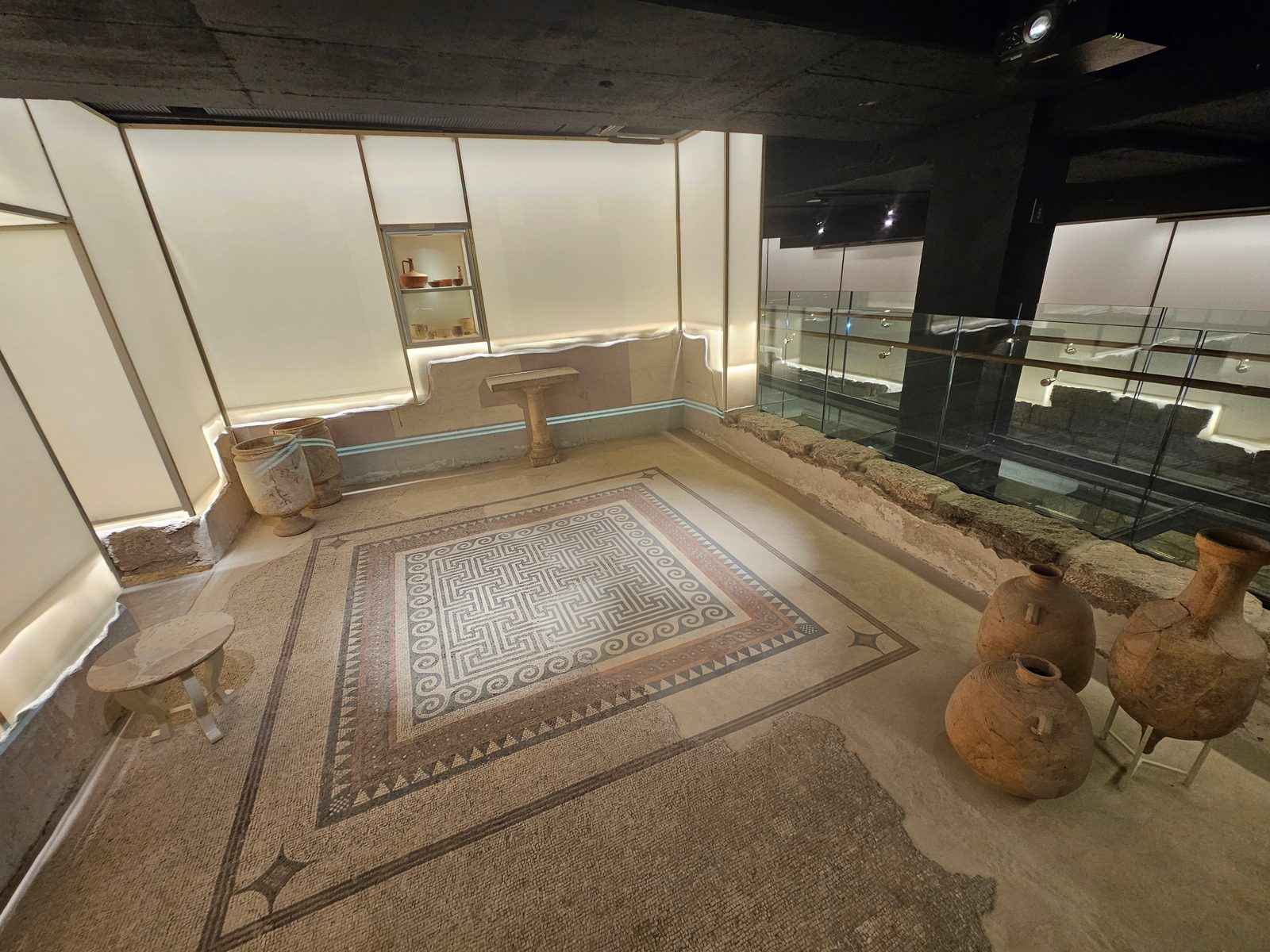
Palatial Mansion
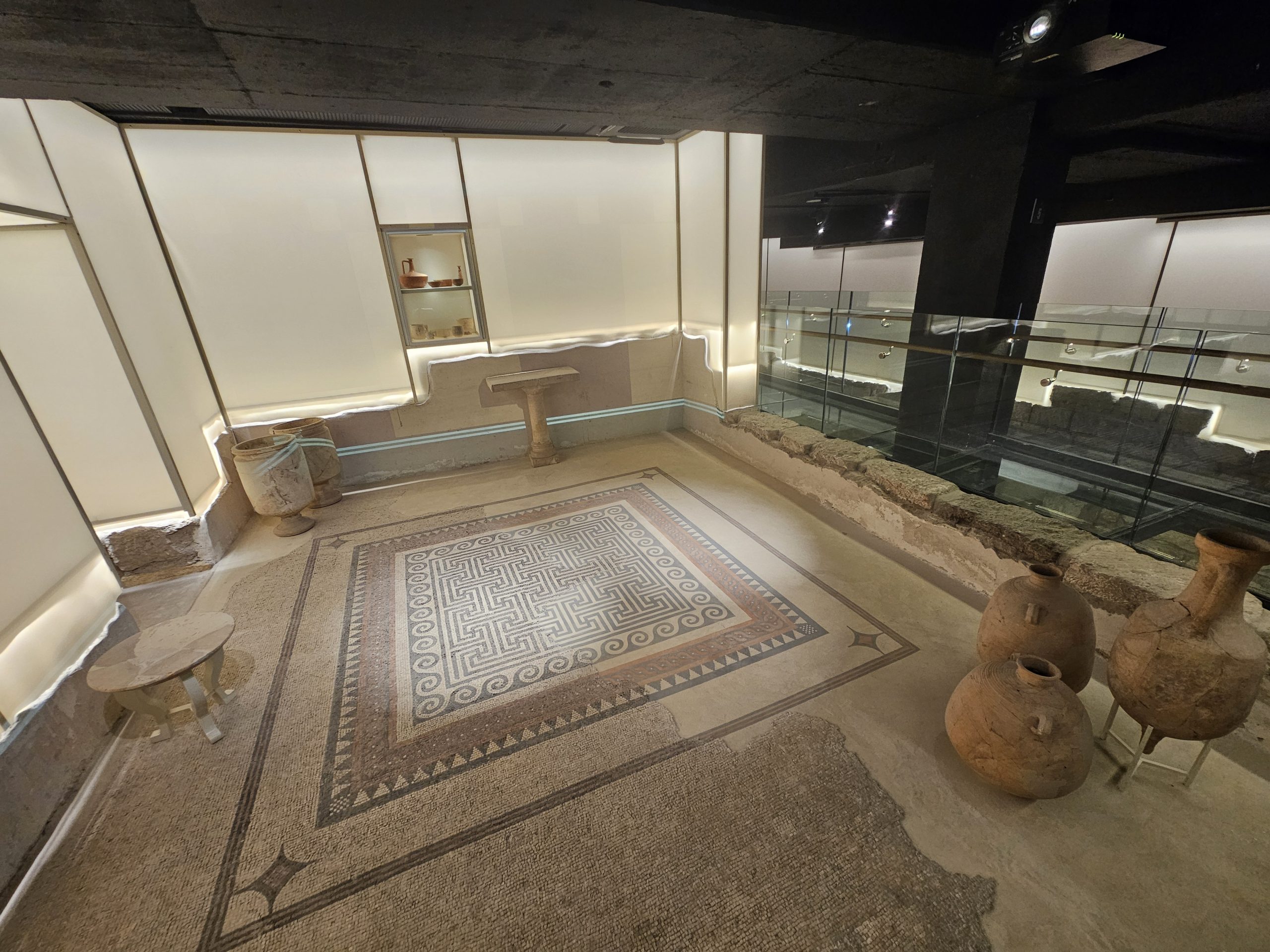
The largest mansion covers over 600 square meters, an enormous residence by any ancient standard. The house was arranged around a central courtyard, with reception rooms, bedrooms, and service areas on multiple levels. The walls were decorated with frescoes in the Pompeian style, imitating marble panels and architectural features in painted plaster. The floors featured geometric mosaics of high quality. The scale and decoration of the house indicate that its owner was among the wealthiest and most powerful people in Jerusalem, almost certainly a member of the priestly aristocracy.
Visitors descend several meters below the modern street level to walk through these rooms. The experience is disorienting in the best way: above you is the bustling Jewish Quarter of today; around you are the walls of a home that was abandoned in flames nearly 2,000 years ago. The proximity of the ancient and modern, separated by just a few meters of earth, is one of the most striking aspects of archaeology in Jerusalem.
Ritual Baths
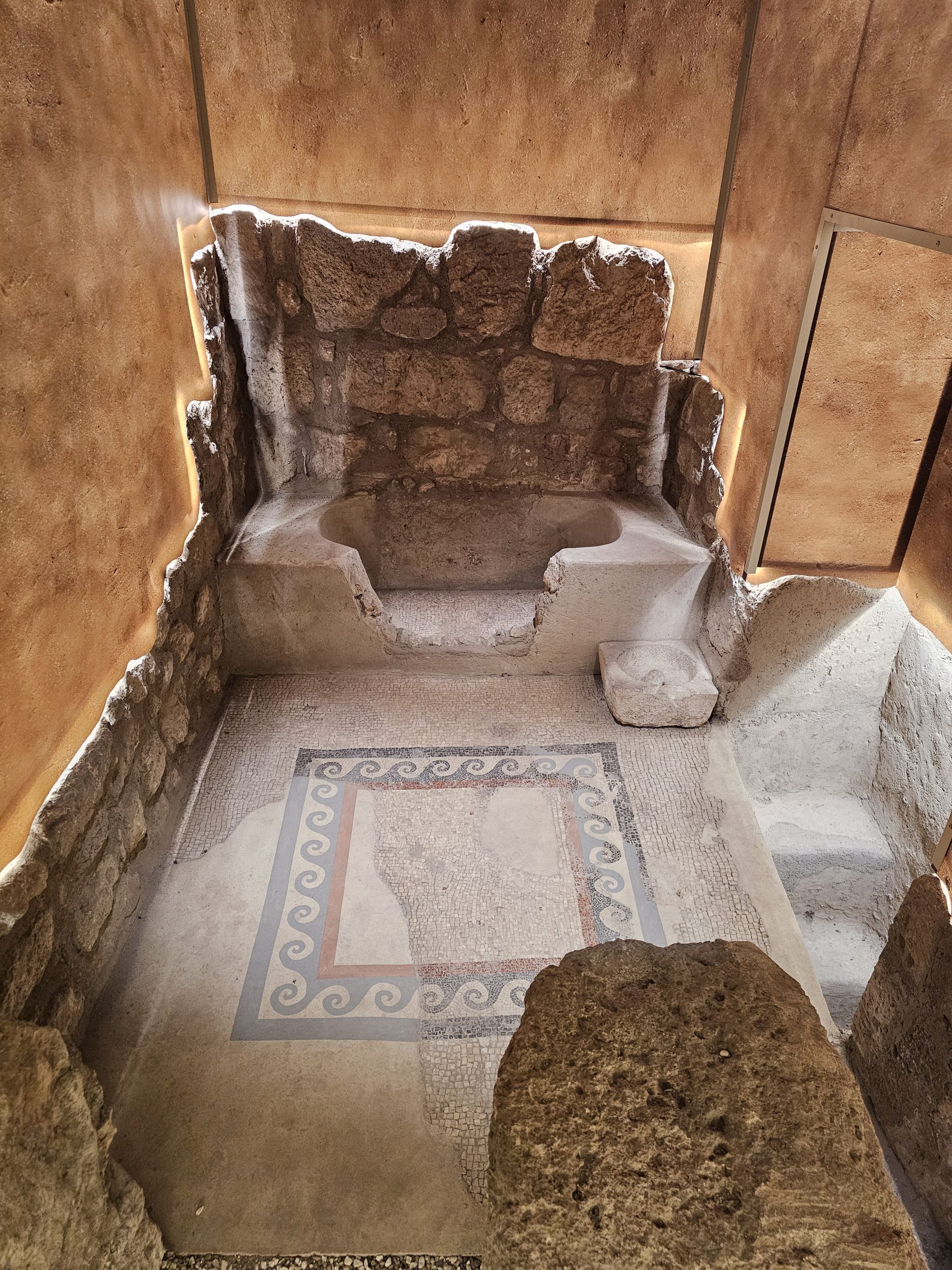
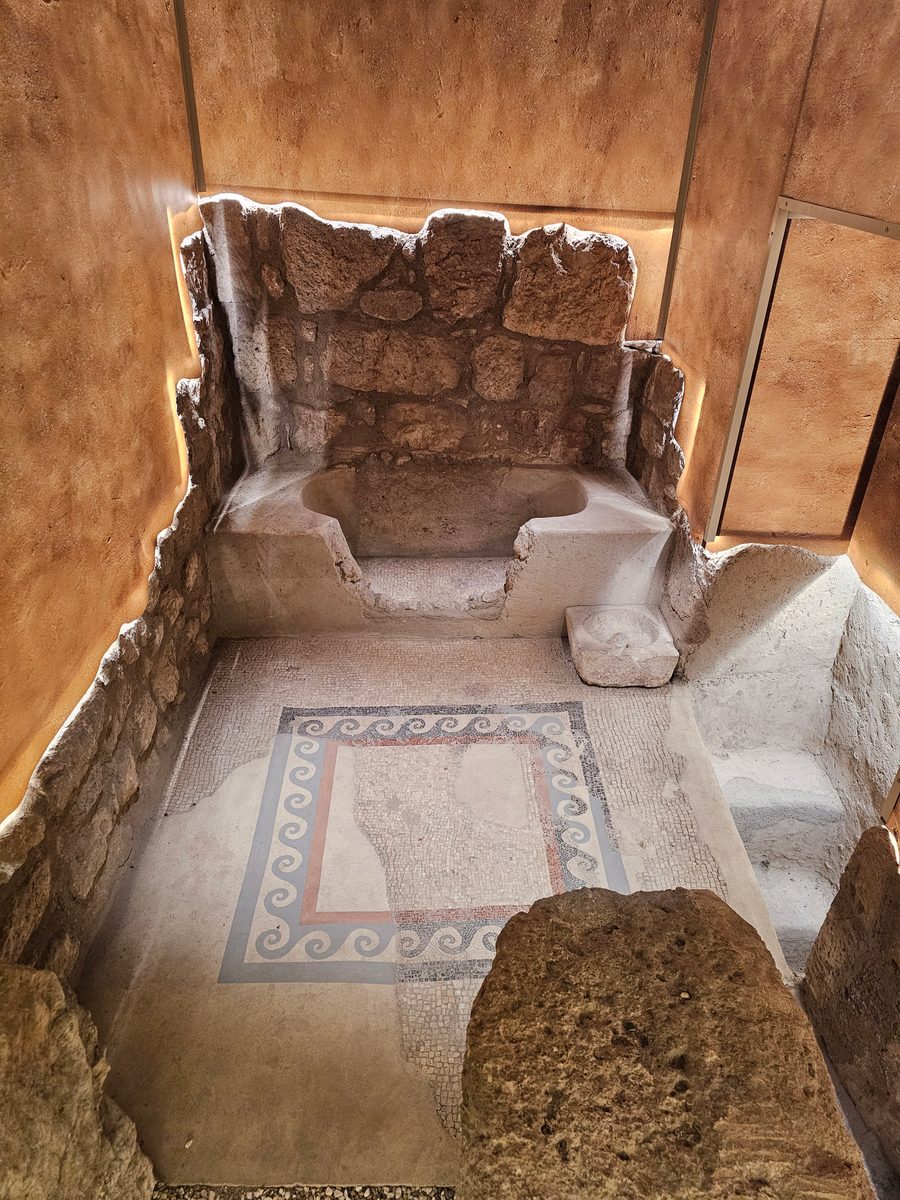
Multiple mikvaot (ritual baths) were found in each house, reflecting the priestly families’ obsession with ritual purity. The priests who served in the Temple were required to immerse before performing their duties, and the private mikvaot in their homes allowed them to maintain purity in their daily lives. The baths are carved from the bedrock, plastered, and supplied with rainwater collected from the roof. The number and size of the mikvaot in each house go far beyond what ordinary Jewish law requires, confirming that these were priestly families who took purity to an extreme. The baths also tell us something about the daily rhythm of life in these houses: immersion was not a weekly event but a daily practice, woven into the fabric of priestly existence. Before meals, before prayer, before entering the Temple precinct, the water of the mikveh marked the boundary between the ordinary and the sacred.
Stone Vessels
Throughout the mansions, archaeologists found large quantities of stone vessels: cups, bowls, measuring cups, and storage jars, all carved from the soft local limestone. Stone was preferred over pottery because, according to Jewish law, stone does not contract ritual impurity. A pottery vessel that became impure had to be broken and discarded; a stone vessel could be used indefinitely. The prevalence of stone vessels in these houses is one of the clearest archaeological indicators of Jewish religious observance in the Second Temple period. A nearby workshop where these vessels were manufactured was also discovered, with half-finished pieces still on the lathe, frozen in mid-production at the moment of the destruction.
The Destruction
Like the Burnt House nearby, the Herodian mansions were destroyed in the Roman sacking of Jerusalem in 70 CE. Layers of ash and collapsed masonry seal the houses at the moment of their destruction. In one room, a stone table was found overturned, as if someone had knocked it over while fleeing. In another, charred wooden beams lay where they fell when the ceiling collapsed. The excavations preserve these moments with haunting clarity, turning archaeological remains into human stories. The historian Josephus, who witnessed the destruction, described how the Romans set fire to the Upper City after conquering the Temple, and the flames consumed the mansions of the wealthy along with everything in them. What Josephus described in words, the archaeology confirms in ash.
Menorah Graffito
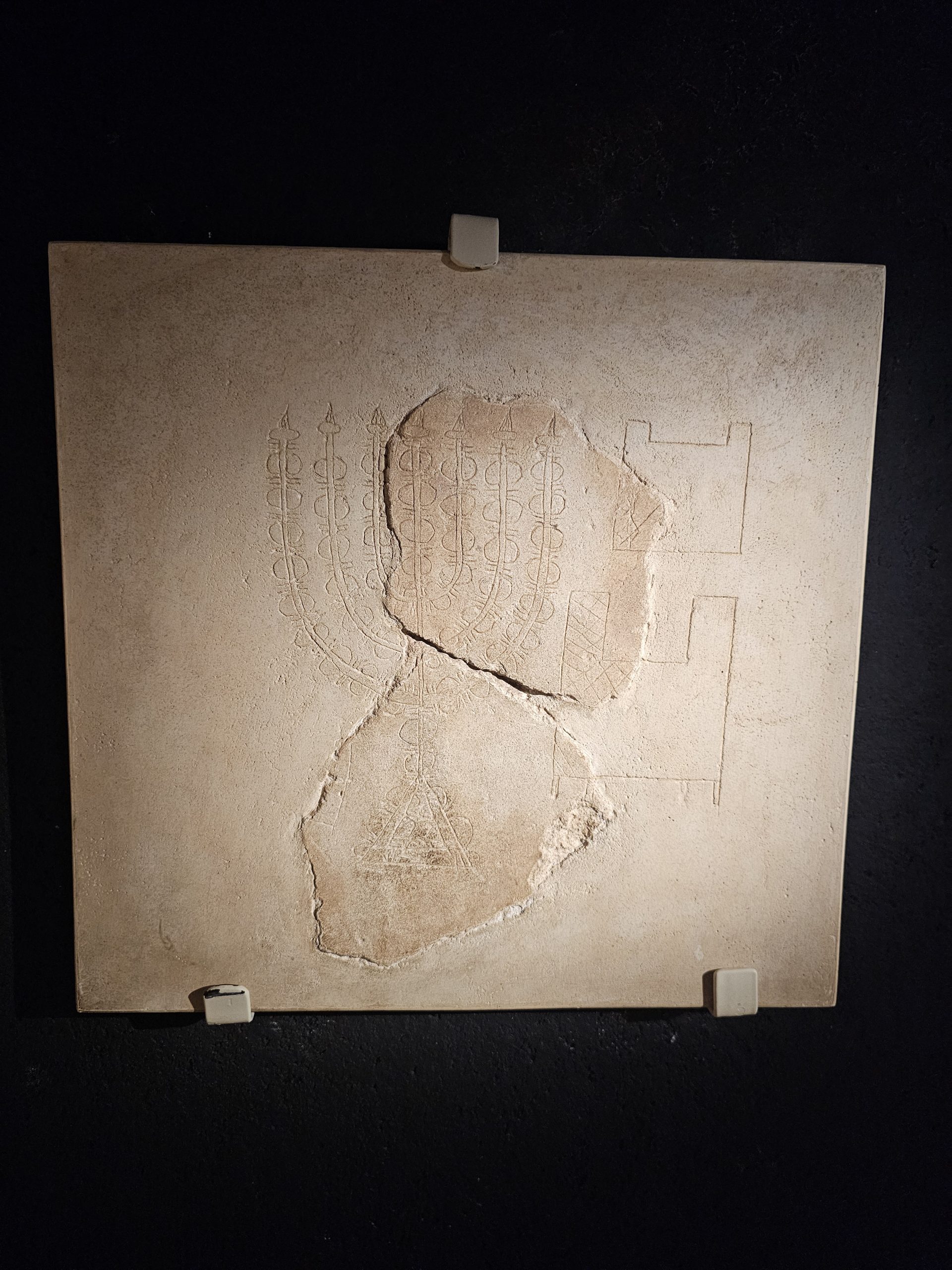
One of the most significant small finds in the Herodian Quarter is a graffito of a seven-branched menorah scratched into the plaster wall of one of the mansions. The drawing is believed to depict the actual golden menorah that stood in the Temple, drawn by someone who had seen it. If so, it is one of the earliest and most authentic representations of the Temple menorah in existence, not an artist’s imagination, but an eyewitness sketch. The graffito shows details of the menorah’s base and branches that differ from later artistic depictions, suggesting it may be more accurate than the famous image on the Arch of Titus in Rome.
Visit with Hoshen Tours
The Herodian Quarter museum reveals the luxurious lifestyle of Jerusalem’s priestly aristocracy before the Roman destruction. Located in the Jewish Quarter, it combines naturally with the Burnt House next door, offering complementary perspectives on life and destruction in Second Temple Jerusalem. Your Hoshen Tours guide can continue the journey to the Western Wall, along the ancient Cardo, and past the Broad Wall to create a comprehensive archaeological tour of the Old City.
Ready to experience Israel in true colors?
Plan Your TourPrivate tours designed around your interests, schedule, and pace.