



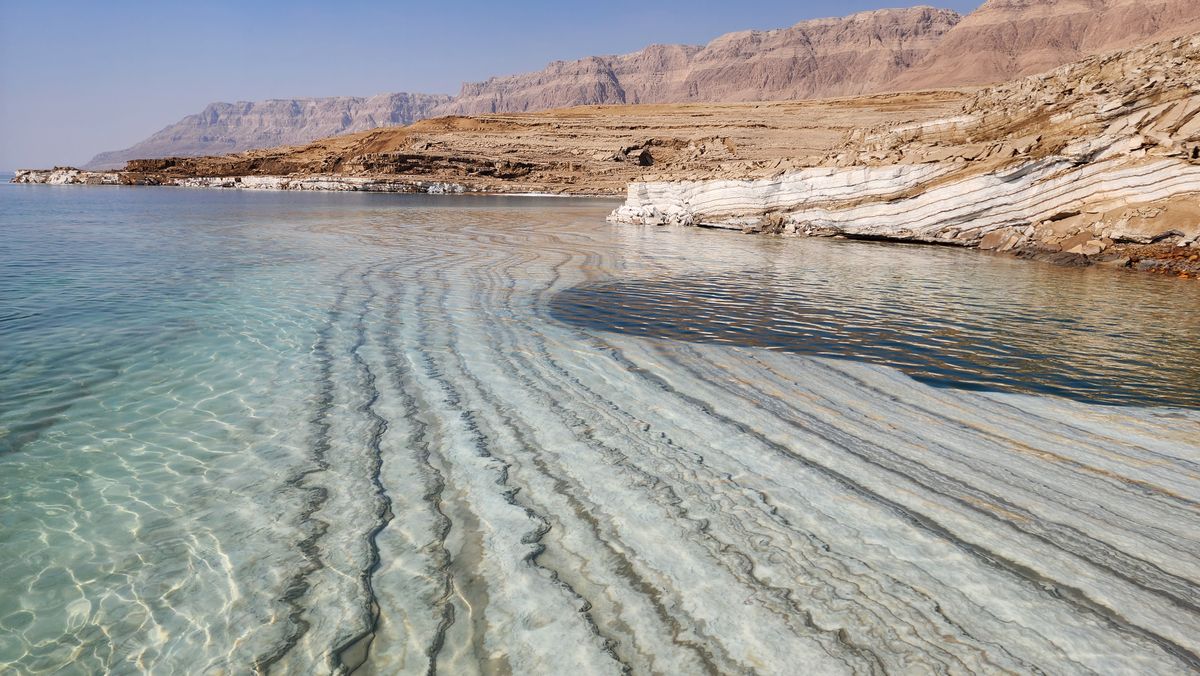
The Dead Sea sits at approximately 435 meters below sea level, the lowest point on the surface of the earth. Its water is nearly ten times saltier than the ocean, so dense that swimmers float effortlessly on its surface. The mineral-rich mud on its shores has been valued for therapeutic purposes since the time of Cleopatra, who reportedly established cosmetic factories on its banks. And the lake is disappearing, shrinking by more than a meter every year, making a visit both a tourist experience and a witness to one of the most significant environmental crises of our time. The Dead Sea stretches along the border between Israel and Jordan, flanked on the west by the cliffs of the Judean Desert and on the east by the mountains of Moab, a landscape of stark beauty that has drawn travelers, pilgrims, and health seekers for thousands of years.
Floating in the Dead Sea
Floating in the Dead Sea is one of those experiences that everyone should have once. The extreme salinity (approximately 34% dissolved salt, compared to about 3.5% in the ocean) makes it physically impossible to sink. You lie back on the surface and the water holds you, pushes you up, refuses to let you go under. The sensation is strange, wonderful, and unlike anything else on earth. The water itself feels oily and thick, noticeably different from any lake or ocean you have swum in before. The mineral mud, scooped from the shore and spread on the skin, is rich in magnesium, calcium, potassium, and bromide, and leaves you feeling like you have been polished from the inside out.
A few practical notes: do not put your head under water (the salt will burn your eyes painfully), do not shave before visiting (same reason), and do not stay in the water for more than 20 minutes at a time. The salt concentration is powerful, and extended exposure can irritate the skin. Bring water shoes if you can, as the salt crystals on the lake bed are sharp and uneven. And bring a bottle of fresh water to rinse your face immediately if any splash reaches your eyes.
Minerals and Mud
The Dead Sea’s mineral content has attracted health seekers for millennia. What makes this body of water unique is not just the quantity of dissolved salt but its specific composition. While ocean salt is predominantly sodium chloride, the Dead Sea contains unusually high concentrations of magnesium chloride, potassium chloride, and calcium chloride, along with significant levels of bromine. Magnesium is known to promote skin hydration and reduce inflammation. Potassium helps maintain moisture balance in cells. Bromine, present in the Dead Sea at concentrations far higher than in any ocean, has a natural calming effect and has been used in therapeutic treatments for centuries. The Dead Sea also contains notably low levels of sulfates compared to ocean water, which contributes to the silky feel of the water on the skin.
The combination of these minerals in the water and mud, the low-allergen air (the thick atmosphere at the lowest point on earth filters out a significant portion of UV radiation), and the high oxygen content have made the Dead Sea a destination for people suffering from skin conditions like psoriasis, as well as respiratory ailments and arthritis. Medical tourism is a significant part of the Dead Sea economy, and hotels on the Israeli and Jordanian shores offer spa treatments based on the local minerals. Clinics in the area attract patients from around the world who come for extended treatment programs, particularly for chronic skin and joint conditions, often covered by European health insurance systems. The Dead Sea’s mud, sold commercially in cosmetic products around the world, is a thick, dark paste that dries on the skin in the desert sun and is believed to draw out impurities while delivering minerals directly through the pores. The ancient Romans called the Dead Sea’s bitumen deposits “Asphalt Lake” and traded the black substance throughout the Mediterranean, and the Egyptians are believed to have used it in the mummification process.
Environmental Crisis
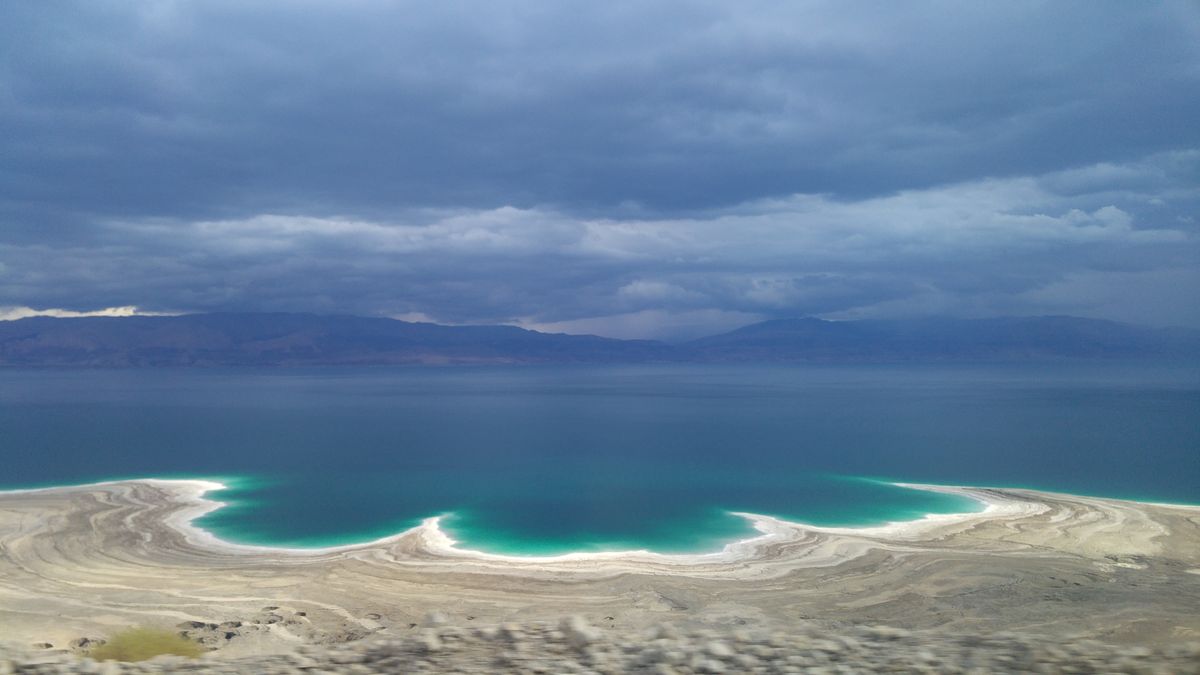
The Dead Sea has lost approximately one-third of its surface area since the 1960s. The water level drops by more than a meter every year. The primary cause is the diversion of the Jordan River, which once supplied most of the lake’s water. Israel, Jordan, and Syria have diverted an estimated 90% of the Jordan’s flow for domestic and agricultural use. At the same time, mineral extraction operations on both sides of the lake, the Dead Sea Works on the Israeli side and the Arab Potash Company on the Jordanian side, use massive evaporation pools that accelerate water loss.
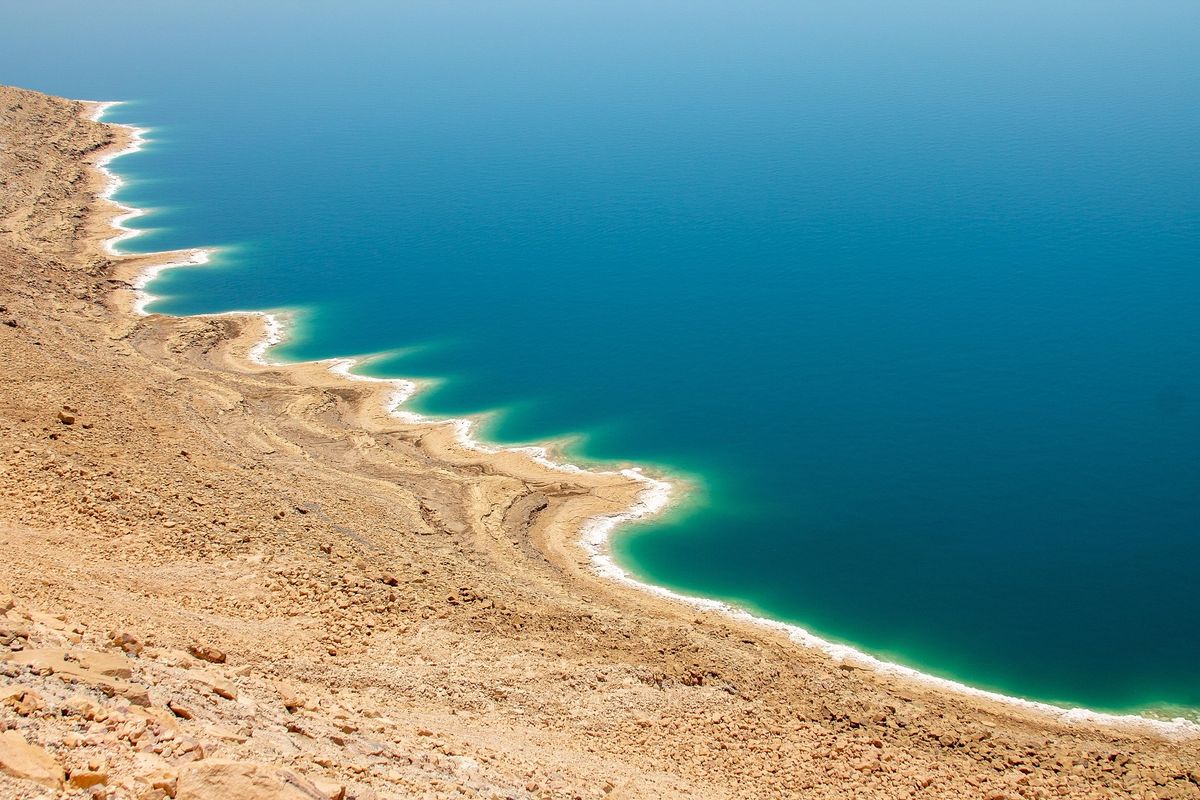
The most dramatic consequence is the sinkholes. As the shoreline retreats, underground freshwater flows toward the receding sea and dissolves ancient salt layers beneath the surface, creating cavities that collapse without warning. Over 6,000 sinkholes have appeared along the western and southern shores since the 1980s, swallowing roads, palm groves, and buildings. Some are small depressions; others are craters tens of meters wide. The sinkholes have forced the closure of several beaches and tourist facilities, and they continue to multiply each year. The northern shore has been particularly affected, with areas that were beachfront in the 1980s now lying hundreds of meters from the waterline.
Can the Dead Sea Be Saved?
Various plans have been proposed to save the Dead Sea, including the Red Sea-Dead Sea canal, which would pipe water from the Gulf of Aqaba to the Dead Sea while generating desalinated water and hydroelectric power along the way. The project has been discussed for decades but faces environmental and financial obstacles. In the meantime, the Dead Sea continues to shrink. Some scientists have noted that as the lake loses volume, its salinity increases, which may eventually slow evaporation and stabilize the water level at a much-reduced size. But that equilibrium, if it comes, would leave a Dead Sea dramatically smaller than the one visitors see today. The southern basin has already dried up entirely and is maintained as a series of industrial evaporation ponds by the mineral extraction companies. The lake that visitors see today is only the northern basin, and it is a fraction of what it was even a few decades ago.
The Dead Sea in the Bible
The Dead Sea (called the Salt Sea, the Sea of the Arabah, or the Eastern Sea in the Bible) appears in some of the most dramatic biblical narratives. Abraham and Lot looked down at the Jordan Valley, “well watered, like the garden of the Lord, like the land of Egypt” (Genesis 13:10), and Lot chose it for himself, settling near Sodom. The destruction of Sodom and Gomorrah, the cities of the plain near the Dead Sea, “with burning sulfur from the Lord out of the heavens” (Genesis 19:24), is one of the foundational stories of divine judgment. Lot’s wife, who looked back at the destruction against the angel’s command, “became a pillar of salt” (Genesis 19:26), and salt formations along the Dead Sea shore have been identified with her ever since.
The prophet Ezekiel had a vision of the Dead Sea transformed: a river flowing from the Temple in Jerusalem down to the Dead Sea, and wherever the water flowed, the salt water was healed: “Swarms of living creatures will live wherever the river flows… There will be large numbers of fish, because this water flows there and makes the salt water fresh” (Ezekiel 47:9). The vision of the Dead Sea coming to life is one of the most powerful images of redemption in the Hebrew Bible, and it gives the Dead Sea a prophetic future as dramatic as its geological present.
Herod’s Building Projects
The Dead Sea region has attracted human settlement for thousands of years. The caves above its northwestern shore hid the Dead Sea Scrolls, the oldest known manuscripts of the Hebrew Bible, produced by the community that lived at Qumran nearby. The oasis of Ein Gedi, halfway down the coast, provided refuge for David fleeing from Saul. Masada, the fortress on the cliffs above, held out against Rome. The mineral-rich waters drew Herod the Great, who built his fortress at Masada on the cliffs above and controlled the profitable bitumen trade. Cleopatra is said to have coveted the region’s resources, and ancient sources suggest she persuaded Mark Antony to grant her control over the valuable balsam groves and bitumen deposits near the Dead Sea. The Byzantine period saw monasteries built into the cliffs of the Judean Desert west of the shore, and the Nabateans controlled the lucrative trade in Dead Sea asphalt, shipping it as far as Egypt. Today the Dead Sea remains what it has always been: a place where the landscape itself feels extreme, ancient, and unlike anything else on earth.
Visit with Hoshen Tours
The Dead Sea is a must-visit destination on any guided tour of Israel. Most visitors experience it at Ein Bokek, the resort area on the southwestern shore, where public beaches offer easy access to the water along with showers to rinse off the salt afterward. The classic Dead Sea experience includes floating on your back (the obligatory photo of reading a newspaper while floating is practically a tradition), coating yourself in the dark mineral mud from the shore, letting it dry in the sun, and then rinsing it off to discover remarkably soft skin underneath.
The best times to visit are spring and autumn, when temperatures are warm but not overwhelming; summer heat at the Dead Sea can exceed 45°C, and winter days, while mild by most standards, can feel cool after a swim. The drive from Jerusalem takes about an hour and a half, dropping from roughly 800 meters above sea level to over 400 meters below, one of the most dramatic elevation changes in the world over such a short distance. As you descend, the barren hills of the Judean Desert give way to the shimmering expanse of the lake below, with the mountains of Jordan rising beyond. Hoshen Tours combines the Dead Sea with Masada, Ein Gedi, and Qumran for a day that covers history, nature, and the most unusual swimming experience in the world. Because the Dead Sea will not be here forever, and seeing it now is seeing something that your grandchildren may only read about.
Explore Our Tour Collection
Ready to experience Israel in true colors?
Plan Your TourPrivate tours designed around your interests, schedule, and pace.