



The Armenian Quarter Jerusalem in Jerusalem is the smallest and quietest of the Old City‘s four quarters, occupying the southwestern corner between the Jaffa Gate and Mount Zion. Behind its walls lives one of the oldest continuous communities in Jerusalem: Armenians have been in this city since the 4th century, and the quarter functions as much as a walled village as a neighborhood, with its own monastery, seminary, library, printing press, and residential compound.
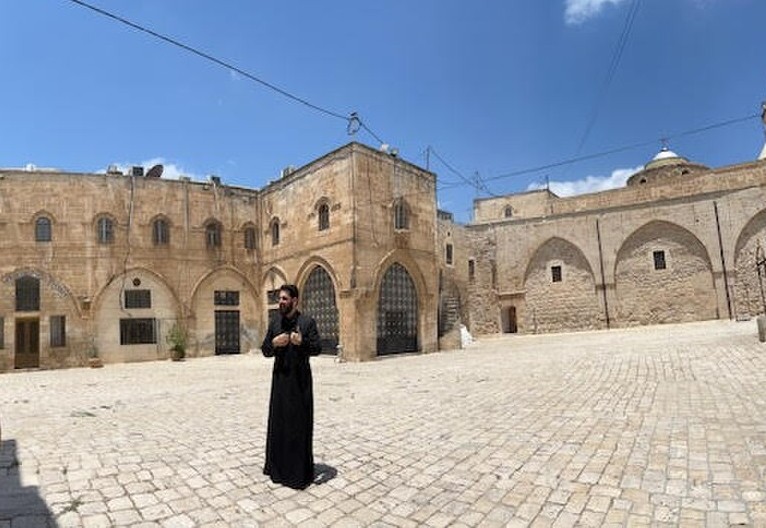
The Armenian Community Jerusalem
The Armenian Quarter is structured around the Armenian Patriarchate compound, a walled enclave within the walled city. The compound contains the Cathedral of St. James, the Armenian Seminary, the Gulbenkian Library (one of the finest collections of Armenian manuscripts outside Armenia), the Armenian Museum, a printing press that has been operating since the 19th century, and the residential buildings where Armenian families live. The compound gates close at night, and the community inside maintains a rhythm of life that has continued for centuries.
Armenia was the first nation to adopt Christianity as its state religion, in 301 CE, and Armenian pilgrims and monks began coming to Jerusalem almost immediately. By the 5th century, a permanent Armenian community was established, and the Armenian Patriarchate of Jerusalem became one of the three most important centers of the Armenian Church, alongside the Catholicosate in Etchmiadzin (Armenia) and the Catholicosate in Cilicia (now in Lebanon). The Armenian presence in Jerusalem has survived Arab, Crusader, Mamluk, Ottoman, British, Jordanian, and Israeli rule, a continuity that is remarkable even by Jerusalem standards.
Armenian Genocide
The Armenian community in Jerusalem swelled dramatically after the Armenian Genocide of 1915, when the Ottoman Empire systematically killed an estimated 1.5 million Armenians. Survivors who reached Jerusalem were taken in by the monastery, and many of their descendants still live in the quarter today. The genocide is central to Armenian identity, and the Armenian Museum in the quarter documents both the ancient presence and the modern tragedy. Every April 24, the community holds a memorial march through the Old City streets.
Life in the Quarter
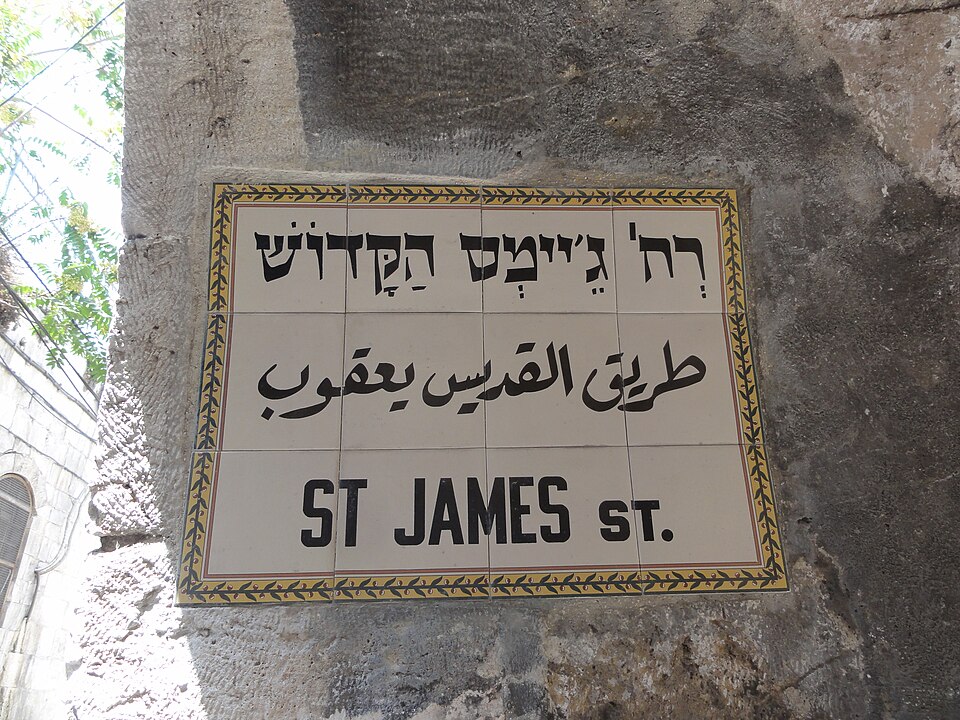
Armenian ceramics are one of Jerusalem’s most distinctive crafts. The tradition of Armenian tile-making in Jerusalem dates to 1919, when the British brought Armenian artisans from the town of Kutahya in Turkey to restore the tiles on the Dome of the Rock. The artisans stayed, and their descendants continue to produce hand-painted tiles in workshops near the quarter. The blue, turquoise, and white floral designs that adorn buildings throughout the Old City, and that visitors buy as souvenirs, are an Armenian contribution to Jerusalem’s visual identity.
Land Dispute
In recent years, the Armenian community has been engaged in a high-profile legal and public struggle over a large parcel of land within the quarter known as the “Cows’ Garden” (Goveroun Bardez). The community alleges that a land deal was made without proper community consent and has mounted protests and legal challenges to prevent development on what they consider patrimony held in trust for the Armenian community. The dispute has drawn international attention to the challenges facing the small community in maintaining its presence in a city where real estate pressures are intense.
The Armenian Quarter today is home to approximately 1,000 Armenians, though the number has been declining as younger generations leave for better economic opportunities abroad. The community maintains its own schools, sports clubs, and social organizations. The Armenian tavern on Armenian Patriarchate Road serves Armenian and Middle Eastern food and is one of the few public restaurants in the quarter. Walking through the quiet streets, past the stone walls and iron gates, with the sound of the seminary bell marking the hours, is one of the most peaceful experiences in the Old City.
Visit with Hoshen Tours
The Armenian Quarter is the smallest and most intimate of the Old City’s four quarters, yet it holds centuries of fascinating history. Entering through Jaffa Gate, your Hoshen Tours guide will walk you past the Tower of David and into the quarter’s quiet streets, where the Armenian Museum tells the story of this ancient community. The quarter borders the Jewish Quarter to the east and is home to Christ Church, the oldest Protestant church in the Middle East. A guided visit reveals a side of Jerusalem most visitors never see. Hoshen Tours often combines this site with Sephardic Synagogues, Deir es-Sultan, and Sisters of Zion for a memorable day exploring the region.
Ready to experience Israel in true colors?
Plan Your TourPrivate tours designed around your interests, schedule, and pace.