



The Armenian Museum of Jerusalem, located within the compound of the Armenian Quarter, documents two intertwined stories: the 1,700-year presence of Armenians in the Holy Land, and the Armenian Genocide of 1915, in which the Ottoman Empire systematically killed an estimated 1.5 million Armenians.
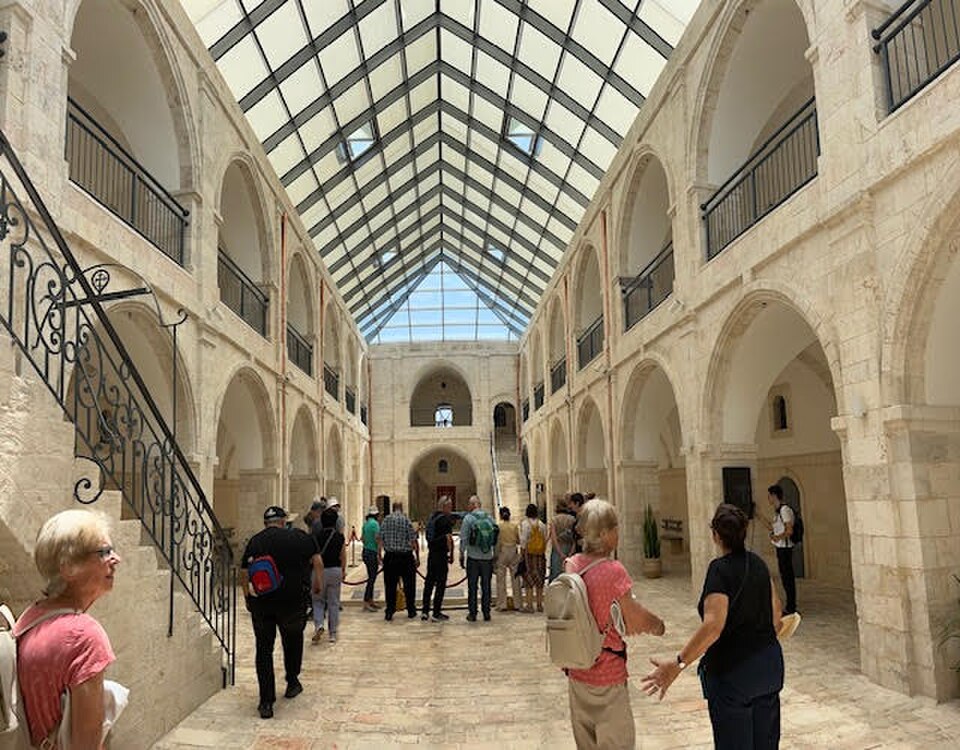
Ancient Presence and Manuscript Collection – Armenian Museum of Jerusalem
Armenia was the first nation to adopt Christianity as its state religion, in 301 CE, and Armenian pilgrims began coming to Jerusalem almost immediately. By the 5th century, a permanent Armenian community was established in the city, with its own monastery, churches, and residential quarter. The museum displays religious vestments, liturgical objects, crosses, and ceramics that document this continuous presence across 17 centuries. The manuscript collection is among the museum’s greatest treasures, featuring illuminated manuscripts produced in Armenian scriptoria (writing workshops) where monks created some of the most beautiful books of the medieval world. These manuscripts, written in the distinctive Armenian alphabet invented by Mesrop Mashtots in 405 CE, include gospels decorated with gold leaf, elaborate marginal illustrations, and ornamental headpieces that represent centuries of artistic tradition.
The Photographic Archive
The museum preserves a significant photographic archive documenting Armenian life before 1915. These photographs, many brought to Jerusalem by genocide survivors, show Armenian communities in Anatolia, their churches, schools, workshops, and family gatherings in the years before the catastrophe. The images record a world that was systematically destroyed: prosperous towns, ancient monasteries, and thriving cultural institutions that no longer exist. For descendants of survivors, these photographs are often the only visual record of their ancestral communities. The archive serves both as historical documentation and as evidence of what was lost.
The Armenian Genocide Exhibition
The second floor of the museum is dedicated to the Armenian Genocide of 1915-1923. Beginning in 1915, the Ottoman government deported, starved, and massacred the Armenian population of Anatolia. The museum displays photographs, documents, testimonies, and personal objects from the genocide, telling the story with restraint and dignity. Many of the survivors who reached Jerusalem were taken in by the Armenian Monastery, and their descendants still live in the quarter today. The museum makes the connection explicit: the community that maintains this museum exists in Jerusalem partly because of the catastrophe that destroyed their communities elsewhere. For many Armenian visitors, the museum is both a celebration of survival and an act of remembrance.
The Tilework Tradition
The museum also showcases the Armenian ceramic tilework tradition that has become one of Jerusalem’s most recognizable art forms. Armenian potters, many of them refugees who arrived after the genocide, established workshops in Jerusalem and developed a distinctive style of hand-painted tiles featuring floral patterns, birds, and geometric designs in cobalt blue, turquoise, and manganese purple. Their work adorns buildings throughout Jerusalem, including the Dome of the Rock’s exterior tiles (restored by Armenian craftsmen in the 1920s). The museum displays examples of this tradition from multiple centuries, connecting the ancient art of Armenian ceramics to the living workshops that still operate in the city today.
Visit with Hoshen Tours
The Armenian Museum within the Armenian Quarter tells the remarkable story of one of Jerusalem’s oldest communities. Your Hoshen Tours guide will walk you through the collection of manuscripts, artifacts, and religious art that document centuries of Armenian presence in the Holy Land. The museum is a short walk from Jaffa Gate and the Tower of David, and can be combined with a visit to nearby Christ Church for a deeper understanding of the Old City’s diverse heritage. Hoshen Tours often combines this site with Sephardic Synagogues, Deir es-Sultan, and Sisters of Zion for a memorable day exploring the region.
Ready to experience Israel in true colors?
Plan Your TourPrivate tours designed around your interests, schedule, and pace.