



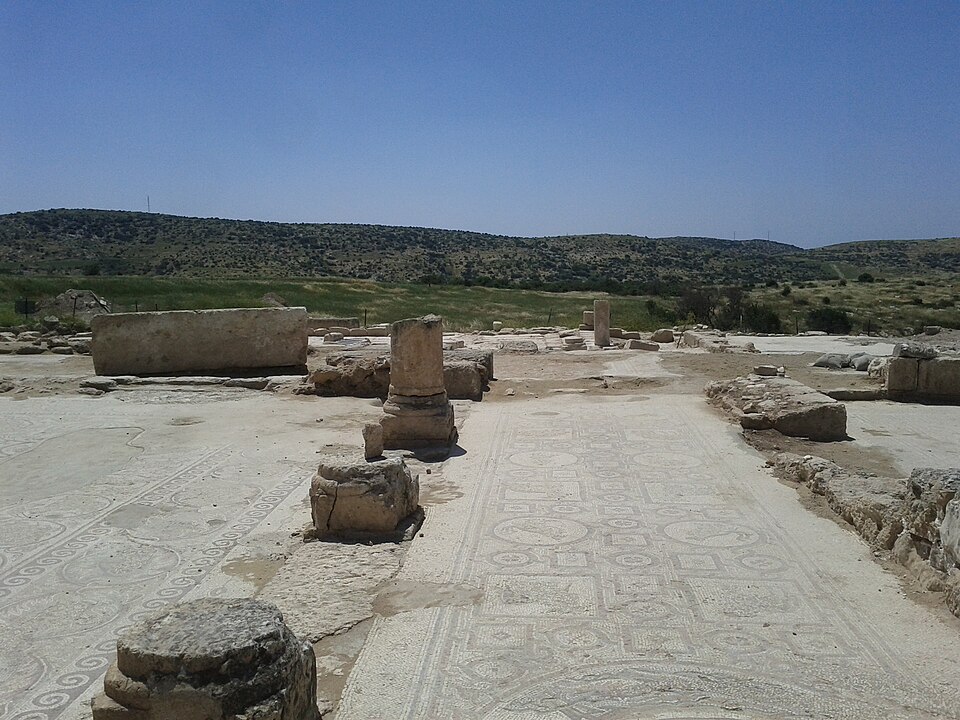
Beit Loya (Horvat Beit Loya) is a small archaeological site in the Judean foothills with two remarkable features: an ancient synagogue with a stunning mosaic floor, and a burial cave with the oldest known inscription of the name “Jerusalem” in Hebrew, dating to the 7th or 8th century BCE.
Jerusalem Inscription
In a burial cave at the site, archaeologists found an inscription scratched into the limestone wall that reads, in ancient Hebrew script: “YHWH is the God of the whole earth; the mountains of Judah belong to him, to the God of Jerusalem.” The inscription is generally dated to the late First Temple period, most likely the 8th or 7th century BCE, making it one of the earliest known Hebrew inscriptions to mention Jerusalem by name outside of the biblical text. The paleographic style of the script and the archaeological context of the cave support this dating, though scholars continue to debate the precise century. The theological content of the inscription is significant for understanding ancient Judahite religion: the author expressed a belief that the God worshipped in Jerusalem held dominion over all the earth, not only the territory of Judah. This universalist claim aligns with the religious reforms traditionally attributed to Kings Hezekiah and Josiah, who sought to centralize worship in Jerusalem and suppress local shrines.
The cave itself contains several chambers carved into the soft limestone, and additional inscriptions and drawings were found on the walls, including human figures and a sailing ship, offering a rare glimpse into the artistic expression of ordinary people in the Kingdom of Judah. The dating of these inscriptions to the late 8th century BCE has led many scholars to connect the cave with the Assyrian invasion of Judah under Sennacherib in 701 BCE, when the Assyrian army devastated the Shephelah and besieged Jerusalem. It is believed that the cave may have served as a refuge for people fleeing the destruction, which would explain the urgency and devotional nature of the writings. The combination of the Jerusalem reference, the First Temple dating, and the possible connection to a well-documented historical crisis makes Beit Loya one of the most important epigraphic sites in Israel for the study of ancient Israelite faith and identity.
Synagogue Mosaic
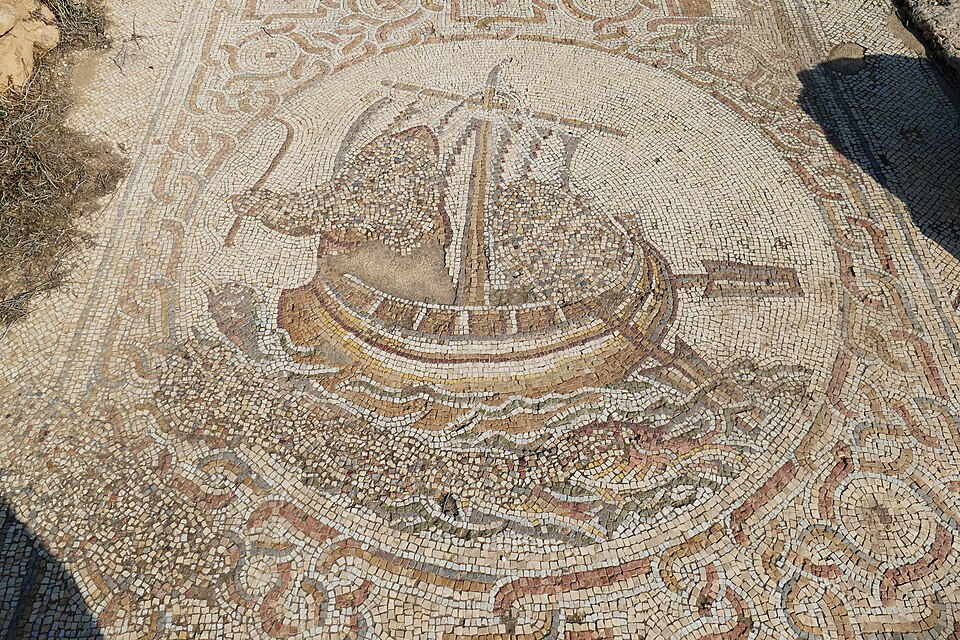
The Byzantine-period synagogue at Beit Loya contains a beautiful mosaic floor with a menorah, a shofar, a lulav, and an inscription in Hebrew and Aramaic. The mosaic is well preserved and the colors are vivid. A nearby church from the same period has its own mosaic floor, and the proximity of the two buildings suggests a community where Jews and Christians lived as neighbors. The synagogue mosaic is notable for its craftsmanship and for the way it combines religious symbols with decorative geometric patterns, reflecting the artistic traditions of the Byzantine period in the region. The site demonstrates that Jewish communities continued to thrive in the Judean foothills well into the Byzantine era, maintaining their own houses of worship alongside the growing Christian presence.
Mormon Connection
The Jerusalem inscription at Beit Loya has attracted interest from members of the Church of Jesus Christ of Latter-day Saints (Mormons), who see it as evidence supporting their belief in the historical accuracy of the Book of Mormon’s references to ancient Israelite inscriptions. The connection has brought LDS visitors and scholars to the site, and Beit Loya is a regular stop on tours organized for LDS groups visiting Israel. BYU (Brigham Young University) researchers have been involved in studying the inscription, and the LDS interest has helped raise the site’s profile internationally.
Visit with Hoshen Tours
Beit Loya’s ancient mosaics and Hebrew inscription are a hidden treasure of the Shephelah. Hoshen Tours pairs it with the caves of Beit Guvrin, the ancient city of Maresha, the hermitage at Horvat Burgin, and the Philistine city at Tel Miqne (Ekron).
Explore Our Tour Collection
Ready to experience Israel in true colors?
Plan Your TourPrivate tours designed around your interests, schedule, and pace.