



Tel Aviv Port, known locally as Namal Tel Aviv, was born out of necessity and defiance. 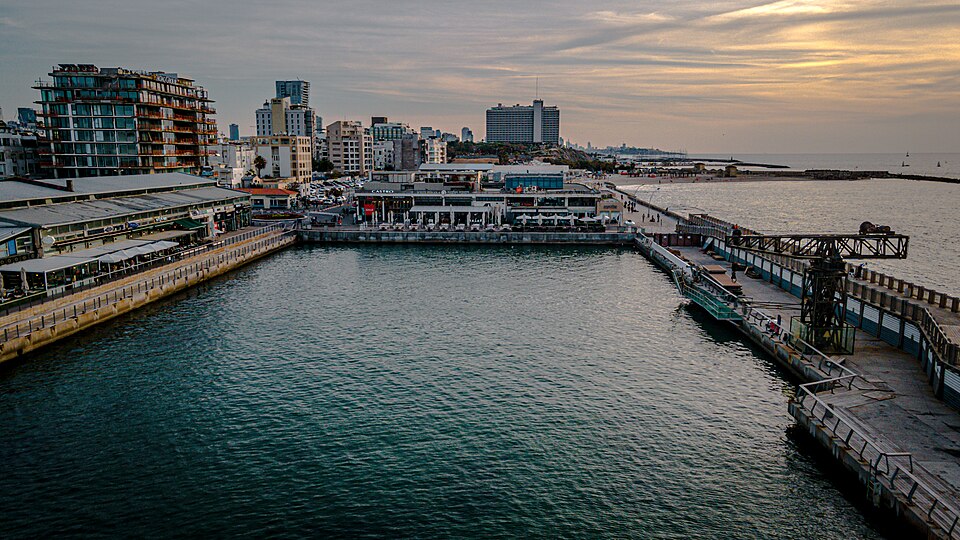 Jaffa, which at the time was the main commercial harbor serving the Jewish economy. Jewish citrus exports, the lifeblood of the Yishuv’s economy, were stranded. Goods could not be loaded or unloaded. The Jewish community’s dependence on an Arab-controlled port, and on British willingness to keep it open, was suddenly exposed as an existential vulnerability.
The response was characteristically Zionist: build our own. Within weeks of the strike’s outbreak, Jewish leaders began planning an independent harbor on the Tel Aviv shoreline, north of the Yarkon River. Construction moved fast. A wooden pier was erected, a breakwater was built, and basic port infrastructure was improvised on what had been an empty stretch of beach. The port opened in 1936 and, despite its modest size, became a symbol of Jewish self-reliance and economic independence. Over the following years it was expanded and improved, and during the final decade of the British Mandate it served as one of the main entry points for Jewish immigrants arriving in Palestine, both legal and illegal. Ships carrying Holocaust survivors and displaced persons from Europe docked here in the critical years of 1945–1948, when every immigrant landing was a political act. The port operated until 1965, when the larger deepwater facilities at Haifa and Ashdod made it obsolete.
From Cargo to Culture
In the early 2000s, the abandoned port area was redeveloped as a waterfront leisure and entertainment complex. The old warehouses and hangar buildings were converted into restaurants, cafes, and event spaces. The centerpiece is the undulating wooden boardwalk designed by Mayslits Kassif Architects, whose wave-like surface has become an architectural landmark. A weekly farmers’ market draws crowds on Fridays, and the boardwalk fills with joggers, cyclists, dog walkers, and families at all hours. The hangar buildings host rotating exhibitions, pop-up events, and seasonal markets. Restaurants and bars line the waterfront, many with outdoor seating that looks directly over the Mediterranean, the kind of setting where a long Friday lunch can drift seamlessly into a sunset cocktail. On warm evenings, the port area has the relaxed, slightly festive atmosphere of a Mediterranean resort town, and it is hard to believe that the same boardwalk once handled crates of Jaffa oranges and shiploads of refugees.
Visit with Hoshen Tours
A visit to Tel Aviv Port pairs beautifully with nearby destinations along your route. Consider combining it with a stop at Tel Aviv or Yarkon Springs, both just a short drive away. Many travelers also enjoy exploring Dizengoff and HaTachana on the same day, while Jaffa offers another worthwhile addition to your itinerary. Your Hoshen Tours guide will craft a seamless route that brings each destination to life with expert commentary and insider knowledge.
Explore Our Tour Collection
Ready to experience Israel in true colors?
Plan Your TourPrivate tours designed around your interests, schedule, and pace.