



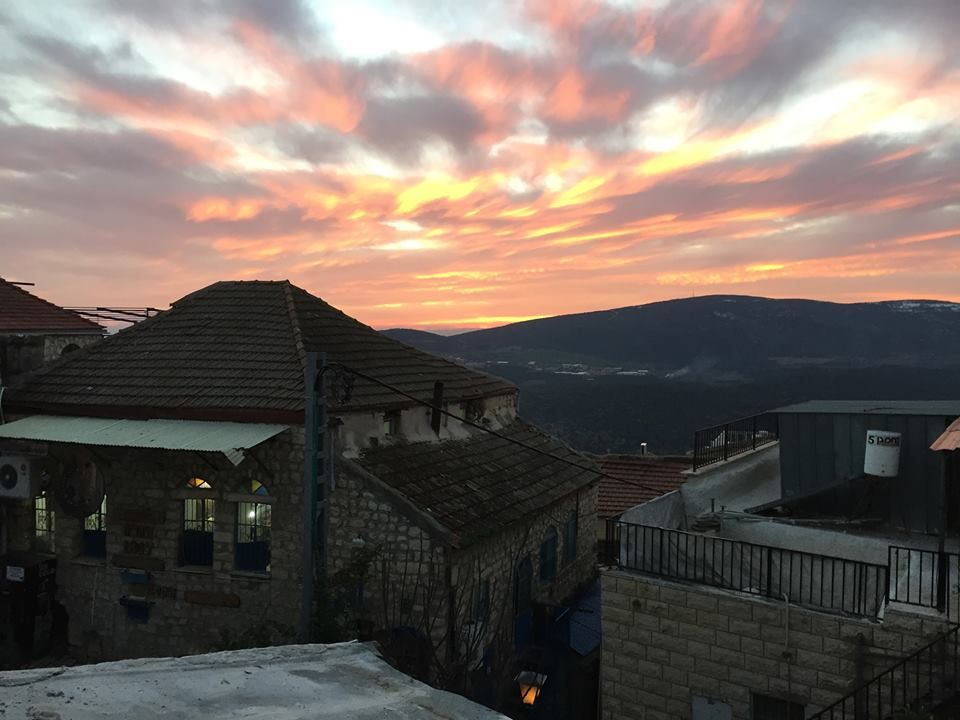
Rabbi Isaac Luria arrived in Safed in 1570 and died two years later at the age of 38. In those two years, he changed Judaism forever. Known as the Ari (the Lion), Luria created a mystical system so powerful that it reshaped Jewish prayer, philosophy, and daily practice across the entire diaspora. Not bad for a man who never wrote a single book.
The Man from Egypt
Luria was born in Jerusalem in 1534, raised in Egypt, and spent years in solitary study on an island in the Nile before arriving in Safed. His reputation preceded him. Within months, he had gathered a circle of devoted students who recorded his teachings, since the Ari himself taught only orally, believing that his ideas were too complex and too sacred to be written down.
Teachings That Transformed Judaism
Lurianic Kabbalah introduced concepts that became central to Jewish thought. Tzimtzum, the idea that God contracted to make room for creation. Shevirat hakelim, the breaking of the vessels, explaining the existence of evil. And tikkun, the repair of the world through prayer, good deeds, and spiritual intention. These ideas, revolutionary at the time, became mainstream in Judaism within a generation.
Two Years That Changed Everything
The Ari’s influence is everywhere in Jewish life. The Kabbalat Shabbat service, recited every Friday evening in synagogues worldwide, was developed by the Ari and his circle in Safed. The custom of visiting graves of the righteous, still practiced at Meron and across Israel, was central to his spiritual practice. Even the layout of many synagogues reflects Lurianic principles.
His synagogue in Safed, the Ari Ashkenazi Synagogue, is one of the most visited sites in the city and one of the most atmospheric prayer spaces in Israel. The mikveh (ritual bath) he used still operates. And his grave in the old cemetery of Safed is a pilgrimage site for Jews from around the world.
The Ari Israel Ashkenazi Synagogue
The Ari Ashkenazi Synagogue, tucked into the narrow streets of Safed’s Synagogue Quarter, is where Luria prayed and taught during his two years in the city. The building is small, intimate, and painted in the blues and whites that characterize Safed’s sacred spaces. The Holy Ark is ornately carved, and the bimah (reading platform) stands in the center of the room in the Ashkenazi tradition.
According to tradition, Luria would leave this synagogue every Friday afternoon and walk with his students to the fields outside the city to welcome the Sabbath. It was during these walks that the Kabbalat Shabbat service took shape, with hymns composed by the Ari’s circle becoming the prayers that Jews around the world recite to this day. The synagogue has been damaged and rebuilt several times, including after the devastating earthquake of 1837, but it has never ceased to function as a house of prayer.
The Ari’s Mikveh
Below the synagogue, cut into the rock of the hillside, is the Ari’s mikveh (ritual bath), fed by a natural spring. The Ari taught that immersion in the mikveh was essential for spiritual purification, and he used this particular mikveh regularly. Today, visitors (men only) still immerse in the same cold spring water that the Ari used over 450 years ago. The water is freezing. The experience is unforgettable.
Visit with Hoshen Tours
The Ari’s Safed comes alive with a guide who can connect the mystical teachings to the physical places. Hoshen Tours walks you through the synagogue, the mikveh, and the cemetery, bringing the Lion of Safed into focus.
Visitors exploring the upper Galilee often combine The Ari – Rabbi Isaac Luria with nearby destinations such as Safed, Kabbalah in Safed, and Rabbi Joseph Caro, each offering its own distinctive perspective on the region’s layered history and landscape. A broader itinerary might also include Abuhav Synagogue and Mount Meron, both within easy reach and rich in their own right.
Every Hoshen Tours itinerary is private and fully customizable. Contact us to begin planning your journey through the upper Galilee.
Explore Our Tour Collection
Ready to experience Israel in true colors?
Plan Your TourPrivate tours designed around your interests, schedule, and pace.