



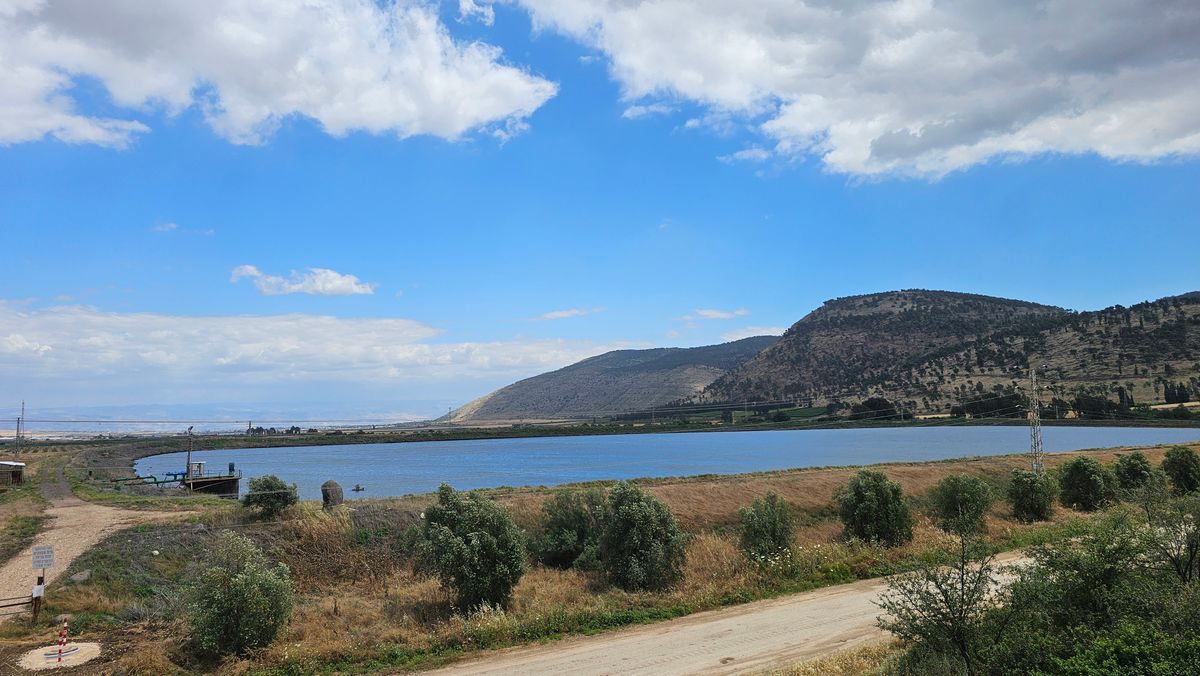
Mount Gilboa, Israel, is a mountain ridge on the eastern edge of the Jezreel Valley, famous for one of the most tragic episodes in the Bible: the death of King Saul and his son Jonathan in battle against the Philistines. David’s lament over their deaths is one of the most powerful passages of poetry in the Hebrew Bible: “How the mighty have fallen! Tell it not in Gath, proclaim it not in the streets of Ashkelon, lest the daughters of the Philistines rejoice. Mountains of Gilboa, may you have neither dew nor rain, may no showers fall on your terraced fields” (2 Samuel 1:19-21).
The Battle of Mount Gilboa: Saul’s Last Stand
The Philistines assembled a massive army at Shunem, on the northern slopes of Givat HaMoreh, and Saul positioned his forces on the ridgeline of Mount Gilboa to the south, with the spring at Jezreel as their water source, “and Israel was encamped by the spring which is in Jezreel” (1 Samuel 29:1). The two armies faced each other across the valley, and the Philistine force was enormous.
The night before the battle, Saul, desperate and abandoned by God, slipped away from his camp and made the dangerous journey around the Philistine lines to Ein Dor, on the far side of Givat HaMoreh, to consult a medium. The spirit of the prophet Samuel delivered a devastating prophecy: “The Lord will deliver both Israel and you into the hands of the Philistines, and tomorrow you and your sons will be with me” (1 Samuel 28:19). Saul collapsed in terror, ate a last meal prepared by the woman of Ein Dor, and returned through the darkness to his army on Gilboa.
The next morning, the Philistines attacked up the slopes of Gilboa. The battle was a disaster for Israel. The Israelite lines broke, and the soldiers fled across the mountain. The Philistines pursued them relentlessly along the ridge. Jonathan, Saul’s eldest son and David’s closest friend, was killed in the fighting, along with his brothers Abinadab and Malki-Shua. Saul himself was hit by Philistine archers and badly wounded. Surrounded, bleeding, and unwilling to be taken alive by the uncircumcised enemy, Saul asked his armor-bearer to kill him. The armor-bearer refused, terrified. So Saul took his own sword and fell on it. When the armor-bearer saw that the king was dead, he too fell on his sword. “So Saul and his three sons and his armor-bearer and all his men died together that same day” (1 Samuel 31:6).
David’s Lament
When news of Saul and Jonathan’s death reached David, his response was not triumph but grief. David composed a lament that is one of the most powerful poems in the Hebrew Bible, ordering that it be taught to all the people of Judah: “Your glory, Israel, lies slain on your heights. How the mighty have fallen! Tell it not in Gath, proclaim it not in the streets of Ashkelon, lest the daughters of the Philistines rejoice, lest the daughters of the uncircumcised exult” (2 Samuel 1:19-20). David’s love for Jonathan, the son of the king who hunted him, is expressed in words that have echoed through the centuries: “I grieve for you, Jonathan my brother; you were very dear to me. Your love for me was wonderful, more wonderful than that of women. How the mighty have fallen! The weapons of war have perished!” (2 Samuel 1:26-27).
The bodies of Saul and his sons were taken by the Philistines and hung on the walls of Beit She’an, the city visible from Gilboa to the east. When the men of Jabesh Gilead heard what had happened, they marched through the night, took the bodies from the wall, and gave them a proper burial: an act of loyalty repaying Saul’s rescue of their city at the beginning of his reign (1 Samuel 31:11-13). The story of Gilboa is not just a story of defeat. It is a story of loyalty, love, and the end of an era.
The Gilboa Iris
Every spring, between February and April, the slopes of Mount Gilboa explode with the purple bloom of the Gilboa Iris (Iris haynei), a rare species found primarily on this mountain. The iris has become the symbol of the mountain, and its bloom draws thousands of hikers each spring. The flower is endangered and protected, and the irony of David’s curse (“may you have neither dew nor rain”) and the mountain’s spectacular spring bloom is not lost on visitors.
Views Across Three Valleys
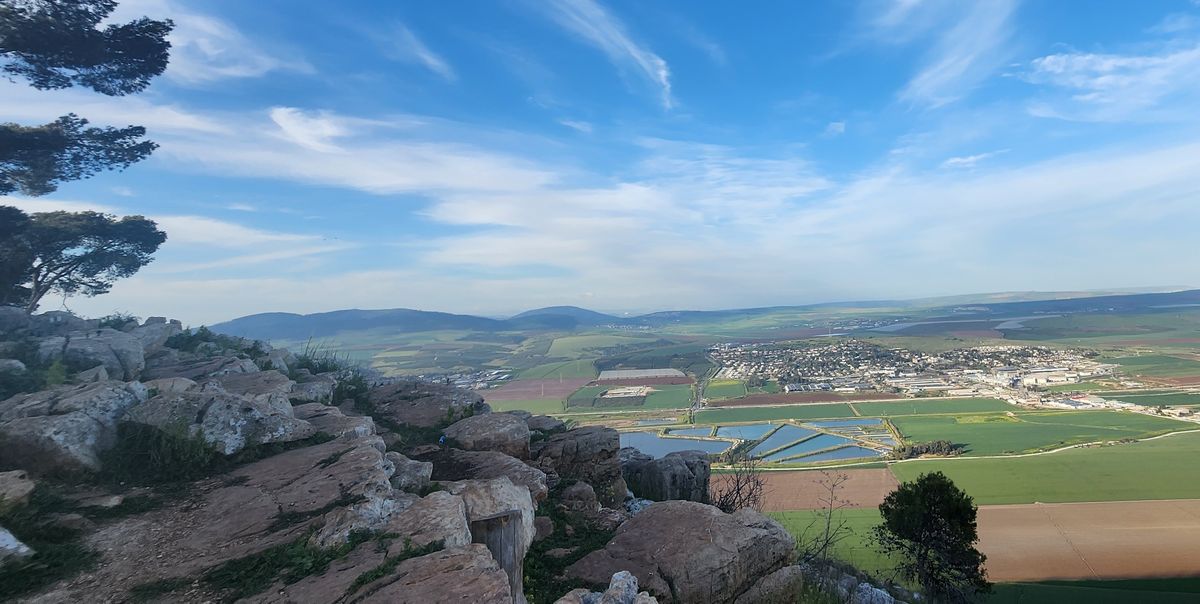
The Gilboa ridge offers panoramic views of the entire Jezreel Valley, the Jordan Valley, and the mountains of the Galilee and Samaria. On a clear day, the view stretches from Mount Hermon in the north to the hills of Judea in the south. The mountain is crisscrossed with hiking and cycling trails, and the combination of biblical history, spring wildflowers, and sweeping views makes it one of the best outdoor destinations in northern Israel.
Har Barkan and the Scenic Drive
Har Barkan (Mount Barkan), a peak in the Gilboa range, offers one of the best panoramic viewpoints on the mountain. The summit provides sweeping views of the Jezreel Valley, the Beit She’an Valley, and on clear days, the mountains of Jordan. The Gilboa scenic drive connects Har Barkan to the other viewpoints and hiking trails along the ridge, and the area is popular with hikers and cyclists, especially during the February-April wildflower season when the slopes are covered with the Gilboa iris, anemones, and cyclamen.
Visit with Hoshen Tours
Mount Gilboa is where King Saul fell in his final battle. Hoshen Tours pairs it with the spring at Ma’ayan Harod, the village of Nain, Tel Jezreel of Ahab and Jezebel, and the last camp at Mount Saul.
Explore Our Tour Collection
Ready to experience Israel in true colors?
Plan Your TourPrivate tours designed around your interests, schedule, and pace.