



Napoleon Bonaparte conquered Egypt, marched through the Sinai, took Jaffa, and arrived at the walls of Akko in 1799 fully expecting to add another city to his collection. Two months later, he retreated. The walls held. The defenders, a mix of Ottoman troops and local forces aided by the British navy, refused to break. Napoleon reportedly said, “If I had been able to take Acre, I would have reached Constantinople and changed the face of the world.” Instead, Akko changed the face of Napoleon’s campaign, and the French went home.
That is Akko in a nutshell. A city that has been besieged, conquered, rebuilt, and besieged again more times than anyone can count, and somehow keeps standing. It is one of the oldest continuously inhabited cities in the world, a UNESCO World Heritage Site, and, depending on who you ask, the best place to eat hummus in Israel.
4,000 Years of History
Akko appears in Egyptian records from the 19th century BCE, making it one of the oldest named cities in the world. The Egyptians knew it. The Phoenicians traded from it. Alexander the Great passed through it. The Romans used it. And when the Crusaders lost Jerusalem to Saladin in 1187, they made Akko their capital and turned it into the most important port city in the eastern Mediterranean.
The city’s location, on a natural harbor at the northern end of the Haifa Bay, gave it strategic and commercial importance that no empire could ignore. Whoever controlled Akko controlled the coast, the trade routes, and the access to the interior. This is why every power in the region, from the Egyptians to the Ottomans, fought to hold it.
The Crusader Capital
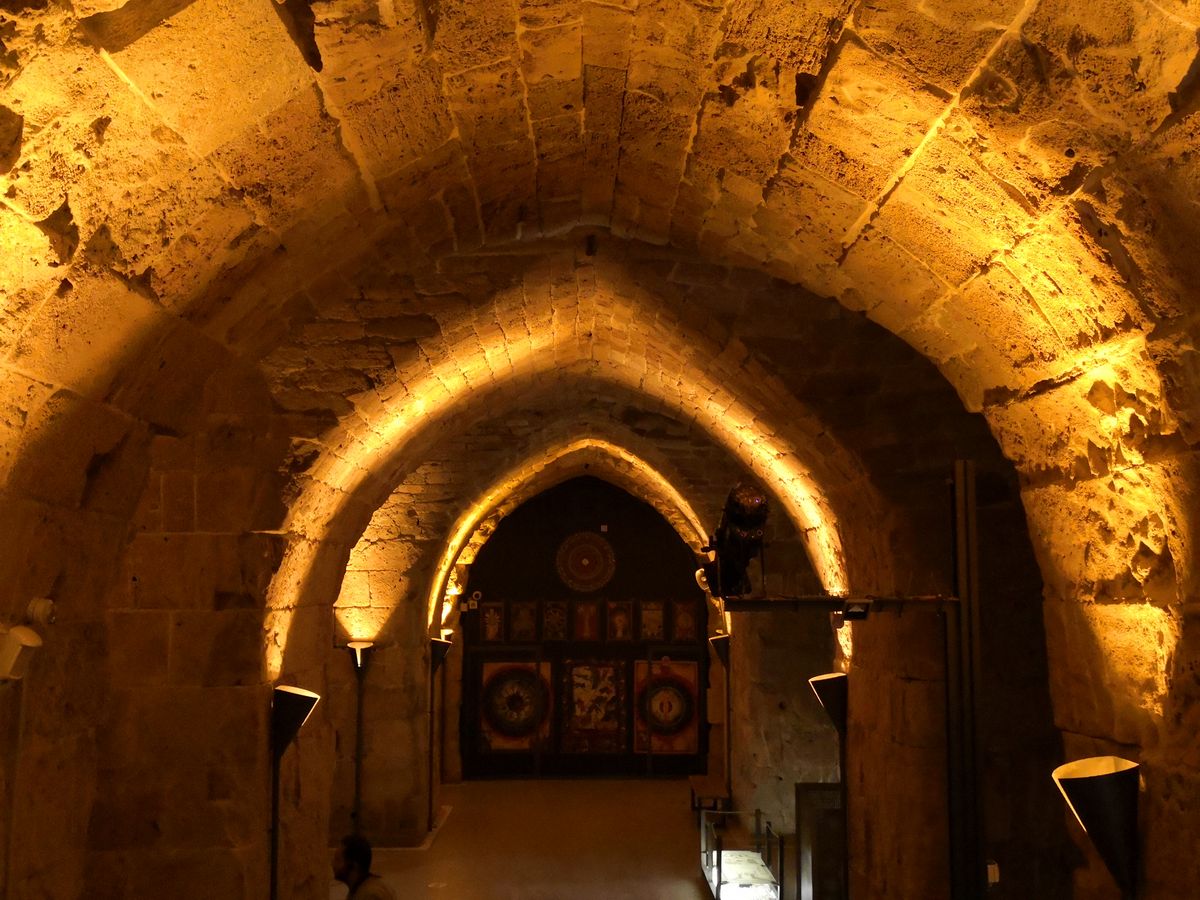
After losing Jerusalem, the Crusaders retreated to the coast and made Akko their headquarters. For the next century (1191-1291), Akko was the most important Crusader city in the Holy Land. The Knights Hospitaller, the Knights Templar, the Teutonic Knights, the Venetians, the Genoese, and the Pisans all had their own quarters, their own churches, and their own agendas. The city was a pressure cooker of competing interests, where the military orders plotted against each other almost as energetically as they fought the Muslims.
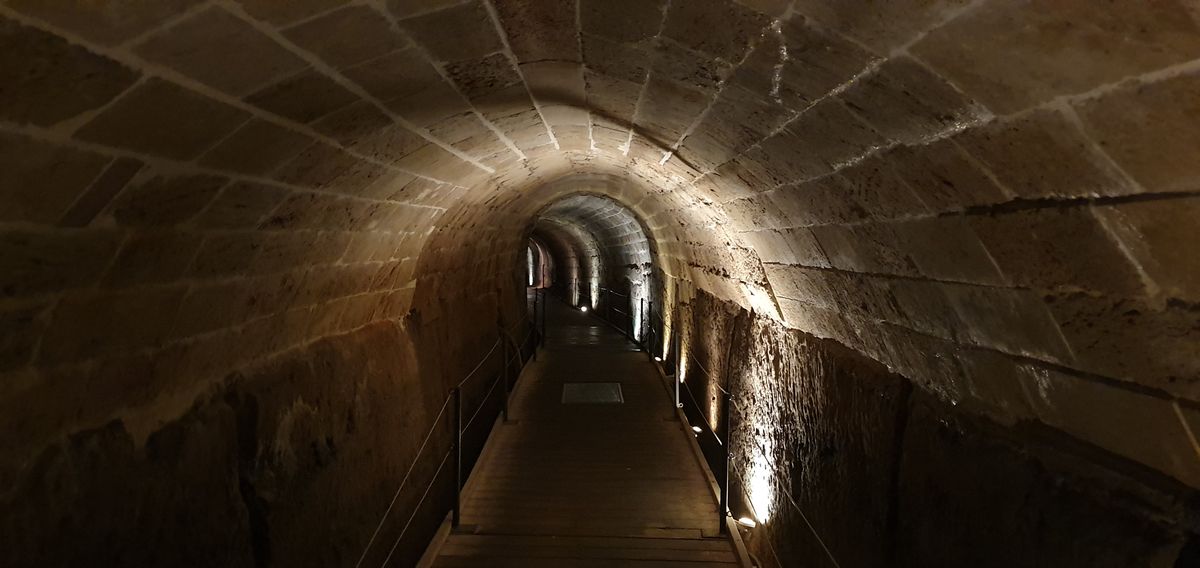
The Knights’ Halls, the underground Crusader city discovered beneath the Ottoman streets, are the most dramatic physical evidence of this period. Massive Gothic halls, vaulted corridors, and the Templar Tunnel connecting the fortress to the port were buried for 700 years and rediscovered in the 20th century.
The Fall of 1291
The fall of Akko on May 18, 1291, was the end of the Crusader era in the Holy Land. The Mamluk sultan al-Ashraf Khalil besieged the city with an overwhelming force, and after weeks of fierce fighting, the walls were breached. The Templars made a last stand in their fortress, which collapsed on attackers and defenders alike. The destruction was thorough. The Mamluks razed most of the city to prevent the Crusaders from ever returning.
Ironically, this destruction is what preserved the Crusader city. When the Ottomans rebuilt Akko centuries later, they simply built on top of the rubble, unknowingly sealing one of the best-kept medieval secrets in the Middle East beneath their foundations.
Al-Jazzar and the Ottoman City
The Akko that visitors see above ground is largely the creation of Ahmad Pasha al-Jazzar (Ahmed the Butcher), the Ottoman governor who ruled from 1775 to 1804. Al-Jazzar was brutal, effective, and a prolific builder. He constructed the mosque that bears his name, the largest in Israel outside of Jerusalem, with its graceful green dome, elegant minaret, and a courtyard filled with ancient columns recycled from Caesarea and other Roman sites. The mosque is open to visitors outside of prayer times and is one of the most beautiful Islamic buildings in the country.
Al-Jazzar also strengthened the city walls, and it was these walls that stopped Napoleon in 1799. The British navy, commanded by Sir Sidney Smith, reinforced the defense from the sea, and after two months of failed assaults, Napoleon withdrew. It was one of his few defeats, and one of the most consequential. Had he taken Akko, the history of the Middle East might have been very different.
The Old City Market
The old city market is one of the most atmospheric in Israel. Unlike the tourist-oriented markets in Jerusalem, Akko’s shuk is primarily a local market where Arab families do their daily shopping. The stalls sell spices, fresh fish, vegetables, and sweets, and the smell of freshly ground coffee and za’atar fills the narrow alleys. On Friday mornings, the market is packed, and the energy is intense.
The fish market, near the harbor, is particularly good. The catch comes in from the boats just outside the market walls, and the fishmongers know their customers by name. Buying fish in Akko and having it grilled at one of the port restaurants is one of the simple pleasures of visiting the north.
The Templar Tunnel
In 1994, a woman in the old city reported a plumbing problem. When workers dug into her floor to find the pipe, they found something else entirely: a 350-meter underground tunnel connecting the Templar compound to the port. The Templar Tunnel, now cleaned, lit, and open to visitors, is one of the most surprising discoveries in Israeli archaeology. Walking through it, you are tracing the secret passage that the Knights Templar used to move between their fortress and their ships, eight hundred years ago.
The Hummus Question
It is impossible to write about Akko without addressing the hummus. Several restaurants in the old city claim to serve the best hummus in Israel, and the debate is fierce. Hummus Said and Abu Christo are the most famous, and the lines that form outside their doors on weekends are a testament to how seriously Israelis take this question. The hummus is served warm, smooth, and topped with whole chickpeas, olive oil, and lemon. It comes with fresh pita, pickles, and onions, and it costs almost nothing. Whether it is actually the best in Israel is a matter of personal conviction, but it is undeniably excellent.
The Sea Wall and the Port
Akko’s sea wall circles the old city and offers one of the best walks in Israel. Starting from the harbor, the path follows the top of the Ottoman walls past fishing boats, through gaps in the stone that frame views of Haifa and Mount Carmel across the bay, and around to the lighthouse at the southwestern corner. At sunset, the light turns the stone walls golden, and the entire old city looks like it belongs in a painting.
The fishing port itself is small, colorful, and still very much in use. Fishing boats line the harbor walls, and the catch of the day ends up in the restaurants along the waterfront within hours. Eating fresh fish at one of the port restaurants, with the sea wall and the old city behind you, is one of the great simple pleasures of visiting Israel’s north.
Visit Akko with Hoshen Tours
Akko is one of those places where every street has a story, and a good guide makes the difference between a pleasant walk and a journey through four thousand years of history. Hoshen Tours combines the Crusader halls, the Ottoman mosque, the Templar Tunnel, the market, and a waterfront lunch into a day that captures everything this extraordinary city has to offer. Because Akko is the city that stopped Napoleon. The least you can do is give it a full day.