



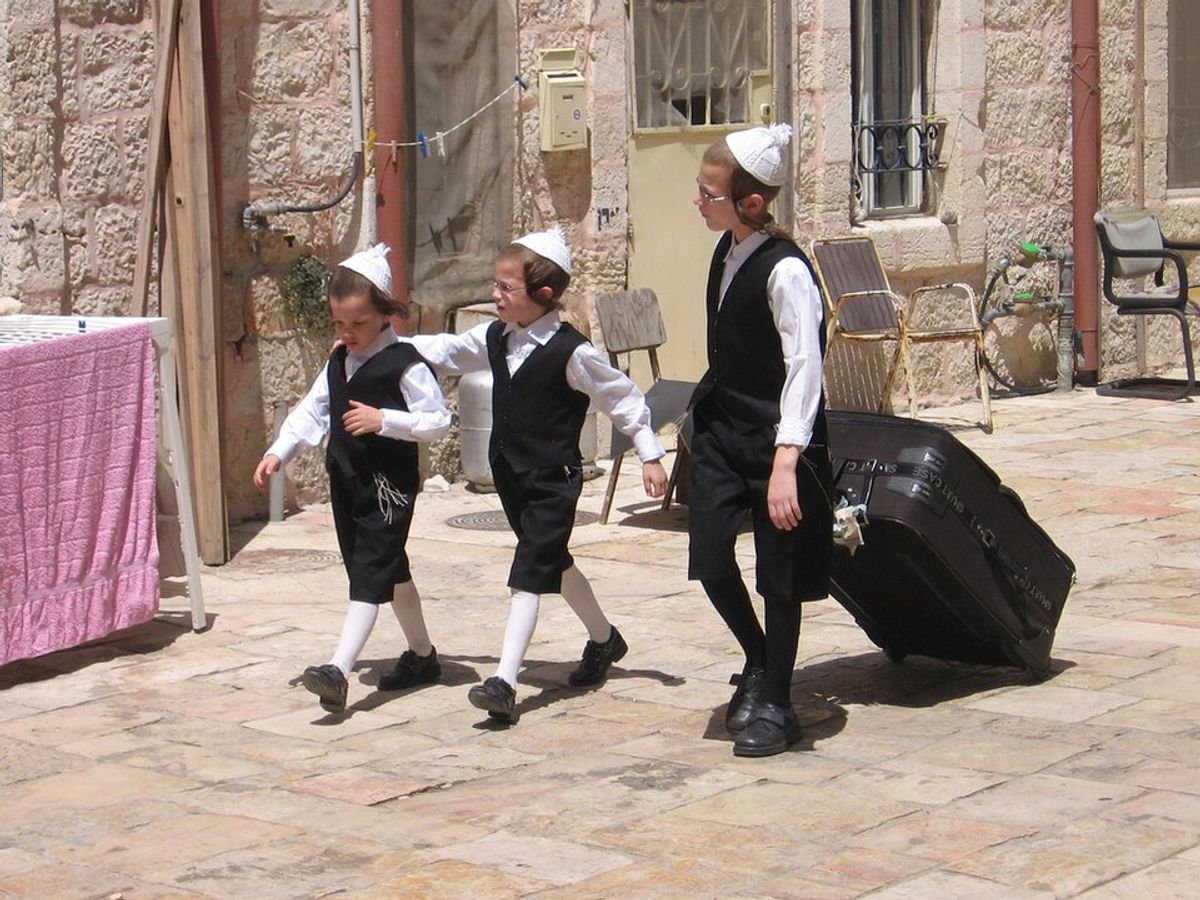
There are places in Jerusalem that carry you back centuries in the span of a single city block. Mea Shearim is one of them. Founded in 1874, it stands as one of the oldest Jewish neighborhoods built outside the walls of the Old City, and today it is the most well-known Haredi (ultra-Orthodox) neighborhood in the world. Walking its narrow lanes, you encounter a community that has deliberately preserved a way of life rooted in Eastern European Jewish tradition. The sounds, the language, the rhythm of daily and weekly life, all of it reflects a continuity that has outlasted empires. Mea Shearim is not a relic; it is a living, breathing world unto itself.
The Founding of Mea Shearim
By the 1870s, the Jewish population of Jerusalem had grown far beyond what the cramped quarters of the Old City could accommodate. A group of approximately one hundred shareholders came together to purchase a tract of land roughly a mile north of the Jaffa Gate and establish what would become Mea Shearim. The neighborhood was formally founded in 1874, making it among the earliest of the planned Jewish residential quarters built in the “new city”, among the earliest of the planned Jewish residential quarters built outside the walls, following Mishkenot Sha’ananim (1860), Machaneh Yisrael, and Nahalat Shiva (1869).
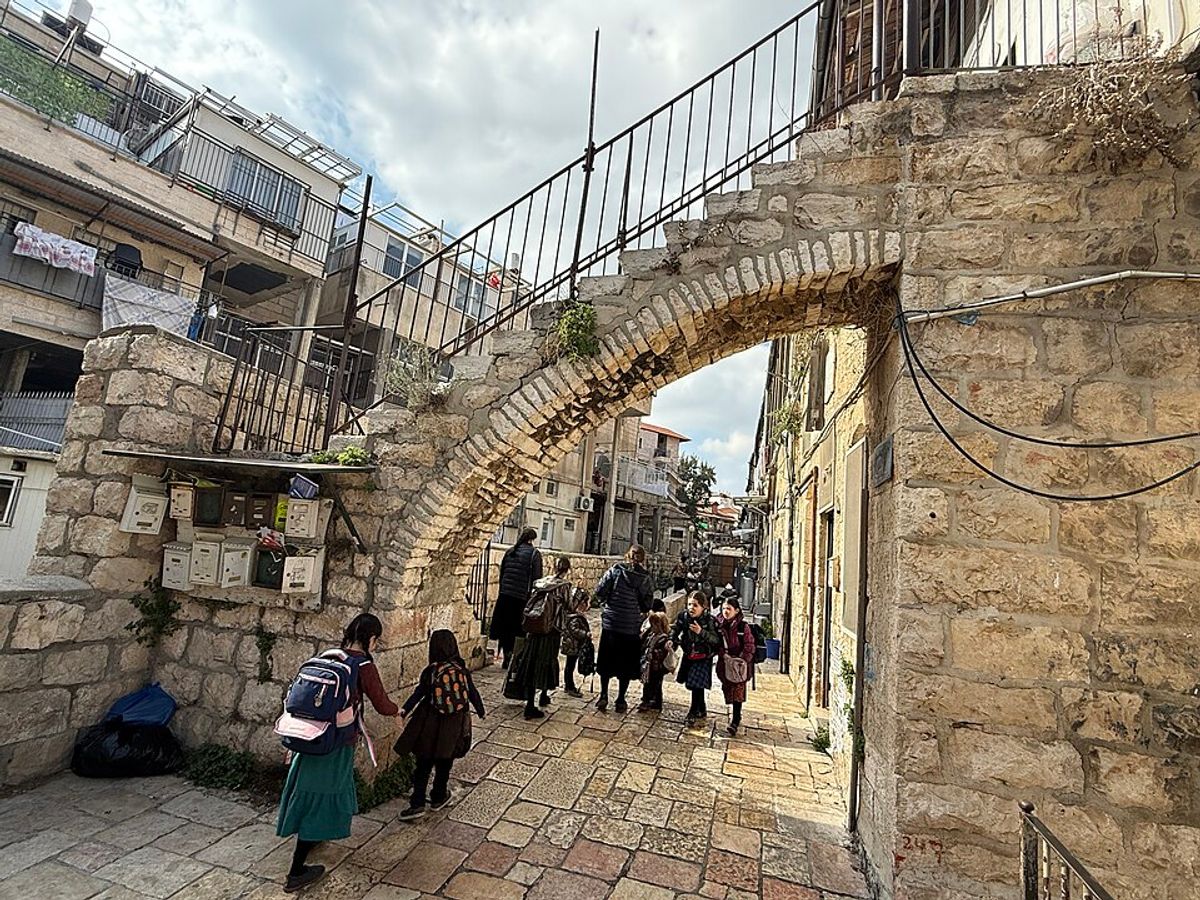
The name Mea Shearim comes from the Book of Genesis (26:12): “And Isaac sowed in that land, and received in the same year a hundredfold”, in Hebrew, meah she’arim, meaning “a hundredfold.” The connection to the one hundred founding shareholders only deepened the resonance of the name. The neighborhood was designed as a walled compound, with gates that were locked at night for the security of its residents, a prudent measure in the late Ottoman period. Much of the original courtyard architecture, where families shared communal open spaces surrounded by residential buildings, remains visible to this day and gives the neighborhood much of its distinctive enclosed, intimate character.
A Living Community
It is essential to approach Mea Shearim with one understanding firmly in mind: this is not a museum, a theme park, or a tourist attraction. It is a fully functioning neighborhood where tens of thousands of people live, work, study, pray, raise families, and observe a religious calendar that shapes every hour of their lives. For many residents, Yiddish , not Hebrew, remains the language of daily conversation, of commerce, of study, and of home. Hebrew, in this community’s tradition, is reserved for prayer and sacred texts.
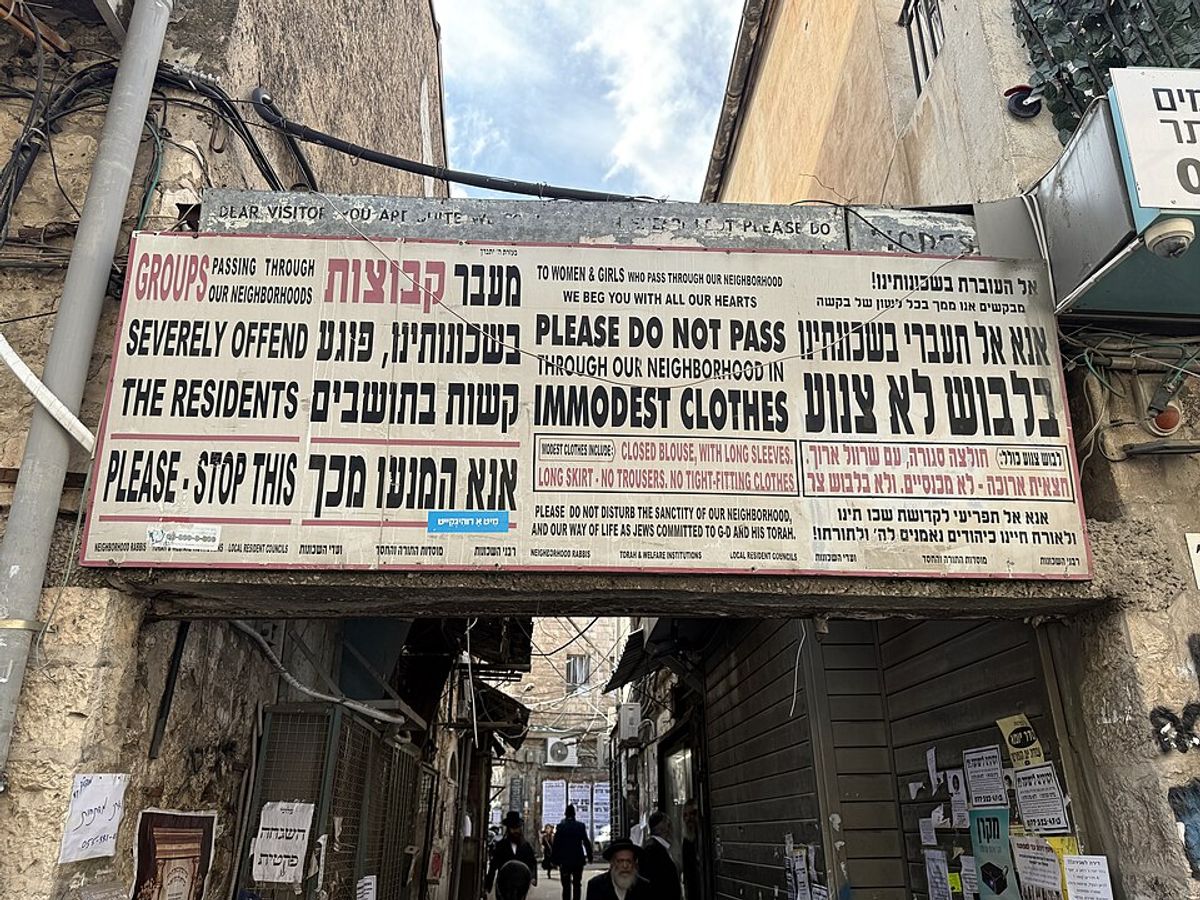
The neighborhood is home to dozens of shtiebels , small, intimate prayer houses, as well as major yeshivot where men devote years to intensive Torah study, and mikvaot (ritual baths) that serve the community’s religious needs. The cycle of Shabbat and the Jewish holidays defines the rhythm of public life in ways that are immediately apparent to any visitor. On Friday afternoons the pace quickens as the neighborhood prepares; by sundown, the streets quiet into Shabbat. Various Hasidic courts , each with its own lineage, customs, and spiritual leadership, are represented within the neighborhood, giving Mea Shearim a rich internal diversity that outsiders rarely perceive. Signs posted at the entrances to the neighborhood respectfully request that visitors dress modestly when entering, in keeping with the community’s standards.
Architecture and Atmosphere
The built environment of Mea Shearim is itself a document of history. The original Ottoman-era courtyard buildings , constructed of the pale Jerusalem limestone that the city’s building codes would later make mandatory, line alleyways too narrow for modern traffic. Laundry hangs between windows. Iron-railed balconies overlook shared courtyards where children play and neighbors call to one another in Yiddish. The main commercial artery, Mea Shearim Street, hosts a lively market selling everything from religious books and prayer items to household goods, fabrics, and food.
One of the most visually striking features of the neighborhood is the pashkevil, large posters, dense with Hebrew text, plastered in overlapping layers across the walls of buildings. Pashkevilim serve as the neighborhood’s public bulletin board, announcing community events, publishing rabbinical rulings, proclaiming positions on matters of religious importance, and marking significant life events. They are, in effect, a form of mass communication that predates social media by well over a century and continues to function as a primary channel of public discourse within the community. Reading them offers a window into the internal conversation of a self-contained world.
Tradition and the Modern State
Many residents of Mea Shearim belong to communities that have historically opposed Zionism on theological grounds, holding that only the coming of the Messiah can rightfully restore Jewish sovereignty over the Land of Israel. This belief, rooted in centuries of rabbinic interpretation, creates a complex and sometimes tense relationship between these communities and the modern State of Israel. Visitors walking the streets may notice signs, posters, and pashkevilim that reflect these views, sometimes in strong language. The tension between ultra-Orthodox tradition and the surrounding Israeli society is part of what makes Mea Shearim so distinctive and so fascinating, but it is a tension that deserves to be understood with sensitivity rather than reduced to a simple headline. For the residents, these are not abstract political positions but deeply held religious convictions that shape every aspect of how they live.
The Military Draft Debate
Few issues in Israeli society generate as much tension as the question of whether ultra-Orthodox men should serve in the military. The roots go back to 1948, when David Ben-Gurion exempted roughly 400 yeshiva students from conscription, a gesture meant to help rebuild a world of Torah scholarship destroyed in the Holocaust. What began as a small arrangement grew dramatically: today the ultra-Orthodox community accounts for tens of thousands of draft-eligible men. In 2002 the Knesset passed the Tal Law to formalize the deferment, but the Supreme Court struck it down in 2012 as a violation of equal civic duty. The debate intensified after October 7, 2023, when reservists were called up in unprecedented numbers and public patience with the exemption wore thin. In June 2024 the Supreme Court ruled unanimously that yeshiva students must begin enlisting, a decision that sent thousands into the streets of Mea Shearim and Bnei Brak in protest.
It is important to understand that the ultra-Orthodox world is not monolithic. Like any religious tradition, it contains a spectrum of views. Some communities cooperate with the state and its institutions, while others reject Zionism altogether on theological grounds, believing that a Jewish state should not exist before the coming of the Messiah. The most vocal among them is Neturei Karta, a small but visible group known for its outright opposition to the State of Israel. Between these poles are many communities that engage with the state in practical ways while maintaining reservations about its secular character. For those who oppose the draft, the argument is theological: Torah study, they believe, provides spiritual protection for the entire nation, and the yeshiva is as vital to Israel’s survival as any army base. Walking through Mea Shearim you may still see pashkevilim, the hand-printed wall posters that are the neighborhood’s unofficial newspaper, denouncing the draft in fierce language. The issue remains unresolved and is one of the deepest fault lines in Israeli public life.
Visiting Respectfully
Mea Shearim welcomes visitors who come with genuine respect and a willingness to abide by the community’s norms. A few straightforward guidelines will ensure that your visit is a positive experience for both you and the residents. Both men and women should dress modestly: shoulders and knees should be covered, and women may wish to wear a skirt or loose trousers. Avoid visiting on Shabbat (from Friday at sundown through Saturday night) or on Jewish holidays, when the community’s observance is at its most intense and the presence of tourists is most keenly felt as an intrusion.
Do not photograph people without first asking their permission, this applies particularly to children and to men and women in prayer or study. Stay on the main streets rather than venturing into private courtyards, and speak quietly. If you are curious about something you see, a calm and respectful question is almost always welcome. Approaching the neighborhood as a guest in someone’s home , which is precisely what it is, will serve you far better than treating it as a spectacle. Those who visit with openness and consideration often find that residents are willing to share something of their world, and the experience can be among the most memorable of any Jerusalem visit.
Visit with Hoshen Tours
A guided visit to Mea Shearim becomes far richer when woven into the broader story of modern Jerusalem. Hoshen Tours combines Mea Shearim with nearby destinations that together tell the full narrative of the city that grew up outside the Old City walls. A natural companion stop is Machane Yehuda, Jerusalem’s legendary open-air market just minutes away, the contrast between the two neighborhoods, both rooted in Jewish life and tradition yet utterly different in character and energy, is itself one of the great Jerusalem stories. The quiet residential lanes of Nachlaot, tucked between Mea Shearim and the market, add another layer: a neighborhood of Sephardic immigrants who arrived in the late 19th and early 20th centuries, with its own distinctive courtyard architecture and synagogues.
A broader Jerusalem neighborhoods tour with Hoshen Tours can also take in Prophets Street, Mishkenot Sha’ananim, the German Colony, and other quarters that illuminate how Jerusalem grew, layer by layer, from a walled city into a modern metropolis, while communities like Mea Shearim maintained an unbroken thread back to the world that came before. Contact Hoshen Tours to build the Jerusalem itinerary that is right for your group.
Ready to experience Israel in true colors?
Plan Your TourPrivate tours designed around your interests, schedule, and pace.