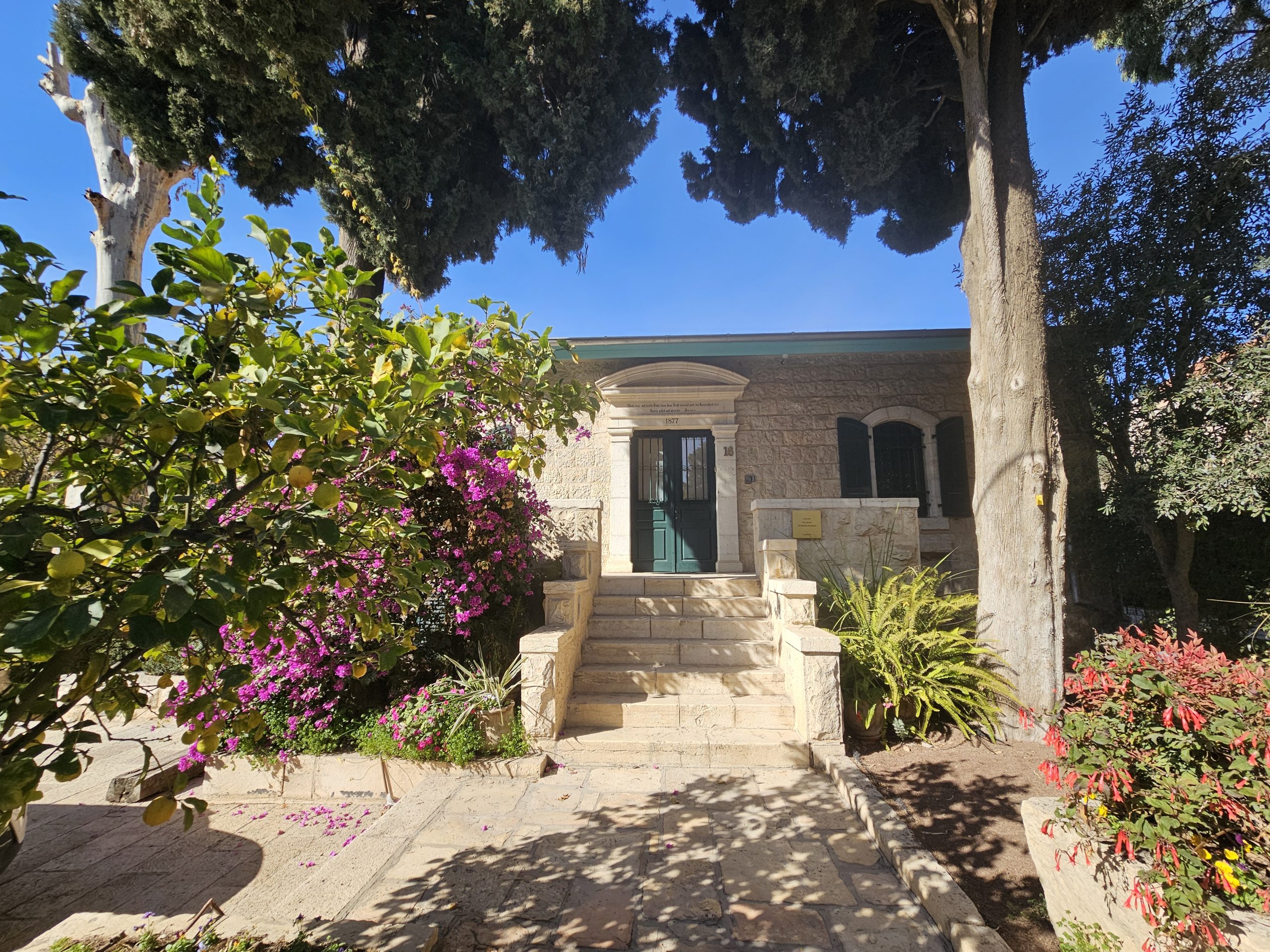
The German Colony (HaMoshava HaGermanit) is one of the most charming and historically layered neighborhoods in Jerusalem, built by the German Templers in 1873 and still a vibrant residential and commercial center today. The colony stretches along Emek Refaim Street, south of the Old City, and its stone houses, tree-lined sidewalks, and European atmosphere make it one of the most sought-after addresses in the city.
The Templers: From Swabia to Jerusalem
The Jerusalem colony was the fourth Templer settlement in the Land of Israel, after Haifa (1868), Jaffa (1869), and Sarona (1871). The Templers (Tempelgesellschaft) were a Protestant sect from Wurttemberg who believed that establishing model Christian communities in the Holy Land would hasten the Second Coming. In Jerusalem, they built a community that combined German orderliness with the spirit of pilgrimage: stone houses in the Wurttemberg style, a school, a community hall, workshops, and agricultural plots on the road leading south toward Bethlehem.
The Jerusalem Templer community was smaller than the colonies in Haifa and Sarona but culturally significant. The settlers established a school that educated both Templer and local children, workshops that produced furniture and metalwork, and a hotel (the Fast Hotel on Jaffa Road) that became one of the most important establishments in late Ottoman Jerusalem. The Templers maintained close relationships with the other European communities in the city, and their engineering skills contributed to Jerusalem’s modernization: they helped build roads, improve water supply, and introduce modern agricultural techniques to the surrounding villages.
Archaeological Discoveries
The most prominent Templer family in Jerusalem was the Fast family, who operated the Fast Hotel, one of the finest hotels in late 19th-century Jerusalem. The hotel hosted European diplomats, archaeologists, and travelers, and it was a center of social life for the city’s growing international community. Gottlieb Schumacher, a Templer architect and engineer from Haifa, designed buildings and conducted archaeological surveys across the Land of Israel, including the first systematic survey of the Golan Heights and important excavations at Megiddo. The Templer community also included teachers, craftsmen, and farmers whose practical skills contributed to the development of the Jerusalem area.
The Templer cemetery on Emek Refaim Street, near the intersection with Pierre Koenig Street, is one of the most poignant sites in the neighborhood. The German-language tombstones, with their biblical inscriptions and dates spanning from the 1870s to the 1940s, tell the story of a community that lived, worked, died, and was buried in a land they considered holy. The cemetery is well maintained and open to visitors, and the tombstones provide a personal connection to the families whose houses still line the street. Some of the graves belong to Templers who died of malaria, disease, and the hardships of pioneer life, and the mortality rates, especially among children, are a reminder of how difficult life was for European settlers in Ottoman-era Jerusalem.
The Dark Chapter and What Remains
Like the other Templer colonies, the Jerusalem community was affected by the rise of Nazism. Some members joined the Nazi Party, though the Jerusalem community was generally less politicized than the colonies in Haifa and Sarona. During World War II, the British interned Templer men of military age, and after the war, the remaining community was deported. Their properties were confiscated and eventually became part of the Israeli state. The houses they built, solid stone structures designed to last for generations, have outlived the community that built them and now serve as homes, restaurants, and shops for the diverse population of modern Jerusalem.
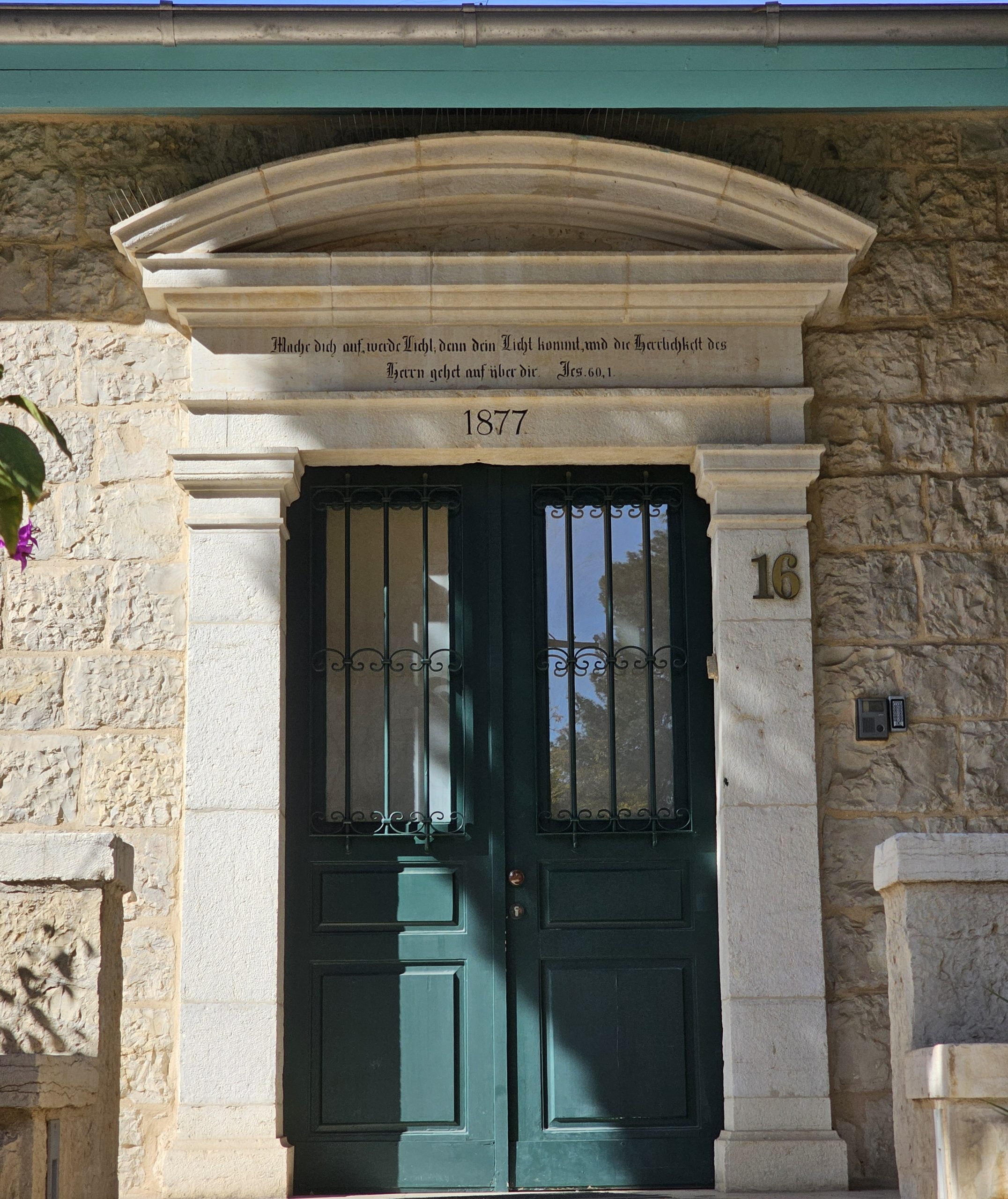
Several original Templer houses still bear their German biblical inscriptions carved in stone above the doorways: “Der Herr ist mein Hirte” (The Lord is my shepherd, Psalm 23:1), “Bis hierher hat uns der Herr geholfen” (Thus far the Lord has helped us, 1 Samuel 7:12), and other verses. The inscriptions, weathered but still legible, are one of the most distinctive features of the neighborhood. Walking down Emek Refaim and reading these inscriptions above the doors of modern cafes and boutiques creates a layered experience: 19th-century German Protestant faith above, 21st-century Jerusalem life below.
Emek Refaim Street Today
Emek Refaim Street has become one of Jerusalem’s liveliest streets for dining and culture. Restaurants, cafes, bars, bookshops, and boutiques line both sides, and the outdoor seating under the mature trees creates a relaxed, cosmopolitan atmosphere. The street connects to the First Station cultural complex at its southern end. On warm evenings, the street fills with families, couples, and groups of friends, and the combination of historic architecture and contemporary energy makes it one of the best places to experience modern Jerusalem beyond the Old City.
Visit with Hoshen Tours
The German Colony is one of Jerusalem’s most charming neighborhoods, built by German Templars in the 1870s along a single boulevard of stone houses. Hoshen Tours walks through Emek Refaim Street, tracing the colony’s history from Protestant utopia to British internment to today’s cafe culture. The neighborhood connects to First Station at its northern end, Talbieh and Mishkenot Sha’ananim above, and the Haas Promenade viewpoint to the southeast.
Ready to experience Israel in true colors?
Plan Your TourPrivate tours designed around your interests, schedule, and pace.