



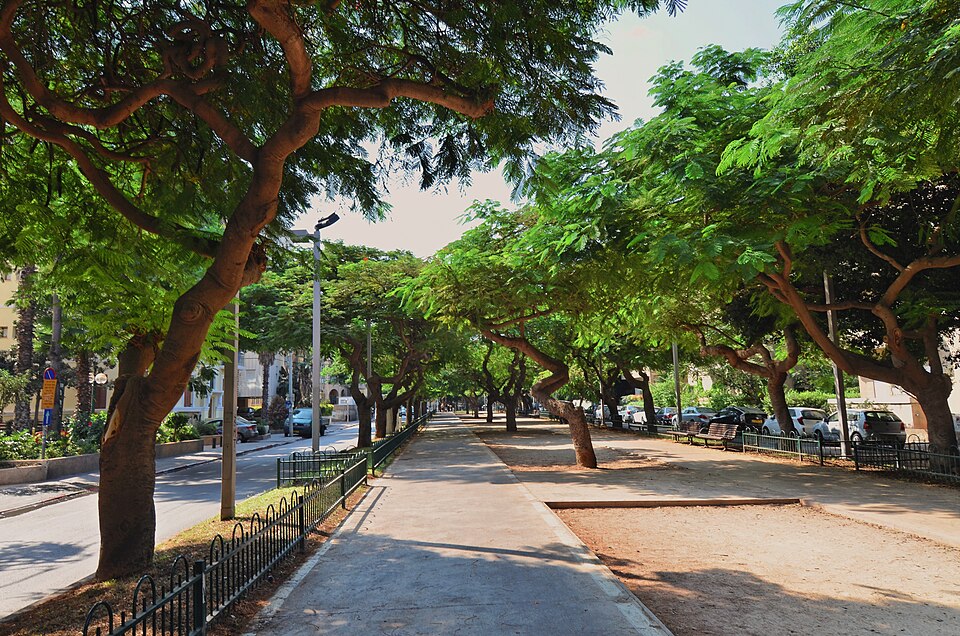
Rothschild Boulevard is the street where Tel Aviv became a city and where Israel became a state. Running from Habima Square in the northeast to Neve Tzedek in the southwest, it is one of the most iconic streets in the country, a tree-lined boulevard with a wide central promenade, flanked by Bauhaus buildings, cafes, and some of the most important sites in Israel’s national story. It was among the first streets laid out in the young city, originally called Rechov HaAm (“The People’s Street”) before being renamed after Baron Edmond de Rothschild, the French Jewish philanthropist whose funding kept the early Jewish settlements alive.
The Boulevard
The boulevard’s central promenade, shaded by tall ficus trees, has been the gathering place of Tel Aviv since the city’s earliest days. Near the corner of Herzl Street stands the famous Kiosk, the first kiosk in Tel Aviv, a modest structure that served as a social hub for the founders, where decisions were debated over coffee and the future of the city was argued into existence. The kiosk has been restored and today functions as a small cafe and cultural landmark. On either side of the boulevard, dozens of Bauhaus and International Style buildings , with their clean lines, horizontal balconies, pilotis, and white plaster facades, form part of the White City UNESCO World Heritage Site. An evening stroll along the promenade, past the dog walkers and the joggers and the couples on the benches, is one of the most pleasant experiences in Tel Aviv.
Independence Hall
At 16 Rothschild Boulevard stands the building where the State of Israel was born. Originally the private home of Meir and Zina Dizengoff, Tel Aviv’s founding mayor, the house was donated to the city after Zina’s death in 1930 and became the Tel Aviv Museum of Art. It was in this hall, beneath a portrait of Theodor Herzl and flanked by two flags of the nascent state, that David Ben-Gurion read the Israeli Declaration of Independence on the afternoon of May 14, 1948, a Friday, timed for 4:00 PM so the ceremony could conclude before the start of Shabbat, just hours before the British Mandate expired at midnight.
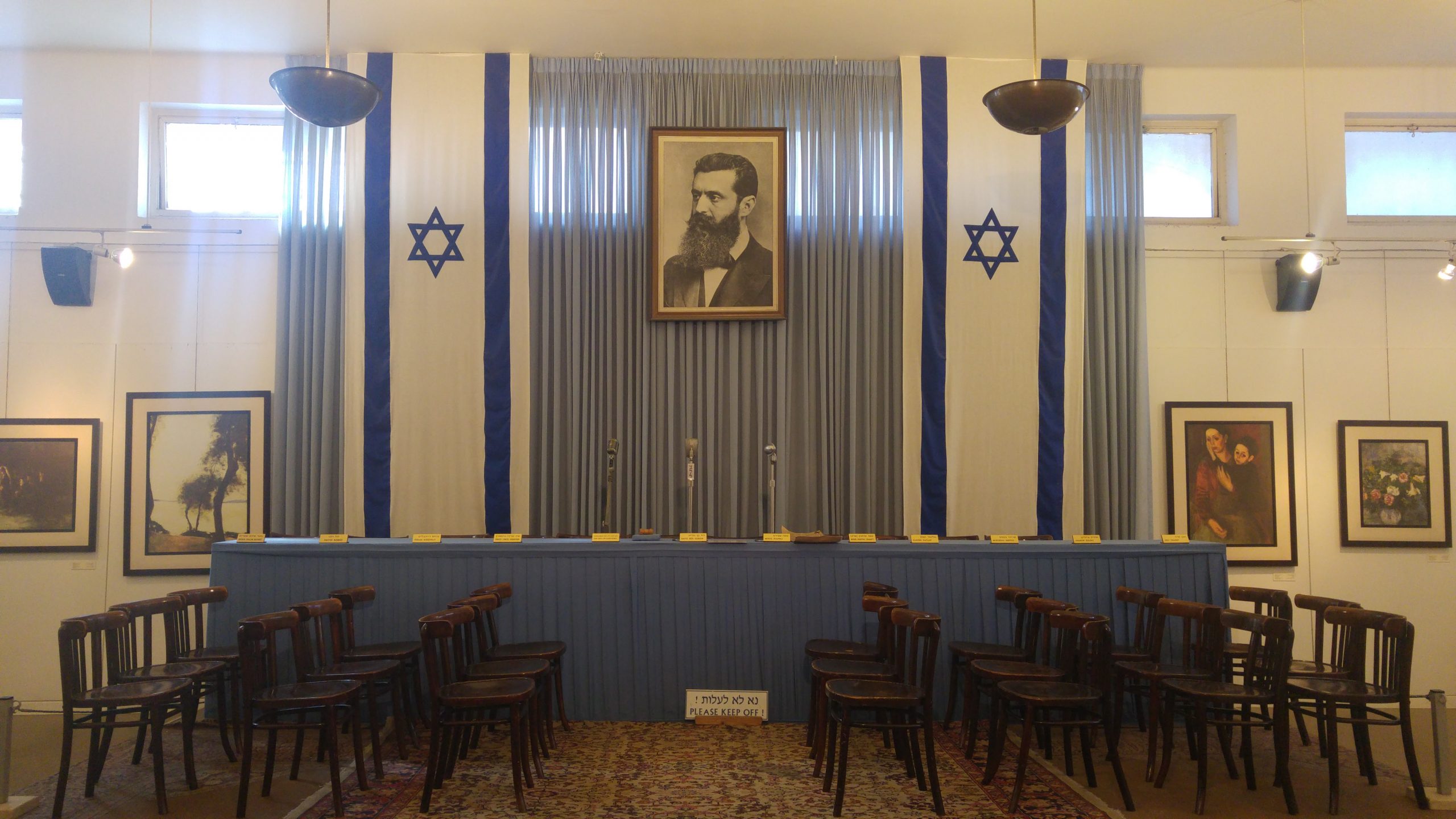
The ceremony was attended by members of the People’s Council (Moetzet HaAm), the pre-state governing body. Of the 37 members who would ultimately sign the declaration, 25 were present that day, the rest, many of them trapped in besieged Jerusalem, signed later. Ben-Gurion read the declaration in 16 minutes. When he finished, the audience rose and sang Hatikvah. The entire event lasted approximately 32 minutes and was broadcast live on Kol Yisrael radio. Outside, crowds filled the streets. A new country had come into existence in a modest hall on a boulevard that had been sand dunes less than forty years earlier.
Today, Independence Hall has been meticulously restored as a museum. The long table, the wooden chairs, the Herzl portrait, the flags, and the microphones are arranged exactly as they were on that Friday afternoon in 1948. Visitors can stand in the room where Ben-Gurion spoke and hear a recording of the original broadcast, one of the most moving experiences in Tel Aviv for anyone with a connection to the story of Israel.
Visit with Hoshen Tours
Hoshen Tours walks the full length of Rothschild Boulevard, from the Kiosk to Independence Hall, telling the story of Tel Aviv’s founding, the Bauhaus architects who shaped its skyline, and the afternoon when a declaration read in a living room changed the map of the world. The boulevard connects the city’s architectural heritage with its defining political moment, all in a single, beautiful walk.
Ready to experience Israel in true colors?
Plan Your TourPrivate tours designed around your interests, schedule, and pace.