



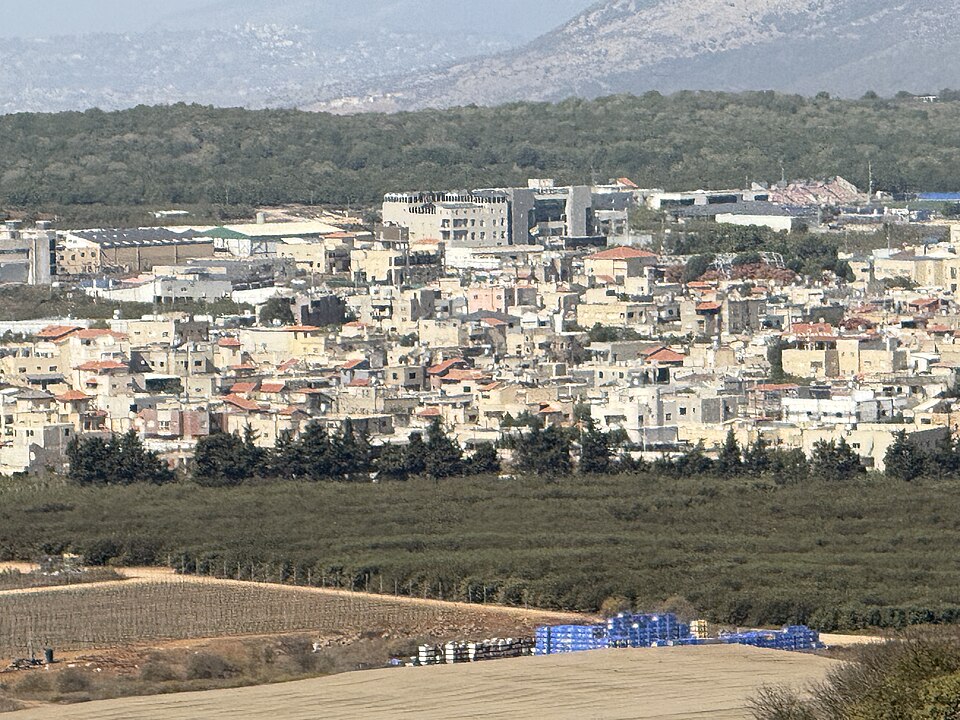
 The Golan Heights are home to approximately 23,000 Druze, most of whom live in four villages on the slopes of Mount Hermon: Majdal Shams, Mas’ade, Buq’ata, and Ein Qiniyye. Their story is unlike that of any other community in Israel, and understanding it is essential to understanding the Golan.
Druze Faith – Druze of the Golan Heights
The Druze religion was founded in the early 11th century in Fatimid Cairo, during the reign of Caliph al-Hakim bi-Amr Allah. The faith was shaped by the teachings of Hamza ibn Ali and other early missionaries who drew on Islam, Christianity, Greek philosophy, particularly the ideas of Plato and Plotinus, and elements of Gnosticism to form a distinct monotheistic theology centered on the absolute oneness of God, known as al-Tawhid.
Unlike Islam, the Druze faith has been closed to converts since 1043 CE. One is born Druze or one is not, there is no process for joining the faith, and the community is defined entirely by lineage. This closure was a deliberate decision by the early leaders to protect the community and preserve its teachings, and it has shaped the Druze identity ever since. Being Druze is not just a religious affiliation. It is an ethnic and communal identity that cannot be adopted from the outside.
The Druze community is divided into two groups: the uqqal (the initiated), who have access to the inner teachings of the faith, and the juhhal (the uninitiated), who live as Druze but are not privy to the religion’s deeper doctrines. The uqqal study the Kitab al-Hikma, the Book of Wisdom, which is the central sacred text of the Druze faith and is not shared with outsiders. Notably, women can become uqqal, and in some communities, women make up a significant portion of the initiated, a feature that distinguishes the Druze from many other Middle Eastern religious traditions.
One of the most distinctive beliefs of the Druze faith is reincarnation. The Druze believe that at the moment of death, the soul is immediately reborn into another Druze body. There is no afterlife, no heaven or hell in the traditional sense, only an ongoing cycle of rebirth within the community. This belief in the transmigration of souls, known as taqammus, is central to the Druze worldview and explains much about the community’s cohesion: every Druze soul has always been Druze and always will be.
Pilgrimage and Worship
The Druze revere a series of prophets, including Adam, Noah, Abraham, Moses, Jesus, and Muhammad, but their most important prophet is Jethro (Nabi Shu’eib), the father-in-law of Moses. Their holiest site is the shrine of Nabi Shu’eib near the Horns of Hattin in the Lower Galilee, which is the destination of the largest annual Druze pilgrimage. The Druze do not build mosques and do not pray in the Islamic tradition. Their places of worship are called khalwa, modest, unadorned prayer houses where the uqqal gather for Thursday evening devotion.
The Druze faith also permits taqiyya, the right to conceal one’s religious identity when under threat or persecution. This principle, rooted in centuries of minority existence in the Middle East, has allowed Druze communities to survive under various rulers and regimes. It also contributes to the tradition of religious secrecy that defines the faith: outsiders are not expected to understand the inner workings of the religion, and the Druze themselves are under no obligation to explain them.
The Druze five-colored star, often seen on flags and in villages, represents the five cosmic principles, or five divine messengers, that are central to the faith’s theology. Each color, green, red, yellow, blue, and white, corresponds to a different spiritual quality, and together they symbolize the unity and diversity of the Druze worldview.
A Community Between Two Countries
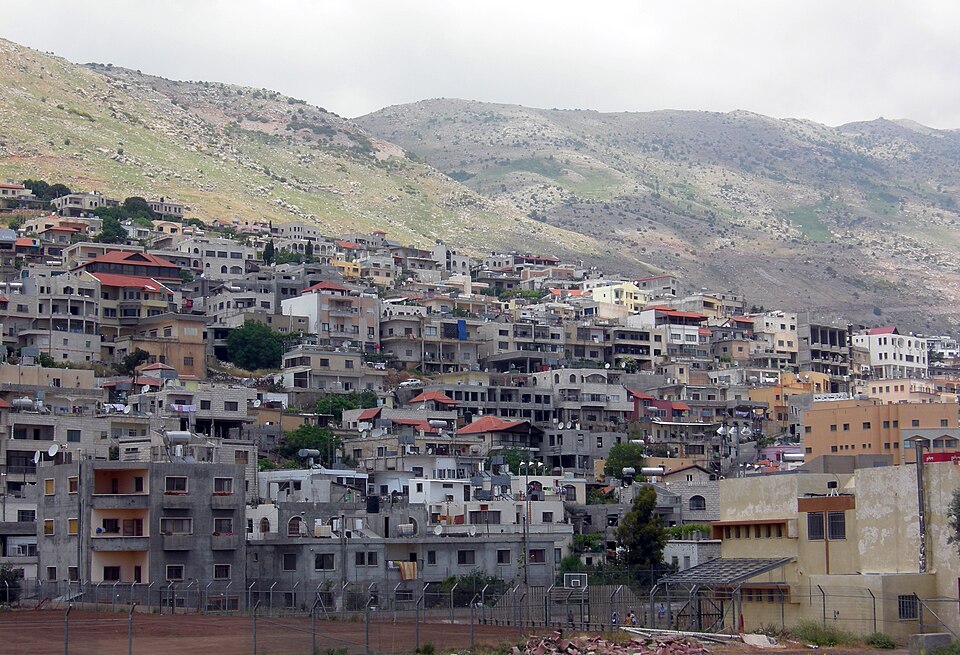 When Israel captured the Golan Heights in 1967, the Druze villages found themselves on the Israeli side of a new border. Israel offered the Druze citizenship. Most declined. Their families were in Syria. Their national identity was Syrian. And loyalty to the sovereign is one of the foundational principles of Druze identity, wherever Druze communities live in the world. In Israel, the Druze of the Galilee and Mount Carmel serve in the IDF with distinction precisely because of this principle. On the Golan, where the sovereign had been Syria until 1967, the same principle led most Druze to maintain their Syrian allegiance. And they had no way of knowing whether the Golan would remain in Israeli hands or be returned to Syria in a future peace deal.
This decision created a unique status. The Golan Druze are permanent residents of Israel with access to Israeli healthcare, education, and social services. They carry Israeli travel documents but not Israeli passports. They vote in municipal elections but not in national ones. And they maintain a Syrian national identity while living under Israeli sovereignty. The arrangement is complicated, sometimes tense, and thoroughly pragmatic.
A Shifting Reality
For decades, most Golan Druze maintained their Syrian identity and declined Israeli citizenship. But the Syrian civil war, which erupted in 2011 and devastated the country for over a decade, changed the equation. Watching Syria tear itself apart, many Golan Druze began to reassess their relationship with Israel. The country they had been loyal to was disintegrating, and the future of the Golan Heights looked increasingly, and perhaps permanently, Israeli.
In recent years, a growing number of Golan Druze have applied for Israeli citizenship. The reasons are practical as much as ideological: an Israeli ID card simplifies travel, employment, access to government services, and bureaucratic processes that permanent residency status makes cumbersome. Young Druze who want to study at Israeli universities, work in Israeli companies, or travel abroad find that citizenship removes barriers that residency status does not.
The shift is significant but not universal. Some families still maintain their Syrian identity, and the decision to apply for citizenship remains a sensitive issue within the community. But the trend is clear, and it reflects a pragmatic recognition that the Golan Heights, regardless of what international law says, is the place where these families live, work, and raise their children.
Shouting Hill
Before mobile phones made it possible to call across the border, families separated by the ceasefire line would gather on hillsides and shout to each other across the valley. The practice, poignant and heartbreaking, gave the area its informal name: the Shouting Hill. Weddings, births, and deaths were announced this way. The custom has faded with technology, but the memory of families shouting across a border they could not cross remains one of the most human stories on the Golan.
Apple Orchards
The Druze villages of the Golan are famous for their apples. The combination of altitude, volcanic soil, cold winters, and abundant water from Mount Hermon creates ideal growing conditions, and Golan apples are considered the best in Israel. The autumn harvest is a major event, and the sight of apple orchards heavy with fruit against the backdrop of the Hermon is one of the most beautiful in the region.
For decades, Golan Druze farmers exported their apples to Syria through a crossing point in the demilitarized zone. This trade, facilitated by the International Committee of the Red Cross, was one of the few points of contact between the Golan Druze and their families across the border.
Druze Hospitality and Cuisine
Druze hospitality is genuine and generous. Visitors to the villages are welcomed with warmth, and the restaurants of Majdal Shams and Buq’ata serve some of the best food on the Golan. The cuisine features fresh pita baked on a convex iron dome (saj), labneh drizzled with olive oil, grilled meats, stuffed vine leaves, and knafeh for dessert. A meal in a Druze restaurant on the Golan is one of the highlights of any visit to northern Israel.
The villages also have a growing tourism sector, with guesthouses, craft shops, and guided experiences that introduce visitors to Druze culture, history, and daily life.
Visit with Hoshen Tours
The Druze villages are an essential part of any Golan Heights experience. Hoshen Tours includes a village visit, a meal, and an introduction to Druze culture that goes beyond the surface. Because the Golan is not just a landscape and a battlefield. It is home to a community whose story deserves to be heard.
Visitors exploring the Golan Heights often combine Druze of the Golan Heights with nearby destinations such as Mount Bental, Birkat Ram, and Nimrod Fortress, each offering its own distinctive perspective on the region’s layered history and landscape. A broader itinerary might also include Banias and Kibbutz El Rom, both within easy reach and rich in their own right.
Every Hoshen Tours itinerary is private and fully customizable. Contact us to begin planning your journey through the Golan Heights.
Ready to experience Israel in true colors?
Plan Your TourPrivate tours designed around your interests, schedule, and pace.