



Tel Gezer is one of the most important ancient cities in the land of Israel, a massive tell guarding the junction of the coastal road (the Via Maris) and the road ascending from the coast to Jerusalem through the Ayalon Valley. The city appears in Egyptian, Canaanite, and Israelite sources spanning over 3,000 years, and its connection to King Solomon makes it one of the key sites for understanding the biblical monarchy.
Solomon’s City
The Bible records that Pharaoh captured Gezer and gave it to Solomon as a dowry when Solomon married Pharaoh’s daughter: “Pharaoh king of Egypt had attacked and captured Gezer. He had set it on fire. He killed its Canaanite inhabitants and then gave it as a wedding gift to his daughter, Solomon’s wife. And Solomon rebuilt Gezer” (1 Kings 9:16-17). The same passage lists Gezer alongside Hazor and Megiddo as cities that Solomon fortified: “Here is the account of the forced labor King Solomon conscripted to build the Lord’s temple, his own palace, the terraces, the wall of Jerusalem, and Hazor, Megiddo and Gezer” (1 Kings 9:15).
Solomonic Gate
Excavations at Gezer uncovered a six-chambered gate nearly identical in design to gates found at Hazor and Megiddo. The discovery of three matching gates at the three cities mentioned in a single biblical verse (1 Kings 9:15) was one of the most celebrated moments in biblical archaeology. The debate over whether the gates were actually built by Solomon or date to a later period continues, but the architectural similarity across three widely separated sites remains remarkable.
Gezer Calendar
The Gezer Calendar, a small limestone tablet inscribed with a list of agricultural seasons in ancient Hebrew, is one of the oldest Hebrew texts ever found (10th century BCE). The inscription lists the months of the year by their agricultural activities: “Two months of harvest / Two months of planting / Two months of late planting / A month of hoeing flax / A month of barley harvest / A month of harvest and feasting / Two months of vine tending / A month of summer fruit.” The calendar is now in the Istanbul Archaeological Museum.
High Place
A row of ten large standing stones (masseboth), the largest over 3 meters tall, was discovered at Gezer and identified as a Canaanite high place (bamah), a sacred open-air worship site. The stones, aligned in a north-south row, are one of the most impressive cultic installations found in Israel and may correspond to the “standing stones” that the Israelites were commanded to destroy: “Break down their altars, smash their sacred stones” (Exodus 23:24).
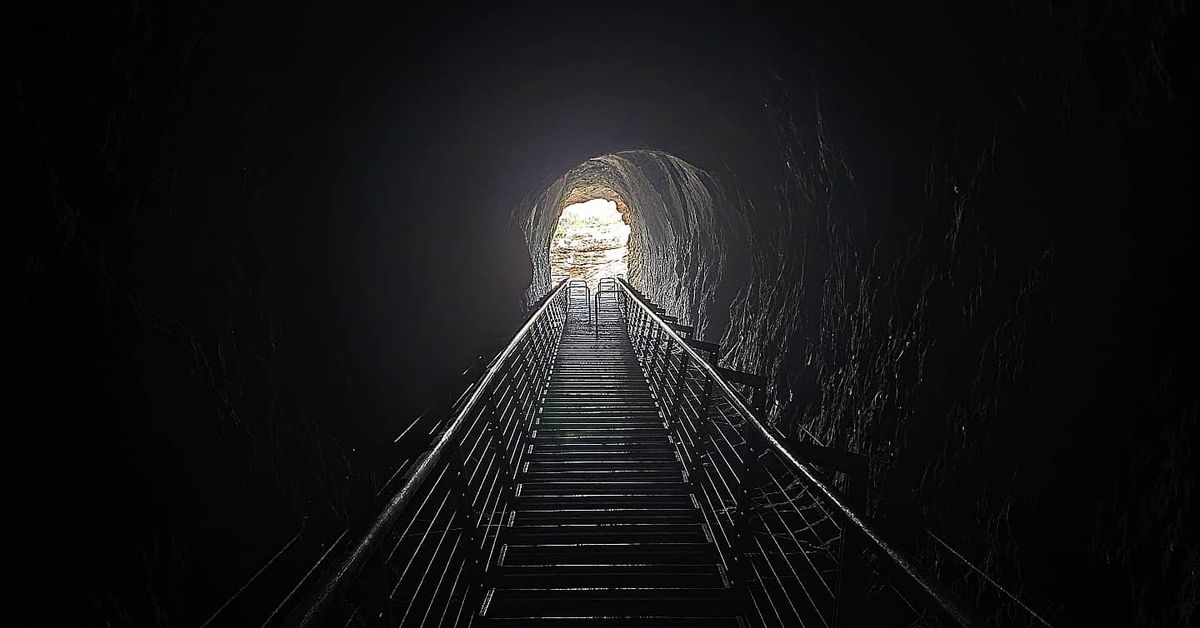
A massive underground water system, similar to those at Megiddo and the City of David, was cut through the bedrock to provide access to water during sieges. The tunnel descends over 40 meters to reach the water table, and the engineering required to excavate it represents a major investment by the city’s rulers.
Visit with Hoshen Tours
Tel Gezer was one of Solomon’s fortified cities. Hoshen Tours pairs it with the Ayalon Valley, the monastery at Latrun, the biblical landscape reserve at the Judean Foothills, and the David and Goliath story at the Ella Valley.
Explore Our Tour Collection
Ready to experience Israel in true colors?
Plan Your TourPrivate tours designed around your interests, schedule, and pace.