



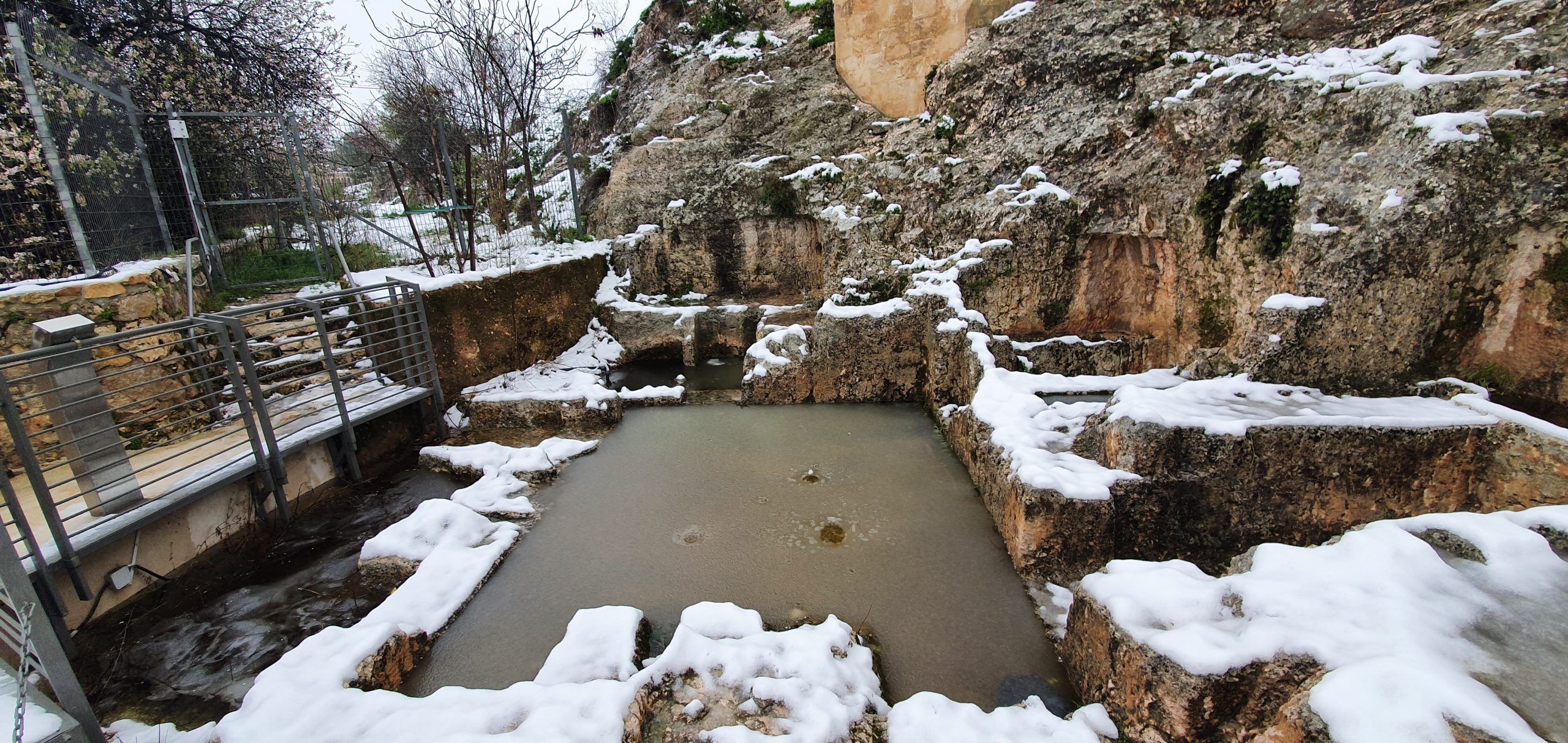
In 1979, the archaeologist Gabriel Barkay was excavating a series of First Temple period burial caves on the shoulder of the Hinnom Valley, a site known as Ketef Hinnom (“the shoulder of Hinnom”), when one of his young volunteers, a 13-year-old boy named Nathan, discovered a hidden chamber beneath the floor of one of the caves. Inside the chamber were two tiny silver scrolls, rolled up and badly corroded. When the scrolls were carefully unrolled and deciphered, they turned out to contain the oldest known text from the Hebrew Bible. Gabriel Barkay, whose discovery at Ketef Hinnom transformed our understanding of biblical history, passed away in January 2026, at the age of 82.
The Silver Scrolls
The two scrolls, each small enough to fit in the palm of your hand, contain the Priestly Blessing from the Book of Numbers: “The Lord bless you and keep you; the Lord make his face shine on you and be gracious to you; the Lord turn his face toward you and give you peace” (Numbers 6:24-26). The scrolls were worn as amulets around the neck — personal protective jewelry inscribed with the words of sacred text, suggesting that ordinary people in ancient Jerusalem carried scripture on their bodies as a source of blessing and protection. The scrolls date to the late 7th century BCE, approximately 400 years before the Dead Sea Scrolls, making them the oldest surviving fragments of biblical text ever discovered. Remarkably, the Priestly Blessing (Birkat Kohanim) is still recited today in synagogues and churches around the world, making it the oldest continuously recited prayer known to humanity.
Why It Matters
The Ketef Hinnom scrolls are significant for several reasons. They push the dating of biblical text back some 400 years before the Dead Sea Scrolls, proving that the text of the Hebrew Bible existed in a recognizable form centuries earlier than was previously confirmed. They show that the Priestly Blessing was used as a personal amulet, suggesting it had liturgical importance as early as the First Temple period. And they place the composition of at least part of the Book of Numbers firmly before the Babylonian exile of 586 BCE, earlier than many scholars had assumed. The unrolling of the scrolls was itself an extraordinary feat: because the silver was so corroded and fragile, the process took three painstaking years of work at the Israel Museum before the text could be read.
The Scrolls Today
The original silver scrolls are displayed at the Israel Museum in Jerusalem, in the same building as the Dead Sea Scrolls. Seeing these two sets of ancient texts side by side — the scrolls from Ketef Hinnom predating the Dead Sea Scrolls by four centuries — is one of the most profound experiences the museum offers. The burial caves at Ketef Hinnom are visible from the Hinnom Valley park and from the terrace of the Scottish Church of St. Andrew.
Visit with Hoshen Tours
Ketef Hinnom is a story best told in two locations: at the site itself, where the caves are visible on the rocky hillside, and at the Israel Museum, where the scrolls are displayed in their tiny, astonishing detail. Hoshen Tours connects both.