



The Israel Museum, on a hilltop in western Jerusalem, is one of the great museums of the world and Israel’s largest cultural institution. Founded in 1965, just seventeen years after the establishment of the state, the museum was an act of cultural ambition, a declaration that this small, young country would build a world-class repository of art, archaeology, and civilization. Its collection spans more than five thousand years of human history, from prehistoric flint tools to contemporary art installations, and includes objects that, by themselves, would justify any museum’s existence: the Dead Sea Scrolls, the Second Temple Model, and one of the finest archaeological collections on earth. The campus covers twenty acres and houses nearly half a million objects. Plan three to four hours at minimum, and consider a full day if you want to do it justice.
Archaeology of the Land of Israel
If the Israel Museum had only its archaeology wing, it would still be worth crossing the world to visit. This is one of the great archaeological collections anywhere, period. The wing takes you on a chronological walk from the Stone Age all the way to the Ottoman period, moving through millennia of human presence in the Land of Israel with extraordinary artifacts at every turn.
Among the standout objects, the Canaanite ivory carvings are breathtaking, delicate, intricate pieces that show just how sophisticated Canaanite artisans were three thousand years ago. The bronze bull figurine from the Bull Site, a hilltop cult site in the northern Samarian hills dating to around 1200 BCE, is one of the most evocative objects in the entire collection: a small, beautifully cast bronze animal that speaks directly to the religious world of early Israel. The cast of the Lachish reliefs brings the Assyrian siege of the Judean city of Lachish to life in vivid detail, showing the armies of Sennacherib advancing, prisoners being led into captivity, and the city burning, scenes carved in stone by the Assyrians themselves to boast of their conquest, and remarkably matched by what archaeologists later found in the ground at Lachish.
Jewish History and Tradition
The Bar Kokhba letters are among the most moving objects in the room. These are actual papyrus letters written during the Jewish revolt against Rome in the second century CE, discovered in the Cave of Letters in the Judean Desert. One is from the rebel leader Bar Kokhba himself, writing to his officers in the field. Holding your gaze on those faded lines of script, you are reading a military communique from the last stand of Jewish independence in ancient Israel.
The Pilate inscription, on display here as a cast, with the original held at Caesarea, is the only archaeological artifact ever found that mentions Pontius Pilate by name, identifying him as prefect of Judea. It confirms what the Gospels and Josephus record and gives a face, so to speak, to one of the most consequential figures in the story of early Christianity. The ancient glass collection is another marvel: hundreds of Roman-period glass vessels in stunning shapes and colors, representing a craft that the Romans transformed from a luxury item into an everyday household art. And the sarcophagus collection, elaborately carved stone coffins from different periods and cultures, rounds out a wing that feels less like a museum gallery and more like a walk through human history itself.
The Shrine of the Book
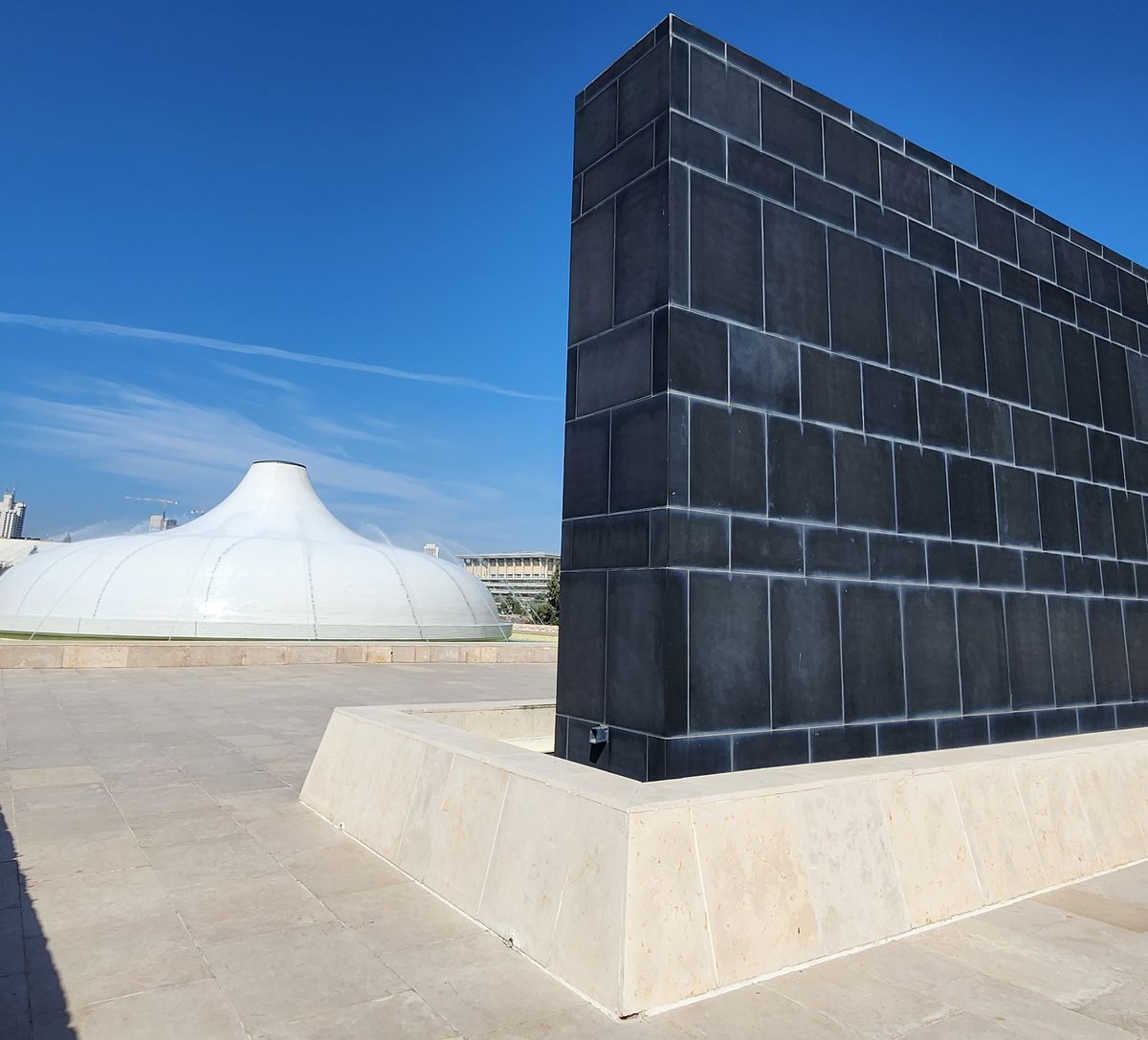 The Shrine of the Book is the museum’s most iconic building, and it is a separate structure on the campus, plan accordingly so you do not run out of time before reaching it. The white dome was deliberately designed to echo the lids of the clay jars in which the Dead Sea Scrolls were found at Qumran in 1947. Facing the dome is a tall, flat wall of black basalt, and the contrast is intentional. The white dome represents the Sons of Light; the black wall represents the Sons of Darkness. These are the two camps described in the War Scroll, one of the most dramatic texts in the collection, which lays out in military detail the final cosmic battle at the end of days. The building itself is theology made architecture.
Inside, in a hushed, dimly lit gallery, the scrolls are displayed with the reverence they deserve. The Great Isaiah Scroll, the most complete ancient biblical manuscript ever found, containing the entire book of Isaiah, is the centerpiece, displayed in its full length around the curved inner drum of the dome. This scroll was copied more than two thousand years ago, and the text it carries is virtually identical to the Hebrew Bible used in synagogues today. That continuity across twenty-two centuries is astonishing to contemplate. The Community Rule, the War Scroll, the Thanksgiving Hymns, and other texts rotate through the exhibition. The atmosphere is deliberately quiet and contemplative. These are among the most significant manuscripts in the history of human civilization, and the building around them honors that weight.
The Second Temple Model
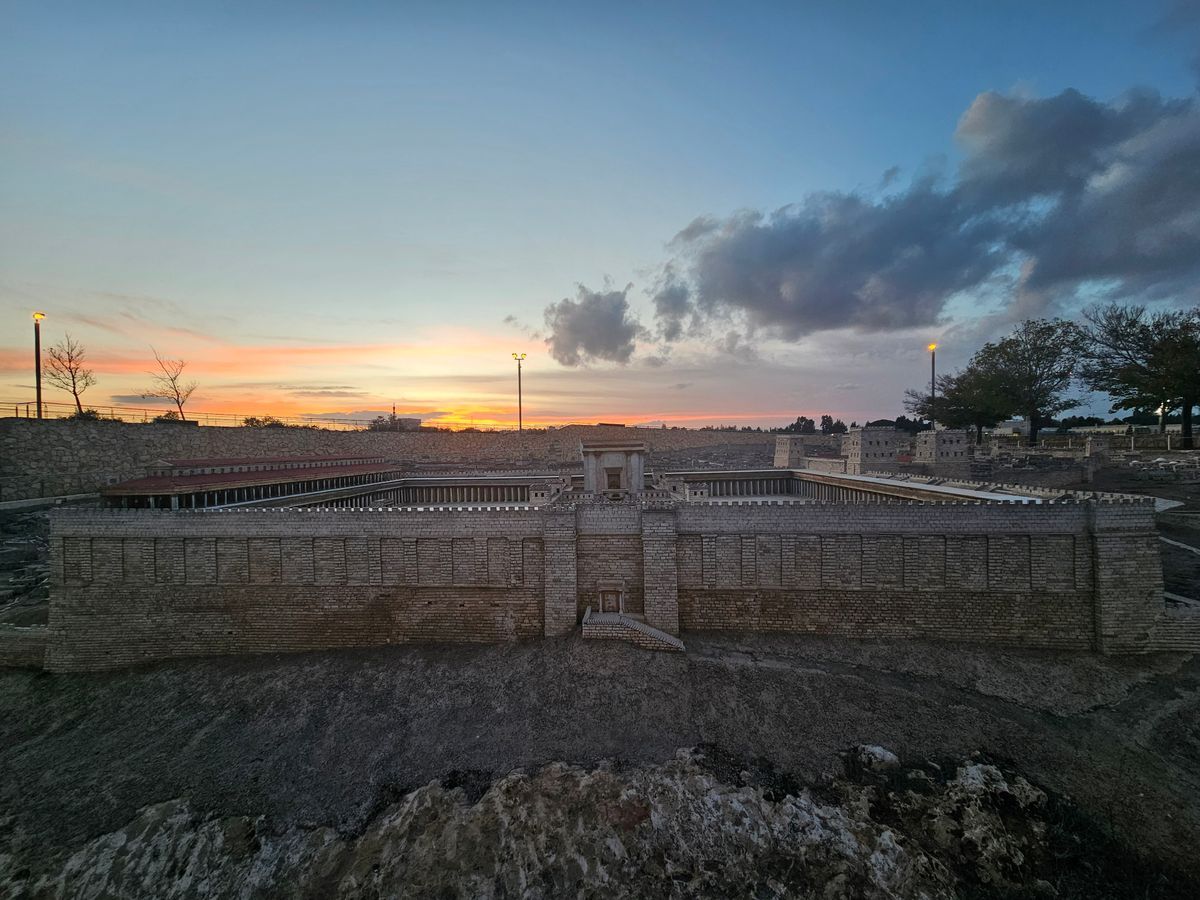
Step outdoors and you find one of the most useful and visually stunning teaching tools in the world: a 1:50 scale model of Jerusalem as it appeared in 66 CE, on the eve of the Roman destruction. The model covers nearly an entire outdoor courtyard. Every known building is represented: the Temple Mount with its massive platform and colonnades, the Temple itself gleaming in white limestone and gold, the palaces of Herod, the Antonia Fortress, the residential neighborhoods of the Upper and Lower City, the ritual pools, the aqueducts, the city walls, and the streets between them.
The model was built by the archaeologist and historian Michael Avi-Yonah, drawing on Josephus, the Mishnah, and every piece of archaeological evidence available at the time. It has been updated multiple times as new excavations refined our understanding of the ancient city. Standing over this model, you can trace the route Jesus would have walked from the Kidron Valley up to the Temple courts. You can see the true scale of Herod’s building projects, and they were genuinely staggering. You can understand why the Roman siege took months, and why the destruction of the city left a wound in Jewish memory that has never fully healed. Nothing brings the geography of ancient Jerusalem to life quite like standing here and looking down at the whole city at once.
The Judaica Wing: Synagogues from Around the World
The museum’s Judaica wing is a remarkable journey across the Jewish world. Four complete historic synagogue interiors, each transported piece by piece from its original location and meticulously reconstructed inside the museum, tell the story of how Jewish communities built their sacred spaces across the diaspora. The ornate Baroque synagogue from Vittorio Veneto in northern Italy gleams with gilt plasterwork. The carved wooden Cochin synagogue from the Malabar coast of India shows motifs borrowed from the Hindu temples and mosques that surrounded it. The Tzedek ve-Shalom synagogue from Paramaribo in Suriname represents the Spanish and Portuguese Jewish communities of the New World. And a painted wooden interior from Horb am Main in Germany preserves the folk art tradition of a small-town European Jewish community. For Jewish heritage visitors, this wing is deeply moving, the same prayers, spoken in radically different buildings across continents and centuries.
Art and Sculpture
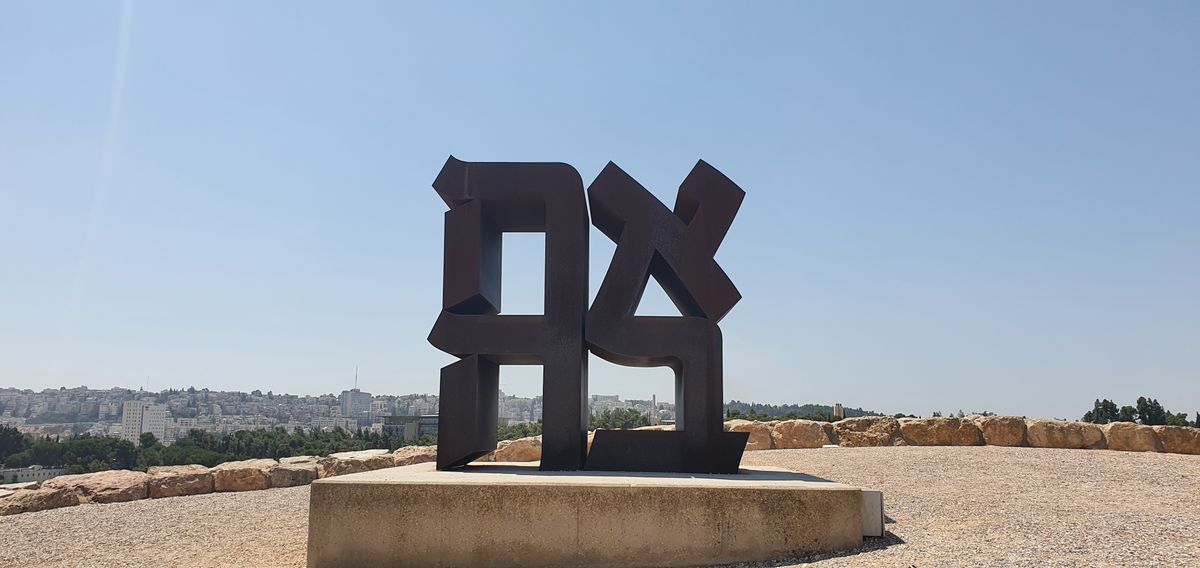 Beyond archaeology and manuscripts, the Israel Museum holds a serious art collection. The Impressionist and Post-Impressionist galleries include works by Monet, Renoir, and Chagall. The contemporary galleries trace Israeli art from the landscape painters of the early twentieth century to today’s video and conceptual artists. Outside, the Billy Rose Art Garden, designed by Japanese-American sculptor Isamu Noguchi, is one of the world’s great outdoor sculpture gardens. Noguchi carved the terraced hillside into a series of semicircular platforms inspired by ancient agricultural terracing, then filled them with major works by Picasso, Rodin, Henry Moore, and others. It is as beautiful a setting as you will find anywhere.
Visit with Hoshen Tours
The Israel Museum holds the Dead Sea Scrolls, a massive model of Second Temple Jerusalem, and one of the finest archaeology collections in the world. Hoshen Tours focuses the visit on highlights that connect to the story of the land, from the Shrine of the Book to the archaeology wing. The museum sits in Jerusalem’s cultural corridor alongside Bible Lands Museum, the Knesset, and Monastery of the Cross in the valley below. It pairs naturally with a morning at Yad Vashem nearby.
Explore Our Tour Collection
Ready to experience Israel in true colors?
Plan Your TourPrivate tours designed around your interests, schedule, and pace.