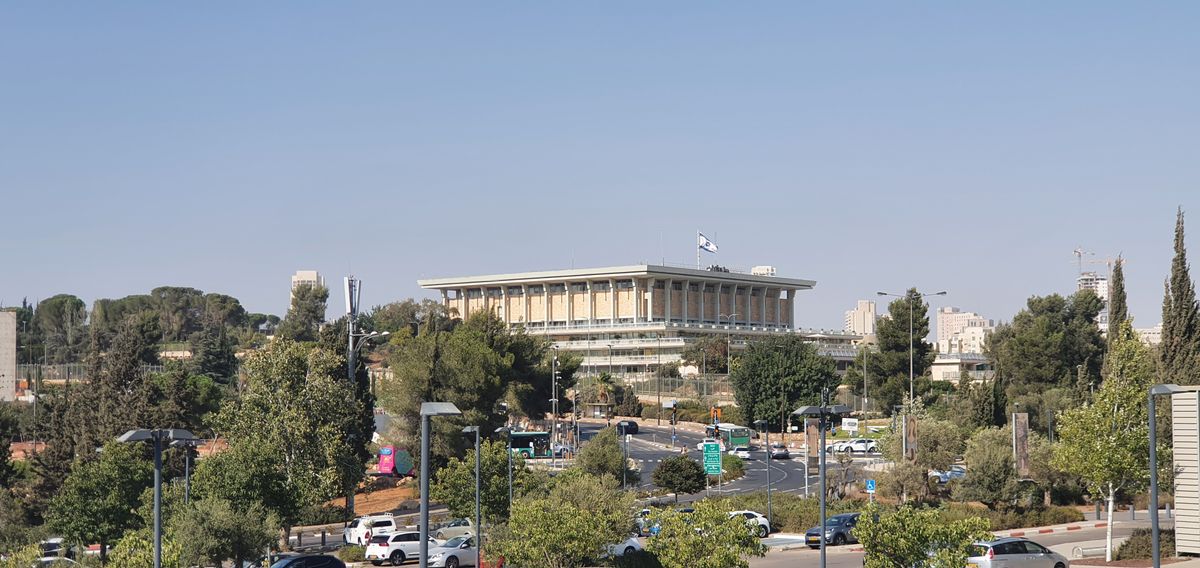
The Knesset, Israel’s parliament, sits on a hilltop in the Givat Ram neighborhood of western Jerusalem, overlooking the Israel Museum and the Valley of the Cross. The building, designed by Joseph Klarwein and opened in 1966, was funded largely by a donation from the Rothschild family. The architecture is deliberately austere, a rectangular stone building that draws on the proportions of ancient Near Eastern structures, reflecting the young state’s desire to connect modern democracy to ancient roots. The Knesset building stands as a symbol of Israeli sovereignty and self-governance, and its hilltop location gives it a commanding presence over the cultural and institutional heart of western Jerusalem.
The Knesset and the Menorah Jerusalem
Klarwein’s design reflects the influence of classical and ancient Near Eastern architecture, with clean horizontal lines, a flat roof, and walls clad in the reddish-pink Eilat stone that gives the building its distinctive warm tone. The main assembly hall, where the 120 members of Knesset debate and vote, is arranged in a horseshoe shape facing the Speaker’s podium. The building underwent a major expansion in the early 2000s, adding committee rooms, offices, and an underground visitors’ center, while preserving the restrained character of the original structure. Surrounding the Knesset, the grounds include sculptures and open spaces that reinforce the sense of a civic sanctuary set apart from the bustle of the city below.
The Menorah
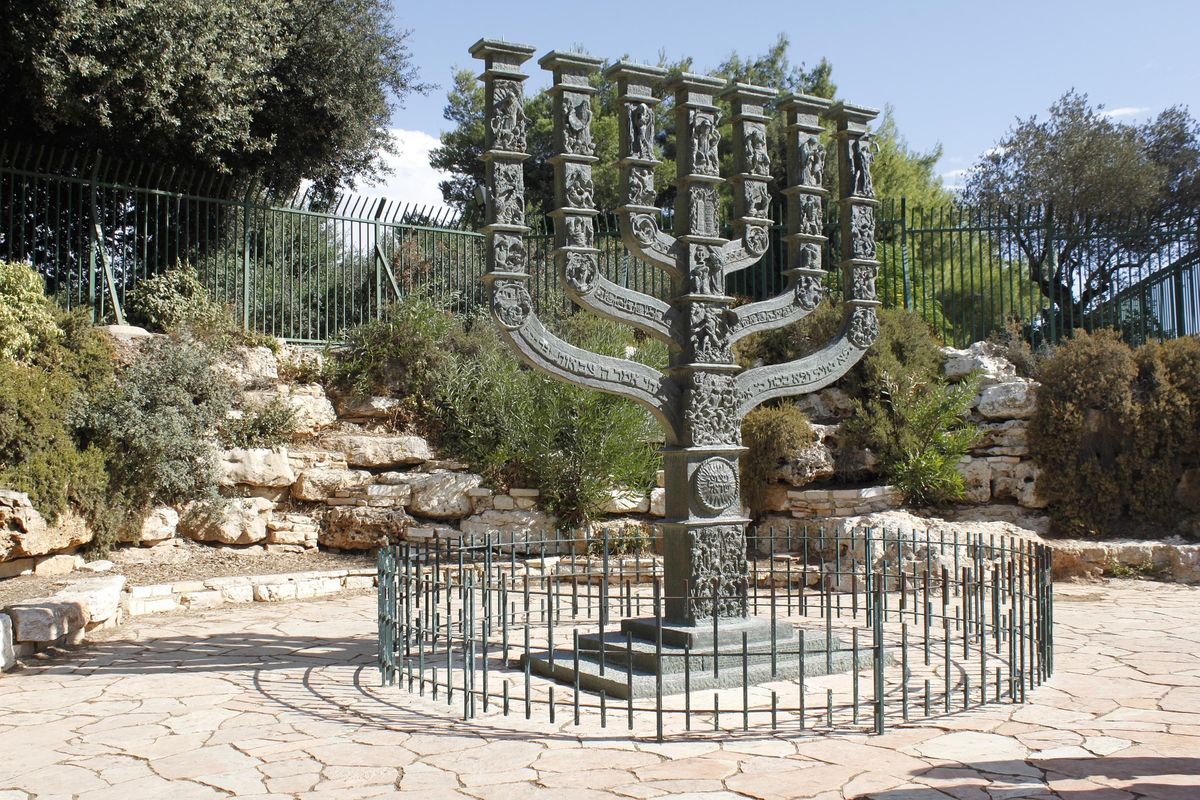
In front of the Knesset stands the bronze Menorah, designed by the British-Jewish sculptor Benno Elkan and presented to the Knesset by the British Parliament in 1956. The 4.30-meter-tall, 4-ton menorah is covered with 29 relief panels depicting key events and figures in Jewish history, from Moses and the Exodus to the Warsaw Ghetto uprising and the Holocaust. Each panel tells a chapter in the long story of the Jewish people, making the sculpture a visual encyclopedia of Jewish memory. The menorah has become one of the most recognizable symbols of the State of Israel and appears on the national emblem. Standing opposite the Knesset building, it creates a powerful dialogue between ancient heritage and modern statehood.
The Chagall Tapestries
Inside the Knesset, the State Hall features three magnificent tapestries and a floor mosaic by Marc Chagall, donated by the artist to the state. The tapestries depict the creation of the world, the exodus from Egypt, and the entry into Jerusalem, rendered in Chagall’s dreamlike style with floating figures, animals, and vivid colors. The tapestries are among the finest works Chagall produced, and the combination of his artistic vision with the setting of a working parliament is unique. The Chagall Hall, as the State Hall is often called, is used for ceremonial occasions including the inauguration of new presidents, making these artworks witnesses to some of Israel’s most important political moments. The floor mosaic, also designed by Chagall, features scenes from the twelve tribes of Israel worked in stone, tying the hall’s symbolism back to the biblical narrative of the nation’s origins. Together, the tapestries and mosaic make the Chagall Hall one of the most striking interiors in Jerusalem.
120 Members and the Great Assembly
The Knesset has 120 members, a number traditionally said to correspond to the 120 members of the Great Assembly (Knesset HaGedolah) in the Second Temple period. That ancient body is credited in Jewish tradition with shaping the prayer liturgy, canonizing parts of the Bible, and guiding the Jewish community through the transition from prophecy to rabbinic leadership. Israel’s parliamentary system is built on proportional representation, with multiple parties competing in national elections, resulting in coalition governments that reflect the country’s remarkable political diversity. The connection between the ancient assembly and the modern parliament is more than symbolic. It roots the idea of collective decision-making in a tradition that stretches back over two thousand years.
Visiting and the Wohl Rose Garden
Guided tours of the Knesset building are available on Sundays and Thursdays when the Knesset is not in recess, and visitors can observe the plenary debates from the gallery when it is in session. Entry requires passing through security, and visitors should bring a valid ID or passport. Israeli parliamentary debates are famously spirited, and watching a session from the visitors’ gallery offers a firsthand look at the energy and passion of Israeli democracy in action. Adjacent to the Knesset, the Wohl Rose Garden spreads across a hillside with hundreds of varieties of roses donated by countries from around the world. The garden is open year-round and is especially beautiful in spring, offering a quiet, colorful space for a stroll just steps from the parliament building.
Visit with Hoshen Tours
The Knesset building and the iconic Menorah sculpture in front of it tell the story of Israeli democracy and the symbols chosen to represent the young state. Hoshen Tours explains the Benno Elkan Menorah’s panels depicting Jewish history, and when sessions permit, takes visitors inside the parliament itself. The Knesset sits in Jerusalem’s institutional corridor alongside the Israel Museum, Bible Lands Museum, and the Monastery of the Cross in the valley below.
Ready to experience Israel in true colors?
Plan Your TourPrivate tours designed around your interests, schedule, and pace.